In modern industrial automation, the precise positioning of holes is a critical task across various sectors, including automotive manufacturing, aerospace engineering, and electronics assembly. Laser sensors have emerged as a leading technology for achieving high-accuracy hole detection and alignment, offering non-contact measurement capabilities that enhance efficiency and reliability. This article explores the principles, applications, and advantages of using laser sensors for hole positioning, providing insights for engineers and technicians in the field.
Laser sensors operate based on triangulation or time-of-flight principles to measure distances and detect surface features. For hole positioning, a laser beam is projected onto the target surface, and the reflected light is captured by a detector. When the beam encounters a hole, the change in reflection pattern—such as a drop in intensity or a shift in the light spot—allows the sensor to identify the hole's edges and center. Advanced sensors integrate algorithms to process this data in real-time, compensating for environmental factors like ambient light or surface variations. This enables sub-millimeter accuracy, even in dynamic production lines with moving components.
The applications of laser sensors in hole positioning are diverse. In automotive manufacturing, they are used to align bolt holes in engine blocks or chassis parts, ensuring proper assembly and reducing rework. In aerospace, sensors verify the placement of rivet holes in aircraft fuselages, where precision is paramount for safety. Electronics manufacturers employ laser sensors to position micro-holes in circuit boards, facilitating accurate component placement. Additionally, these sensors are valuable in quality control, detecting defects like misaligned or undersized holes before products proceed to further stages.
Key advantages of laser sensors include their non-contact nature, which eliminates wear and tear on both the sensor and the workpiece. This leads to longer equipment lifespans and reduced maintenance costs. They also offer high-speed operation, capable of thousands of measurements per second, making them suitable for high-volume production environments. Furthermore, laser sensors are versatile, adaptable to different materials (e.g., metal, plastic, or composite surfaces) and hole sizes, from large diameters in industrial machinery to tiny apertures in medical devices. Integration with programmable logic controllers (PLCs) and industrial networks allows for seamless automation, enabling real-time adjustments and data logging for process optimization.
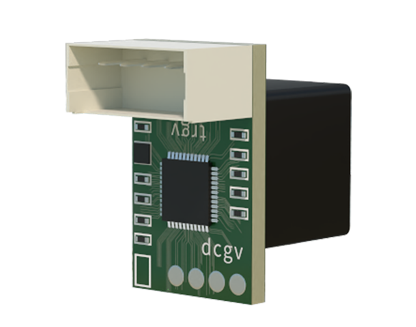
Despite their benefits, challenges exist in implementing laser sensors for hole positioning. Factors such as surface reflectivity, color, and texture can affect measurement accuracy, requiring calibration or sensor selection tailored to specific conditions. For instance, highly reflective surfaces may cause glare, while dark materials might absorb too much light. Engineers must consider these aspects during system design, often opting for sensors with adjustable power settings or complementary technologies like vision systems for redundancy. Regular maintenance, including lens cleaning and software updates, is also essential to sustain performance.
Looking ahead, advancements in laser sensor technology are driving improvements in hole positioning. Innovations like multi-beam lasers and enhanced signal processing algorithms are increasing resolution and robustness. The integration of artificial intelligence (AI) allows for predictive analytics, identifying trends in hole alignment data to prevent errors before they occur. As industries move toward smart factories and Industry 4.0, laser sensors will play a pivotal role in enabling interconnected, data-driven manufacturing processes.
In conclusion, laser sensors provide a reliable and efficient solution for precision hole positioning in industrial settings. By understanding their operational principles and applications, engineers can leverage this technology to enhance productivity, ensure quality, and reduce costs. As technology evolves, continued adoption and optimization of laser sensors will support the growing demands for accuracy and automation in global manufacturing.