Laser light scattering sensors represent a cornerstone technology in modern industrial measurement and process control. Operating on fundamental principles of physics, these sensors provide non-contact, highly precise, and rapid analysis of particulate matter, liquid droplets, and surface properties. At its core, the technology involves directing a focused, coherent laser beam onto a target medium. When the laser light interacts with particles or inhomogeneities within the medium, the light is scattered in various directions. This scattering phenomenon is meticulously analyzed to extract critical information about the target.
The operational principle hinges on the relationship between the intensity, angle, and pattern of the scattered light and the physical properties of the scattering entities. Key parameters include particle size distribution, concentration, velocity, and even chemical composition in some advanced configurations. Mie scattering theory typically governs the interaction for particles with diameters similar to or larger than the laser's wavelength, providing highly accurate size data. For particles much smaller than the wavelength, Rayleigh scattering theory applies, which is sensitive to concentration and molecular weight. Dynamic Light Scattering (DLS), a related technique, analyzes fluctuations in scattered light intensity to determine the size and diffusion coefficient of nanoparticles in suspension.

The architecture of a standard laser light scattering sensor system is robust yet sophisticated. It comprises several key components: a stable laser diode source emitting monochromatic light, precision optics for beam shaping and focusing, a well-defined sample volume or measurement zone, and highly sensitive photodetectors arranged at specific angles. Sophisticated signal processing electronics and software algorithms then convert the raw detector signals into actionable data. The choice of detection angle is crucial; forward scattering (small angles) is often used for larger particles, while side or backscattering configurations are employed for finer particles or applications requiring compact sensor heads.
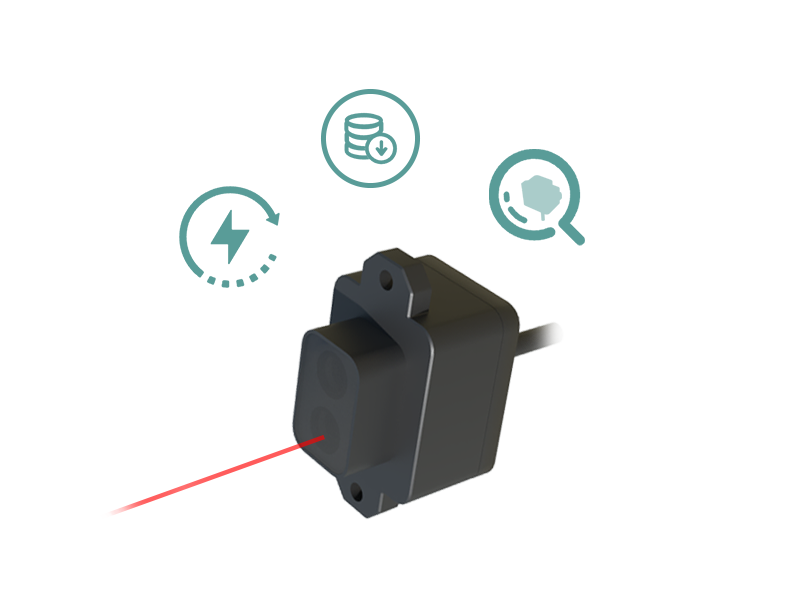
Industrial applications for these sensors are vast and critical across numerous sectors. In pharmaceutical manufacturing, they are indispensable for monitoring aerosol particle size in inhalers and for controlling powder granulation processes, ensuring drug efficacy and batch consistency. The automotive industry relies on them for real-time measurement of paint droplet size in robotic spray booths, optimizing coating quality and material usage. Environmental monitoring stations deploy laser scattering sensors in particulate matter (PM2.5, PM10) analyzers to assess air quality. In the food and beverage sector, they control the consistency of emulsions, monitor powder flow, and ensure the quality of products like milk or juice by detecting unwanted particulates. Furthermore, they play a vital role in chemical process plants for monitoring reactor contents and in semiconductor fabrication for detecting contamination in ultra-pure water and cleanroom air.
The advantages of laser light scattering sensors are compelling. They offer real-time, in-line measurement capabilities, eliminating the need for time-consuming offline laboratory sampling. Their non-invasive nature prevents sample alteration or process disruption. They deliver exceptionally high sensitivity and a wide dynamic range, capable of detecting particles from sub-micron to several hundred microns. Modern sensors are designed for harsh industrial environments, featuring rugged enclosures, robust window designs resistant to fouling, and integrated purge systems.
However, certain limitations and considerations must be acknowledged for effective deployment. The measurement can be influenced by the particle's refractive index, shape, and color. Highly concentrated samples may cause multiple scattering effects, necessitating dilution or the use of specialized optical models. Calibration against known standards is essential for quantitative analysis, and regular maintenance of optical surfaces is required to ensure long-term accuracy. The initial investment cost can be significant, though this is often offset by the substantial gains in product quality, yield, and process efficiency.
Future trends point toward miniaturization, enhanced computational power, and integration with Industry 4.0 frameworks. Smaller, solid-state sensor designs are enabling installation in previously inaccessible locations. Advanced algorithms, including machine learning, are improving the interpretation of complex scattering patterns from non-spherical or mixed-morphology particles. Connectivity via Industrial Internet of Things (IIoT) protocols allows for seamless data integration into plant-wide control systems, enabling predictive maintenance and fully automated process optimization. The convergence of laser scattering with other spectroscopic techniques also promises more comprehensive material characterization.
In conclusion, laser light scattering sensors are a powerful and versatile tool for industrial analytics. By harnessing the interaction between laser light and matter, they provide unparalleled insights into particulate and fluid processes. Their ability to deliver precise, real-time data makes them invaluable for ensuring quality, enhancing efficiency, and maintaining control in demanding production environments across the globe. As technology advances, their role in enabling smarter, more responsive manufacturing is set to expand even further.