In the rapidly evolving landscape of industrial automation and machinery, the demand for precise, reliable, and versatile sensing solutions has never been greater. Among the myriad of sensor technologies available, non-metallic miniature proximity sensors have emerged as a critical component, particularly in environments where traditional metallic sensors fall short. This article delves into the fundamental principles, key characteristics, and diverse applications of these sophisticated devices, offering a detailed perspective tailored for electrical engineers and industry professionals.
At its core, a non-metallic miniature proximity sensor is an electronic device designed to detect the presence or absence of an object without any physical contact. Unlike their metallic counterparts, which often rely on inductive or magnetic principles to detect metals, non-metallic variants are typically based on capacitive or ultrasonic sensing technologies. This fundamental distinction allows them to sense a wide range of materials, including plastics, glass, wood, liquids, and even granular substances, making them exceptionally versatile. The "miniature" designation refers to their compact form factor, often with housing dimensions as small as a few millimeters, enabling installation in space-constrained applications where larger sensors would be impractical.
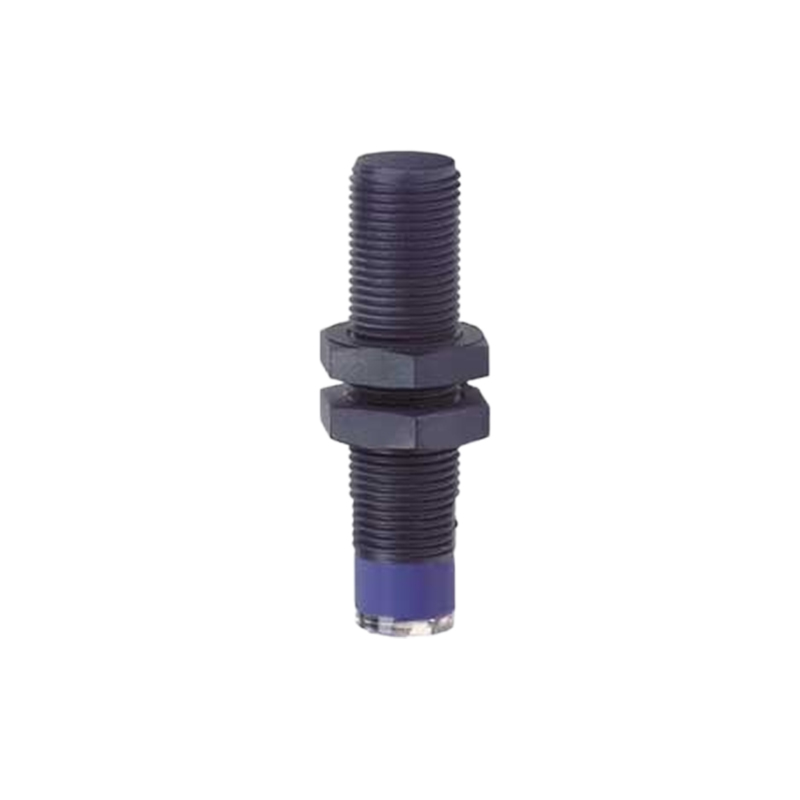
The operational principle of a capacitive non-metallic proximity sensor is based on changes in capacitance. The sensor generates an electrostatic field. When a target object enters this field, it alters the dielectric constant, leading to a detectable change in capacitance. This change is processed by the sensor's internal circuitry, triggering an output signal. This technology is highly effective for detecting non-conductive materials and is sensitive to factors like material density and moisture content. Ultrasonic variants, on the other hand, emit high-frequency sound waves and measure the time taken for the echo to return after reflecting off a target. This time-of-flight measurement allows for precise distance detection regardless of the target's material, color, or transparency, provided the object has adequate acoustic reflectivity.
Several key characteristics define the performance and suitability of these sensors. First is their sensing range, which, for miniature models, typically ranges from a few millimeters to about 30 millimeters, though some specialized models may offer longer ranges. The choice of sensing range is crucial and depends on the specific application requirements. Second is the output type. Common outputs include NPN, PNP (digital switching signals), analog current (4-20 mA), or analog voltage (0-10 V), allowing for seamless integration with Programmable Logic Controllers (PLCs) and other control systems. Third, the housing material is vital. Since the sensor itself is non-metallic, it is often constructed from robust engineering plastics like PBT, PPS, or PVDF. These materials offer high resistance to chemicals, oils, and corrosive substances, which is a significant advantage in harsh industrial environments such as food and beverage processing, pharmaceutical manufacturing, or chemical plants where metallic sensors could corrode or contaminate products.
Another critical feature is the environmental rating. High-quality non-metallic miniature proximity sensors often boast ingress protection ratings like IP67 or IP69K, indicating complete protection against dust ingress and the ability to withstand high-pressure, high-temperature washdowns. This makes them ideal for hygienic and clean-in-place (CIP) applications. Furthermore, their non-metallic construction inherently provides immunity to electromagnetic interference (EMI) and eliminates the risk of causing sparks, enhancing safety in potentially explosive atmospheres.
The applications for these sensors are vast and span numerous industries. In the packaging industry, they are used to detect transparent plastic films, labels, or the presence of liquid in bottles. In woodworking and furniture manufacturing, they reliably detect wooden panels or composite materials. The semiconductor and electronics industries utilize them for precise positioning of wafers, PCBs, and delicate components without risk of magnetic interference or physical damage. In automotive assembly lines, they monitor the presence of plastic parts, rubber seals, or fluid levels. Perhaps one of the most significant domains is the food and pharmaceutical sector. Here, their corrosion-resistant, hygienic design allows for direct contact with food products or sterile environments, detecting items on conveyor belts, monitoring fill levels in containers, or ensuring proper cap placement—all while meeting stringent FDA and EHEDG compliance standards.
When selecting a non-metallic miniature proximity sensor for a project, engineers must consider several factors. The material of the target object is paramount, as it directly influences the choice between capacitive and ultrasonic technologies. The required sensing distance, response speed, environmental conditions (temperature, humidity, exposure to chemicals), and the necessary electrical interface must all be evaluated. Additionally, mounting constraints and the required housing shape (threaded barrel, rectangular, or flat) play a crucial role in the final selection.
In conclusion, non-metallic miniature proximity sensors represent a pinnacle of specialized sensing technology. Their ability to reliably detect a broad spectrum of non-metallic materials in challenging environments, coupled with their compact and durable design, makes them indispensable in modern