In the realm of industrial automation and control systems, the terminology surrounding sensors can sometimes lead to confusion. A common question that arises among engineers and technicians is: Are proximity switches considered position sensors? The answer is nuanced and requires a clear understanding of the definitions, operating principles, and applications of both categories.
Fundamentally, a position sensor is a device that detects and reports the linear or angular position of an object relative to a reference point. This is a broad category encompassing various technologies like potentiometers, Linear Variable Differential Transformers (LVDTs), encoders (optical or magnetic), and yes, certain types of proximity sensors. The key function is to provide continuous or discrete information about where something is.
A proximity switch, also known as a proximity sensor, is a non-contact electronic device designed to detect the presence or absence of a target object within its sensing range without physical contact. They operate on principles such as electromagnetic induction (inductive type for metals), capacitance (capacitive type for various materials), or magnetism (Hall-effect or reed switch types). Their primary output is typically a simple ON/OFF digital signal.
So, where does the overlap occur? The distinction lies in the type of positional information provided.
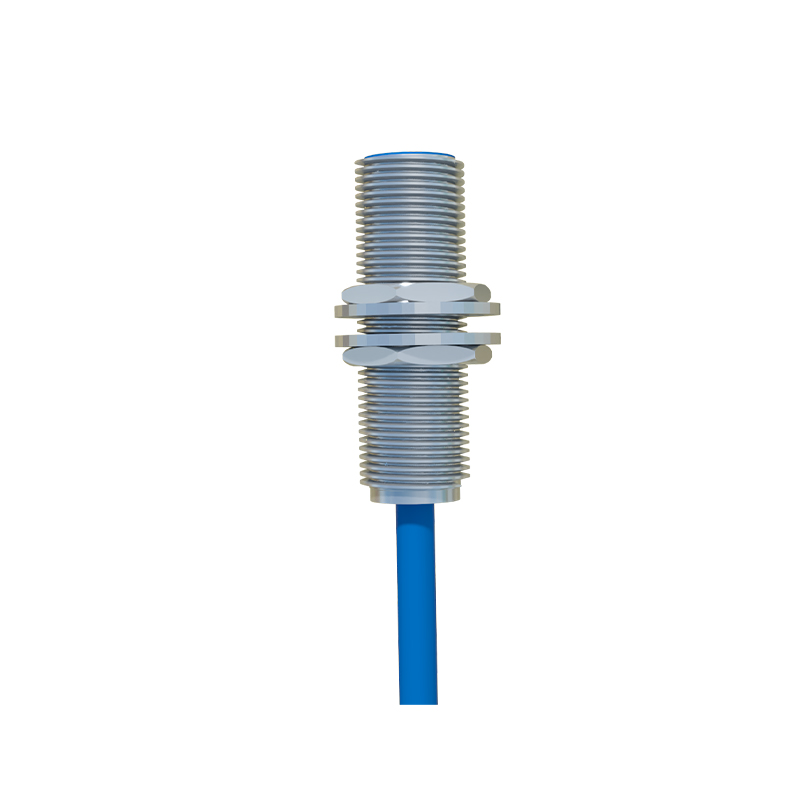
A standard inductive or capacitive proximity switch acts as a binary position sensor. It provides a discrete, go/no-go signal indicating whether an object is within a predefined detection zone. For instance, it can confirm if a metal part on a conveyor has reached a specific point for a robotic arm to actuate, or if a machine door is securely closed. In this context, it is absolutely functioning as a sensor that determines a specific positional state: "present at location X" or "not present at location X." It does not, however, tell you how far the object is, only that it has crossed a detection threshold.
Conversely, what many in the industry strictly define as a "position sensor" often refers to analog or continuous position sensors. These devices provide a variable output (e.g., 4-20mA, 0-10V, or a digital value) proportional to the distance or angle of the target. An ultrasonic or analog-output inductive proximity sensor can measure the precise gap between the sensor face and the target, functioning as a continuous distance-measuring device. This subtype of proximity sensor seamlessly falls into the position sensor category.
Therefore, the relationship can be summarized as follows:
All proximity switches are sensors that detect presence/absence based on position.
Not all proximity switches are continuous position sensors.
Standard (digital output) proximity switches are discrete or limit-type position sensors. They detect a specific positional condition.
Analog-output proximity sensors are unequivocally continuous position sensors.
From an application engineering perspective, the choice hinges on the required feedback. Use a standard proximity switch when you need a reliable, cost-effective solution for detecting end positions, counting objects, or verifying placement in automated machinery. They are robust, resistant to environmental contaminants, and ideal for high-speed counting or safety interlocking.
Specify a dedicated continuous position sensor (like an LVDT or encoder) or an analog proximity sensor when you require precise measurement of displacement, thickness, or runout, such as in spindle positioning, valve control, or thickness monitoring systems.
In conclusion, to the question "Are proximity switches position sensors?" the technically accurate answer is yes, but with a critical qualification. They are a vital subclass of position-sensing devices specialized for discrete, non-contact detection. Understanding this classification—recognizing the difference between discrete binary detection and continuous measurement—is essential for electrical engineers when selecting the correct component for system design, ensuring optimal performance, reliability, and cost-efficiency in any control or automation application. The operational principle does not negate its function; a proximity switch fundamentally senses the position of an object relative to itself, making it an indispensable tool in the broader position sensing toolkit.