In the dynamic world of live-action combat simulation, commonly known as paintball or airsoft, the integration of advanced laser sensor technology has fundamentally transformed the user experience, operational safety, and system reliability. As an electrical engineer specializing in sensor systems and recreational technology, I will delve into the core principles, design considerations, and practical implementations of laser sensors in this thrilling application.
At its heart, a laser tag or live-combat sensor system operates on the principle of photodetection. A player's weapon emits a modulated infrared (IR) or visible laser beam—typically in a safe, eye-friendly Class 1 or Class 2 power range—encoded with a unique digital signal. This signal contains information such as player ID, team affiliation, and shot strength. The target, worn by an opposing player, is equipped with an array of photodiodes or phototransistors. These semiconductor devices are sensitive to specific wavelengths of light. When the incoming laser pulse strikes the sensor array, the photodetector converts the light energy into a minute electrical current.
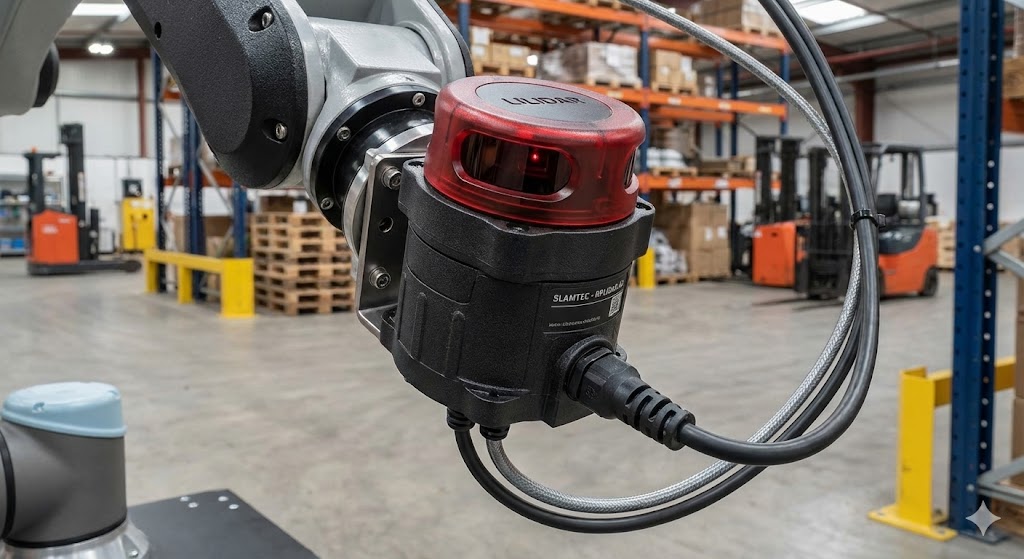
The critical engineering challenge lies not in mere detection, but in accurate discrimination. Ambient light from the sun or artificial sources creates significant noise. To overcome this, the transmitted laser signal is modulated at a high frequency (often in the kHz range) with a precise digital code. The receiver circuit includes a tuned amplifier and a filter that is synchronized to this specific modulation frequency. This design effectively rejects constant ambient light and random flashes, ensuring that only the intentional, coded laser "hit" is registered. Modern systems employ digital signal processing (DSP) microcontrollers to analyze the incoming signal pattern, verify its authenticity against a pre-programmed protocol, and debounce the input to prevent multiple registrations from a single, brief pulse.
From a hardware design perspective, robustness is paramount. These sensors are subjected to physical impacts, dust, moisture, and temperature variations. Therefore, sensor housings are made from impact-resistant polymers, with optical windows that are scratch-resistant and treated with anti-fog coatings. The sensor array is strategically placed on a vest or helmet to cover a wide acceptance angle, often exceeding 120 degrees, to ensure hits from various directions are detected. Redundant sensor placement is a common practice to maintain functionality even if one module is obstructed or damaged.
Power management is another crucial facet. Players are in motion for extended periods, so the sensor packs must be energy-efficient. Low-power microcontrollers, sleep modes that activate upon detecting motion or a nearby signal, and high-capacity lithium polymer batteries are standard. The system must provide clear, immediate feedback to the user—through audible buzzers, vibrating motors, and LED indicators—without draining the battery excessively.

The system architecture often extends beyond simple point-to-point interaction. Many advanced arenas implement a centralized mesh network using radio frequency (RF) communication, such as Bluetooth Low Energy (BLE) or proprietary 2.4 GHz protocols. Each player's pack acts as a node. When a sensor registers a hit, it wirelessly transmits this event data—including attacker ID, target ID, timestamp, and hit location—to a central server. This enables real-time game management, sophisticated scoring algorithms (e.g., variable damage based on weapon type or hit zone), mission objectives, and immersive audio-visual effects synchronized with the gameplay. This blend of laser sensing and RF data transmission creates a cohesive and interactive battlefield simulation.
Future advancements are leaning towards increased realism and data integration. We are seeing prototypes with inertial measurement units (IMUs) that can detect if a player is crouching or behind cover, potentially affecting sensor susceptibility. Integration with augmented reality (AR) visors could project tactical data or simulate environmental effects triggered by laser hits. Furthermore, the use of multiple wavelength lasers and more sophisticated encoding could allow for "different ammunition types" within the same game framework.

In conclusion, the laser sensors at the core of modern live-action combat systems are a sophisticated fusion of optoelectronics, embedded systems, and network engineering. They provide a safe, reliable, and highly engaging method for simulating combat, turning a physical activity into a data-rich interactive experience. For engineers, the continuous pursuit is towards greater accuracy, resilience, and seamless integration, pushing the boundaries of recreational technology.