In the realm of industrial automation and control systems, proximity sensors are indispensable components, providing non-contact detection of objects. For large-scale deployments, such as in automotive assembly lines, material handling systems, or packaging machinery, selecting the correct sensor specifications and models is critical for ensuring system reliability, efficiency, and safety. This guide delves into the key specifications, common model types, and selection criteria for proximity sensors in demanding, high-volume applications.
The core function of a proximity sensor is to detect the presence or absence of an object within its sensing range without physical contact. They primarily operate on principles such as inductive, capacitive, ultrasonic, and photoelectric sensing. For large-scale industrial use, inductive sensors are overwhelmingly prevalent for detecting metallic objects, while capacitive sensors handle non-metallic materials. Photoelectric sensors offer longer ranges and are ideal for diverse object detection, and ultrasonic sensors excel in harsh environments and level sensing.
Key specifications define a sensor's capability and suitability for a specific task. The sensing range, often denoted as Sn, is paramount. For inductive sensors in M18 or M30 housings, standard ranges might be 5mm, 8mm, or 15mm. For large-scale setups, consistency in sensing range across hundreds of units is vital to avoid misalignment issues. The switching frequency, measured in Hertz (Hz), indicates how quickly a sensor can detect objects passing by. High-speed applications, like bottling lines, require sensors with frequencies exceeding 1 kHz. The output type is another critical specification. Common configurations include NPN (sinking), PNP (sourcing), Normally Open (NO), or Normally Closed (NC) contacts. The choice depends on the control system's PLC input card requirements. For instance, a PNP NO sensor is a common industry standard.
Environmental ratings are non-negotiable for large-scale industrial environments. The Ingress Protection (IP) rating, such as IP67 or IP69K, defines the sensor's resistance to dust and water. Sensors in washdown areas (e.g., food & beverage) require IP69K. The housing material, typically nickel-plated brass, stainless steel (e.g., V4A/AISI 316L), or PBT plastic, must withstand chemicals, mechanical stress, and temperature extremes. Operating temperature ranges, often from -25°C to +70°C, ensure functionality in foundries or cold storage facilities.
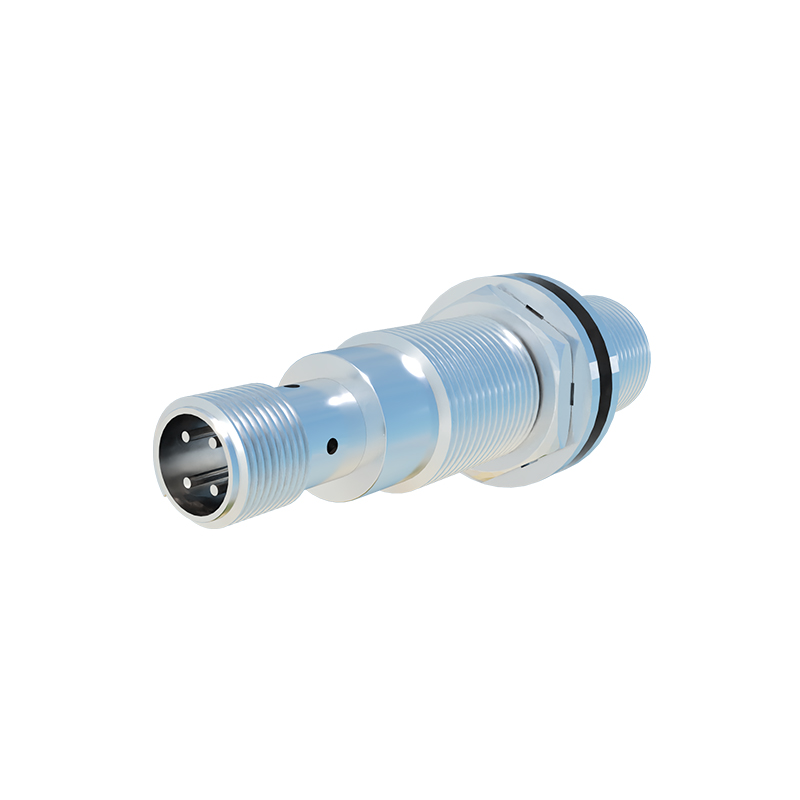
Electrical characteristics include the supply voltage range (commonly 10-30V DC for DC models), current consumption, and short-circuit and reverse polarity protection. For network-integrated large systems, sensors with IO-Link capability are becoming the norm. IO-Link allows for parameterization, remote diagnostics, and process data exchange, significantly reducing downtime during changeovers or troubleshooting across thousands of sensor points.
When discussing models, manufacturers like Siemens, Omron, Pepperl+Fuchs, Balluff, and IFM offer extensive series tailored for scale. A typical model number encodes these specifications. For example, an inductive sensor model might be "BNS816-EGU-2M-S4". Decoding this: "BNS" could be the series, "8" the housing size (M8), "16" the sensing range (16mm), "EGU" the electrical output (PNP, NO), "2M" the cable length, and "S4" the housing material (stainless steel). Understanding this nomenclature is essential for accurate procurement and replacement.
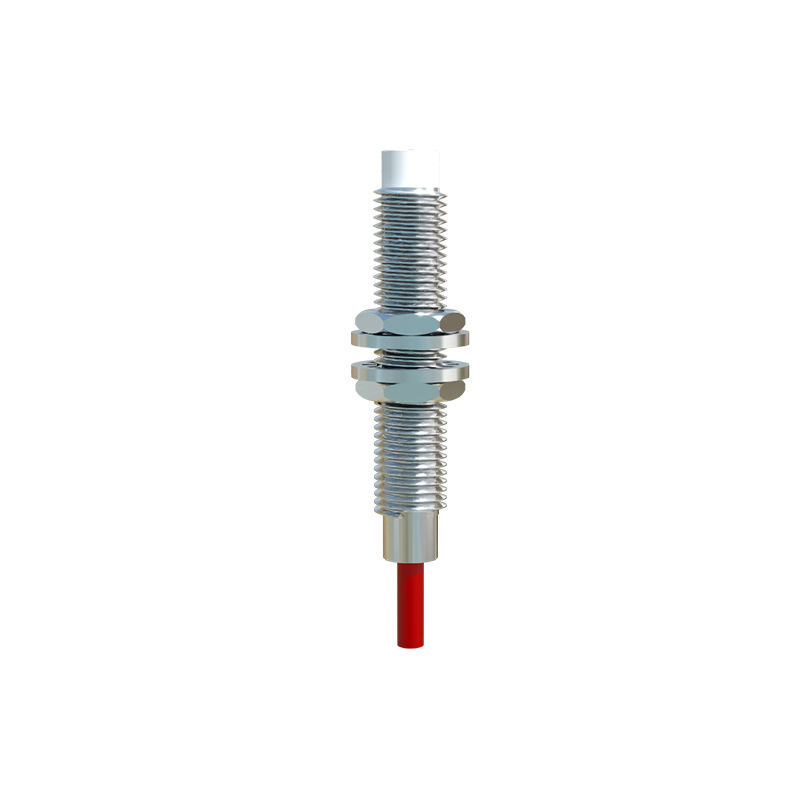
For photoelectric sensors, models differentiate by sensing mode: through-beam, retro-reflective, or diffuse. Through-beam models offer the longest range and highest reliability for counting or break-beam applications on conveyor lines. Diffuse models with background suppression are crucial for detecting objects at a precise distance, ignoring the conveyor belt behind them. Ultrasonic sensor models are specified by their beam angle and resolution, ideal for bulk material level control in silos or tank farms.
Selection for large-scale projects involves a systematic approach. First, define the application: target material (steel, plastic, liquid), required sensing distance, required speed (response time), and environmental conditions. Second, choose the sensing technology. Third, specify the mechanical form factor: barrel-style (M8, M12, M18, M30) or rectangular block, with or without built-in connectors (M12 connectors are industry-standard for quick replacement). Fourth, define the electrical interface. Finally, consider smart features like diagnostic LEDs (a crucial maintenance aid), teach-in functionality for easy range adjustment, and IO-Link for Industry 4.0 readiness.
In conclusion, specifying proximity sensors for large-scale industrial use is a detailed engineering task that balances performance, durability, and total cost of ownership. A deep understanding of specifications like sensing range, output type, IP rating, and model coding conventions enables engineers to design robust and