Inductive proximity sensors are fundamental components in modern industrial automation, renowned for their reliability, non-contact operation, and robustness in harsh environments. At their core, these sensors detect the presence or absence of metallic objects without physical contact, leveraging the principles of electromagnetic induction. This article delves into the operational theory, key components, and typical applications of inductive proximity sensors, providing a comprehensive overview for engineers and technicians in the electrical and automation fields.
The fundamental principle behind an inductive proximity sensor is based on Faraday's Law of Electromagnetic Induction and the behavior of an oscillating circuit. The primary component is a coil wound around a ferrite core, which is energized by an alternating current. This current generates a high-frequency oscillating electromagnetic field around the active face of the sensor. When a conductive metal object enters this field, eddy currents are induced on the surface of the target. These eddy currents draw energy from the oscillator circuit, resulting in a measurable change in the circuit's characteristics—specifically, a reduction in the amplitude of oscillation.
An internal detection circuit, often a Schmitt trigger or a similar comparator, continuously monitors the oscillation amplitude. Once the amplitude drops below a predefined threshold due to the energy loss from eddy currents, the circuit triggers a state change. This change typically controls a solid-state switch (like a transistor), altering the output signal of the sensor. The output can be either a switching signal (ON/OFF) or an analog signal proportional to the distance, depending on the sensor type. It is crucial to note that the sensor's effectiveness is influenced by the target material's properties. Ferrous metals (like iron and steel) cause a greater effect due to their magnetic permeability, which concentrates the magnetic field, while non-ferrous metals (like aluminum or copper) have a lesser but still detectable effect. Non-conductive materials, such as plastics or wood, do not generate eddy currents and are therefore not detected.
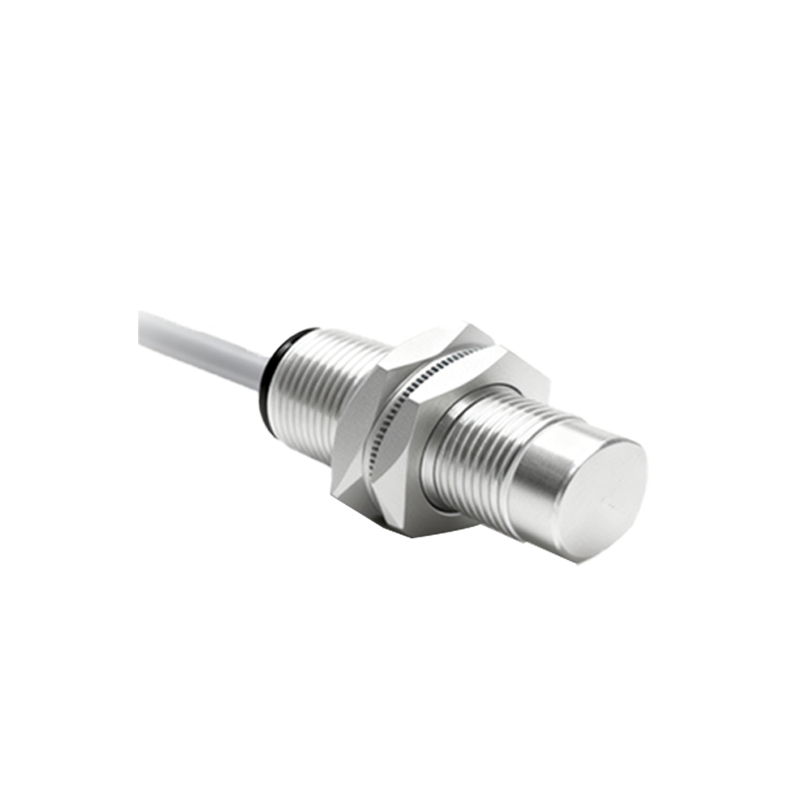
Key design elements include the sensing range, which is typically short (from a few millimeters up to about 60 mm for standard models) and is specified for a standard mild steel target. The housing is usually made of metal (like nickel-plated brass or stainless steel) or high-grade plastic to withstand industrial environments involving dust, moisture, and mechanical stress. These sensors are inherently self-contained, requiring no external moving parts, which contributes to their long service life and minimal maintenance needs.
In practical applications, inductive proximity sensors are ubiquitous. They are employed for precise position detection of machine parts, such as verifying if a cylinder is extended or retracted. They serve as limit switches in conveyor systems to count metallic objects or control sorting gates. In metalworking machinery, they ensure tool presence or monitor workpiece positioning. Their immunity to environmental contaminants makes them ideal for use in areas with oil, coolant, or dust, where optical sensors might fail.
When selecting an inductive sensor, engineers must consider factors like the target material, required sensing distance, electrical output type (e.g., NPN or PNP, NO or NC), supply voltage, and environmental ratings (IP67, IP69K for washdown areas). Proper installation is also vital; mounting the sensor flush or non-flush, and ensuring the correct lateral distance from other metal objects, prevents false triggering and ensures optimal performance.
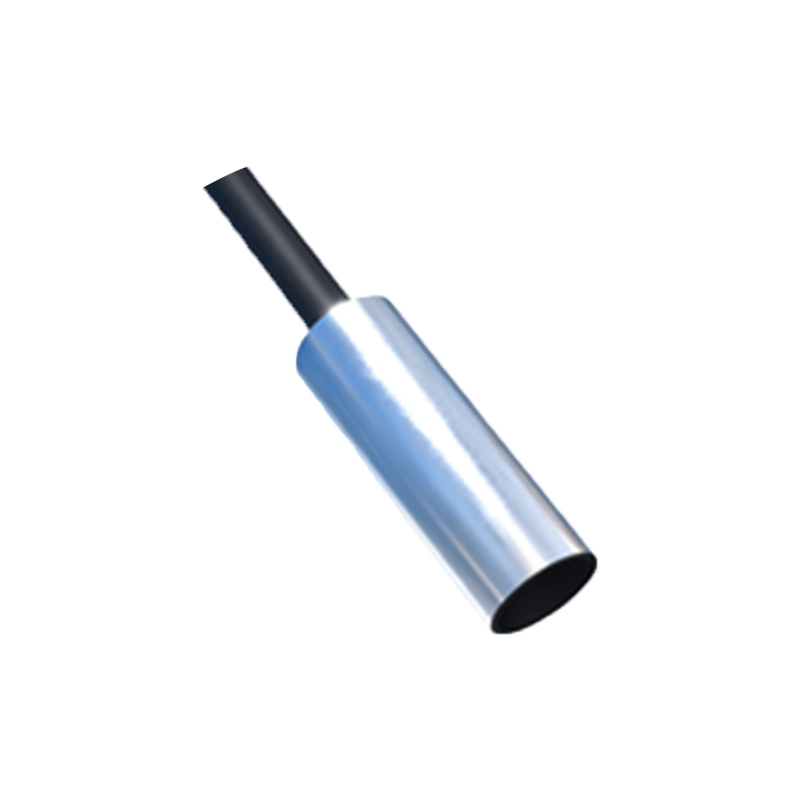
In summary, the inductive proximity sensor is a quintessential example of applied electromagnetism in industrial control. Its operation, rooted in the generation of eddy currents in metallic targets, provides a fast, wear-free, and highly reliable method for object detection. As automation systems evolve towards greater precision and resilience, understanding the underlying principle of these sensors remains essential for effective system design, troubleshooting, and optimization.