In the realm of industrial automation, the demand for reliable, efficient, and cost-effective sensing solutions is paramount. Among the diverse array of sensors available, the 2-wire 250V proximity sensor stands out as a fundamental component in countless control systems. This article delves into the operational principles, key advantages, and typical applications of these robust sensors, providing a comprehensive overview for engineers and system integrators.
A 2-wire 250V proximity sensor is a non-contact sensing device designed to detect the presence or absence of metallic objects without any physical contact. The "2-wire" designation refers to its simplified wiring scheme: it connects in series with the load, similar to a conventional switch, requiring only two wires for both power supply and signal output. This contrasts with 3-wire or 4-wire sensors that have separate power and signal lines. The "250V" rating indicates its capability to operate directly with higher alternating current (AC) voltages, commonly up to 250V AC, making it directly compatible with many industrial control circuits and programmable logic controller (PLC) inputs without the need for additional interfacing modules.
The core technology behind these sensors is typically based on electromagnetic induction for inductive types, which detect ferrous and non-ferrous metals. When a metal target enters the sensor's active field, it causes a change in the oscillation amplitude within the sensor's coil. This change is processed by the internal circuitry, which then switches the state of the output. In a 2-wire configuration, this switching action directly controls the current flow through the sensor's two wires. It is crucial to note that a small residual current, or leakage current, flows even when the sensor is in the "off" state. This characteristic must be considered during system design to ensure proper operation of the connected load.
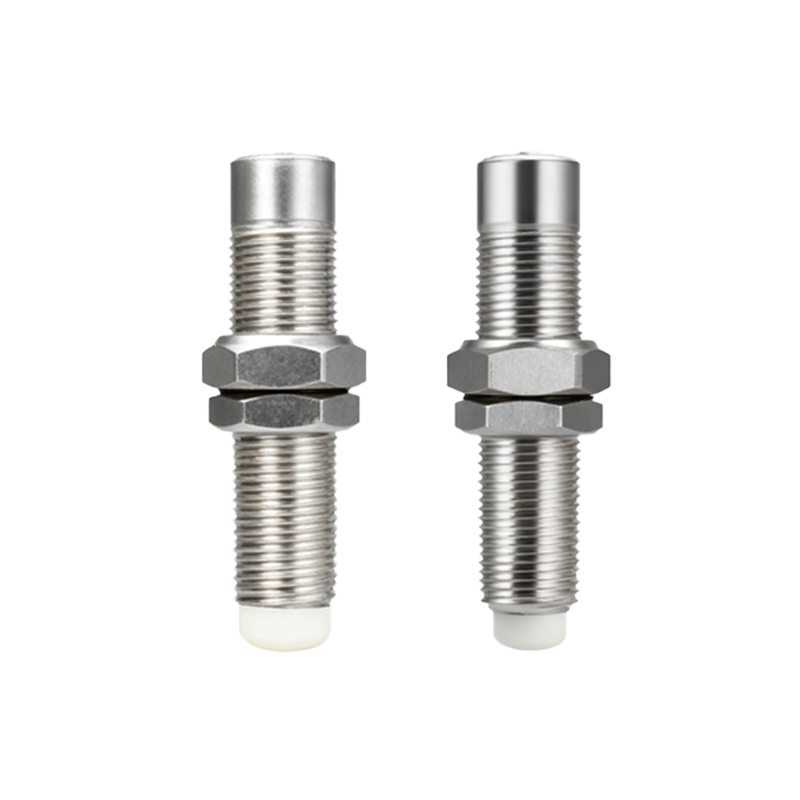
The primary benefits of utilizing 2-wire 250V proximity sensors are significant. First and foremost is simplified installation and reduced wiring costs. With only two wires to connect, installation time is minimized, panel space is saved, and potential wiring errors are reduced. This leads to lower overall system costs and easier maintenance. Secondly, their direct high-voltage compatibility eliminates the need for separate power supplies or signal converters when interfacing with standard AC control circuits. This plug-and-play capability with existing 120V/240V AC systems is a major advantage. Furthermore, these sensors are known for their robustness and durability. Housed in metallic or high-grade plastic casings, they are designed to withstand harsh industrial environments, including exposure to dust, moisture, oils, and mechanical vibrations. Their solid-state design ensures a long operational life with no moving parts to wear out.
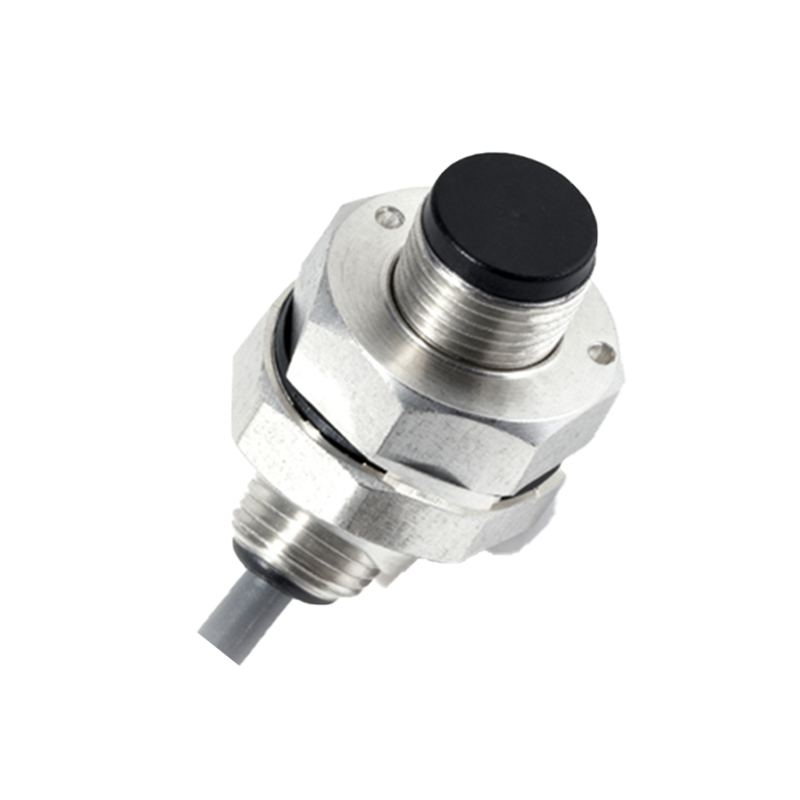
Typical applications for 2-wire 250V AC proximity sensors are widespread across manufacturing and processing industries. They are extensively used for position sensing—verifying if a cylinder is fully extended or retracted, confirming the presence of a part on a conveyor, or detecting the end of a travel limit. In machine safety, they can serve as interlock switches on guards or doors. They are also common in counting and sorting systems, object detection in packaging machinery, and level detection in material handling. Their ability to function reliably in dirty or wet conditions makes them ideal for foundries, automotive assembly lines, and woodworking facilities.
When selecting a 2-wire 250V sensor, several parameters require careful consideration. The sensing distance must be appropriate for the application, with a safety margin to account for mechanical tolerances. The housing material and shape (e.g., cylindrical, rectangular) should suit the mounting constraints and environmental conditions. The output function, normally normally open (NO) or normally closed (NC), must match the control logic. Additionally, attention must be paid to the leakage current specification to ensure it does not inadvertently activate the connected load, and the load current rating must not be exceeded. Proper shielding and grounding are also recommended in electrically noisy environments to prevent false triggering.
In conclusion, the 2-wire 250V proximity sensor represents a cornerstone of practical industrial sensing. Its simplicity, direct high-voltage interface, and proven reliability make it an indispensable tool for engineers designing and maintaining automated systems. By understanding its operating principles and application guidelines, professionals can leverage this technology to create more efficient, cost-effective, and robust automation solutions, ensuring seamless operation in demanding industrial settings.