In the rapidly evolving landscape of electrical engineering, proximity and ambient light sensors have emerged as indispensable components, driving innovation across a multitude of applications. These sophisticated devices, often integrated into compact modules, exemplify the seamless fusion of photonics, semiconductor technology, and intelligent signal processing. Their primary function is to detect the presence or absence of an object within a specific range without physical contact, and to measure the intensity of surrounding light, thereby enabling systems to adapt intelligently to their environment.
Proximity sensors typically operate on principles such as infrared (IR) light emission and reception, capacitive sensing, or ultrasonic waves. The most common type, the IR proximity sensor, consists of an IR LED and a photodiode. The IR LED emits a beam of infrared light. When an object enters the detection field, it reflects part of this light back to the photodiode. The sensor's integrated circuit then processes this signal to determine the object's presence and, in more advanced models, its approximate distance. This non-contact detection is crucial in applications where hygiene, mechanical wear, or safety are paramount. For instance, in modern smartphones, a proximity sensor deactivates the touchscreen during a call when the device is held near the ear, preventing accidental inputs and conserving battery life. In industrial automation, these sensors are vital for object counting, position verification, and as safety interlocks on machinery, ensuring operational precision and worker safety.
Ambient light sensors (ALS), on the other hand, are designed to measure the luminous flux or illuminance in a given environment. They typically utilize photodiodes that are sensitive to the visible light spectrum, often with filters to match the human eye's photopic response. The sensor converts the incident light into a corresponding electrical current, which is then digitized by an analog-to-digital converter (ADC). This digital value allows a microcontroller or system-on-chip (SoC) to dynamically adjust the brightness of displays, such as those on laptops, tablets, and automotive dashboards. This automatic adjustment, known as auto-brightness, significantly enhances user comfort by reducing eye strain in varying lighting conditions and contributes to substantial energy savings by minimizing backlight power consumption when full intensity is unnecessary.

The convergence of these two functionalities into a single sensor module represents a significant engineering advancement. Many modern integrated circuits combine a proximity sensor and an ambient light sensor into one package, sharing resources like the IR emitter for proximity sensing and utilizing separate photodiodes optimized for different spectral ranges. This integration reduces the footprint on printed circuit boards (PCBs), simplifies system design, and lowers overall bill-of-materials costs. Communication with a host processor is typically achieved through standard digital interfaces such as I²C (Inter-Integrated Circuit) or SPI (Serial Peripheral Interface), allowing for precise configuration and real-time data polling.
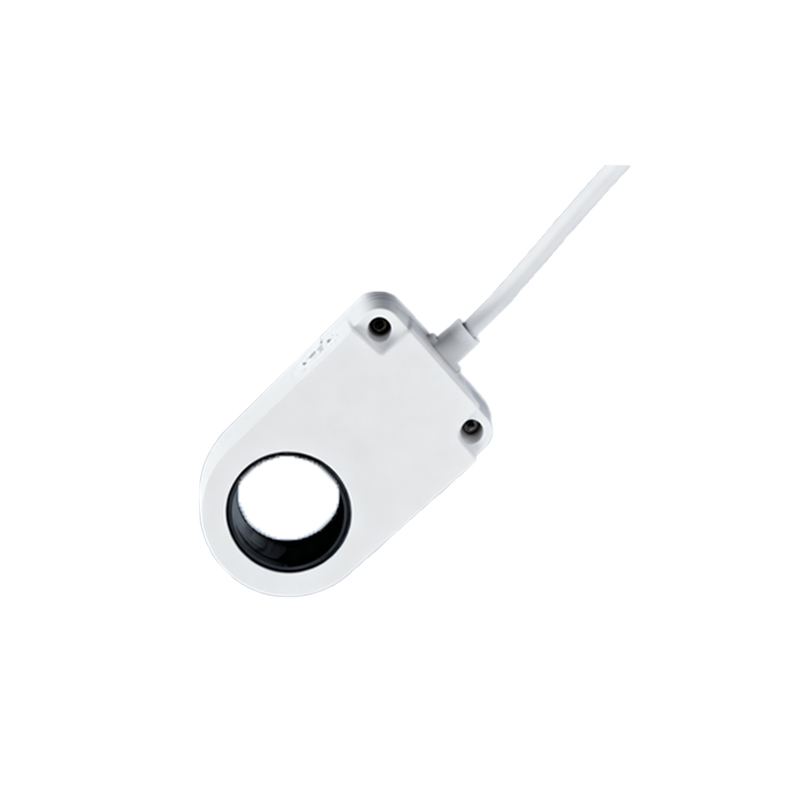
From a design and implementation perspective, engineers must consider several critical parameters. For proximity sensors, key specifications include detection range, response time, and immunity to ambient light interference. The sensor must be able to distinguish its own emitted IR signal from background IR noise, such as sunlight or artificial lighting. This is often managed through modulation techniques, where the emitted IR light is pulsed at a specific frequency, and the receiver is tuned to detect only that frequency. For ambient light sensors, the dynamic range, resolution, and spectral sensitivity are paramount. A sensor must accurately measure light levels from a dimly lit room (a few lux) to direct sunlight (tens of thousands of lux). Furthermore, the ability to reject infrared and ultraviolet components ensures that the measurement correlates accurately with human visual perception.
The applications for these sensors extend far beyond consumer electronics. In the automotive sector, they are integral to driver-assistance systems, enabling features like automatic headlight control and rain-sensing wipers that activate based on ambient light and moisture detection. In smart building management, ambient light sensors work in tandem with occupancy sensors to optimize HVAC and lighting systems, achieving remarkable energy efficiency. In the realm of the Internet of Things (IoT), low-power proximity and light sensors enable smart devices to become context-aware, waking from sleep modes when a user approaches or adjusting functionality based on environmental conditions.
Looking ahead, the development trajectory for proximity and ambient light sensors points toward even greater miniaturization, enhanced accuracy, and lower power consumption. Emerging trends include the incorporation of sensor fusion algorithms, where data from these light-based sensors is combined with inputs from accelerometers, gyroscopes, and other environmental sensors to create a more comprehensive understanding of the device's context. Furthermore, advancements in materials science, such as the use of organic photodiodes, promise sensors with flexible form factors and improved performance in specific spectral bands.
In conclusion, proximity and ambient light sensors are fundamental enabling technologies in contemporary electrical design. Their ability to provide reliable, non-contact environmental sensing empowers engineers to create products that are more intuitive, efficient, and