In the realm of industrial automation and control systems, proximity sensors are indispensable components for non-contact object detection. Understanding their standard structure is fundamental for electrical engineers involved in system design, integration, and maintenance. While variations exist based on sensing principles—inductive, capacitive, ultrasonic, or photoelectric—a core architectural framework is common across most standard proximity sensors.
The outermost layer is invariably the housing or body. This component is engineered from robust materials such as nickel-plated brass, stainless steel, or high-grade plastics like PBT. Its primary functions are to provide mechanical protection for the internal electronics, ensure environmental sealing (often rated IP67 or higher against dust and moisture ingress), and facilitate mounting. The housing geometry is typically cylindrical or rectangular, featuring threaded barrels or mounting brackets for secure installation. This rugged exterior is crucial for withstanding the harsh conditions of industrial environments, including vibration, mechanical shock, and exposure to coolants or oils.
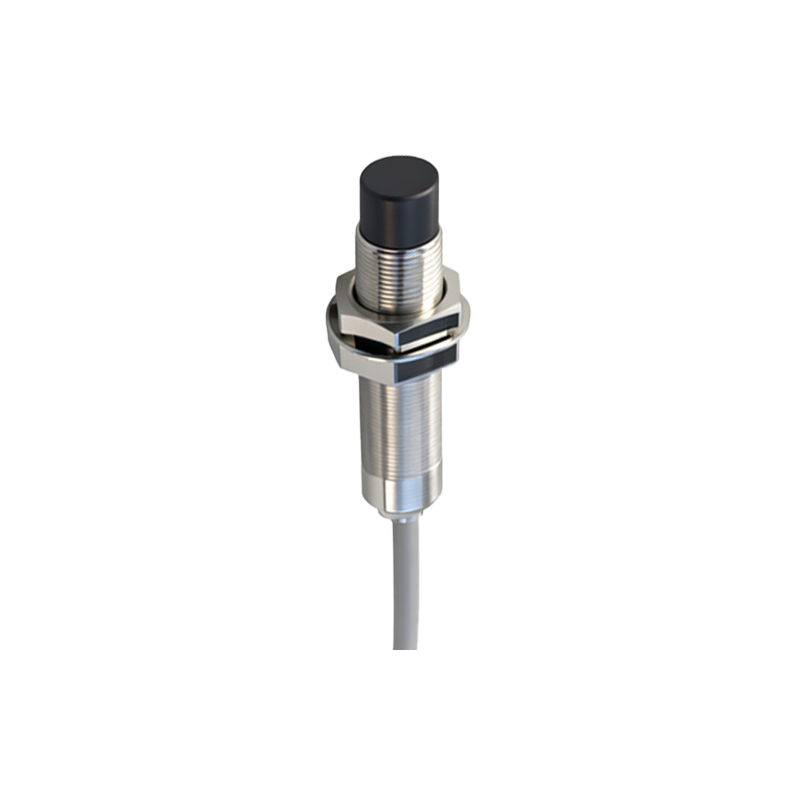
Protruding from the housing is the sensing face or active surface. This is the critical interface where the sensor's field interacts with the target. Its construction is meticulously designed to optimize performance. For inductive sensors, which detect metallic objects, the sensing face incorporates a ferrite core surrounded by a coil. This face is often made of a specialized polymer that allows the electromagnetic field to pass through while protecting the core. Capacitive sensors have a sensing electrode behind this face, which forms one plate of a capacitor. The material and thickness of this front cover are precisely calibrated to achieve the specified sensing range and minimize dead zones.
Beneath the protective shell lies the heart of the sensor: the oscillator and detection circuit. In an inductive proximity sensor, the oscillator generates a high-frequency electromagnetic field that emanates from the coil at the sensing face. When a metallic target enters this field, eddy currents are induced in the target, causing a change in the oscillation amplitude. The detection circuit, which includes a threshold trigger or Schmitt trigger, monitors this amplitude. Once the change exceeds a predefined threshold, it signals the presence of an object. Capacitive sensors operate on a similar principle but measure changes in capacitance caused by any material (conductive or non-conductive) altering the dielectric constant near the sensing electrode.
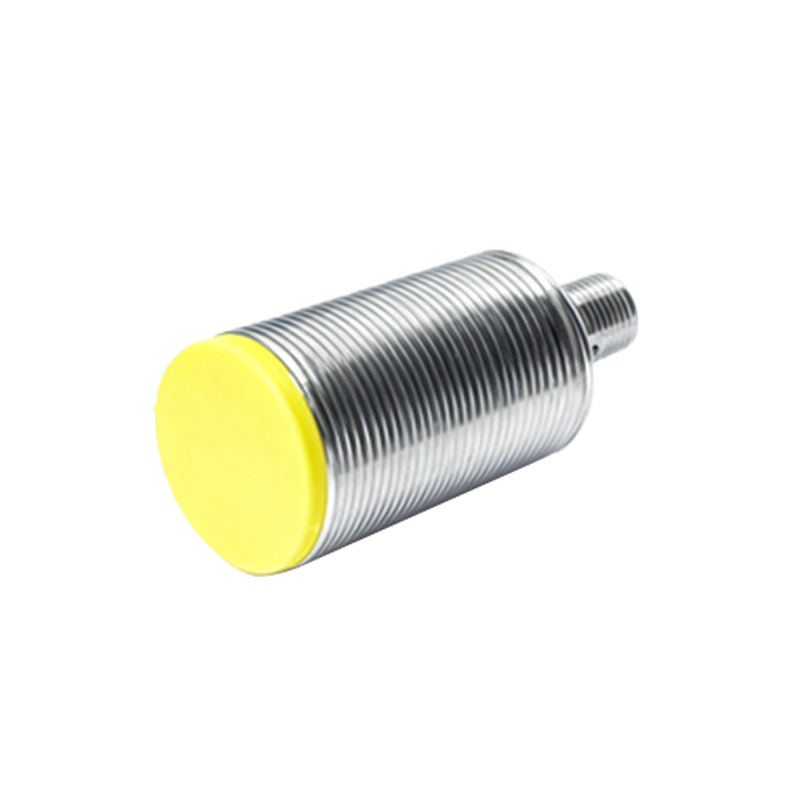
Integrated with the detection circuit is the output switching stage. This component translates the detection signal into a usable electrical output to interface with controllers like PLCs. The standard output configurations include transistor-based (NPN sinking or PNP sourcing), analog (4-20 mA or 0-10V), or sometimes relay outputs. For DC sensors, the output stage typically features a solid-state switch (MOSFET) for fast, wear-free operation. Protection elements like short-circuit, reverse polarity, and overload protection are integrated here to enhance reliability. The output is connected to the external control system via cable leads or a standardized quick-disconnect connector, commonly of the M8 or M12 type.
Power regulation is another internal cornerstone. A built-in voltage regulator ensures stable operation despite fluctuations in the supply voltage, which is typically 10-30V DC or 20-250V AC. This circuit filters noise and provides clean, regulated power to the sensitive oscillator and logic circuits, ensuring consistent sensing performance and immunity to electrical interference.
Finally, most modern standard proximity sensors include a status indicator, usually an LED. This light-emitting diode provides visual confirmation of power (often a green or constant LED) and output state (often an orange or yellow LED that illuminates when an object is detected). This simple feature is vital for quick diagnostics and commissioning on the factory floor.
In summary, the standard proximity sensor structure is a sophisticated synergy of mechanical robustness and electronic precision. From the rugged housing and optimized sensing face to the intricate oscillator, detection logic, protected output stage, and power regulation—each layer is purpose-built. This modular yet integrated architecture allows these sensors to deliver reliable, maintenance-free detection, forming the silent, unseen backbone of automated production lines and machinery. Mastery of this structure enables engineers to select, apply, and troubleshoot these devices effectively, ensuring optimal system performance.