In the realm of industrial automation and control systems, proximity sensors are indispensable components for detecting the presence or absence of objects without physical contact. Among the various types, two-wire and three-wire DC proximity sensors are the most prevalent, each offering distinct advantages and posing specific considerations for system design. This guide delves into their operational principles, wiring configurations, and key selection criteria to aid engineers and technicians in making informed decisions.
Fundamentally, both two-wire and three-wire proximity sensors operate on the same principle: they generate an electromagnetic field. When a metallic or, in some cases, non-metallic target enters this field, it causes a change in the oscillator's amplitude or frequency. This change is detected by the sensor's circuitry, which then triggers a switching action in the output stage. The core difference lies in how they are integrated into the control circuit and how they manage power consumption and voltage drop.
Two-Wire Proximity Sensors

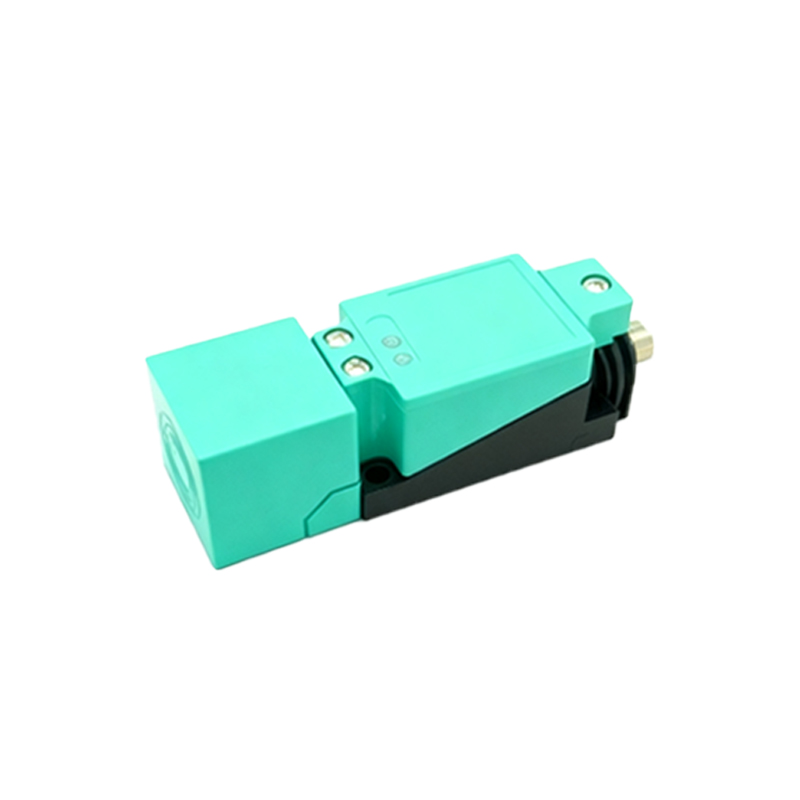
The two-wire sensor is the simpler of the two in terms of connection. It is wired in series with the load (e.g., a PLC input module, relay coil). One wire connects to the positive DC supply voltage, and the other wire connects to the load, which then returns to the negative side of the supply. This design mimics a standard switch, making it easy to replace mechanical limit switches. A significant characteristic is its inherent "leakage current" or "off-state current." Even when the sensor is in the off state (no target detected), a small current, typically less than 2 mA, flows through the circuit to power the sensor's internal electronics. This current must be considered to ensure it does not inadvertently activate a highly sensitive load. Conversely, when the sensor is on, it exhibits a voltage drop (typically 2-4V) across its terminals, which reduces the voltage available to the load. Engineers must verify that the residual voltage at the load is sufficient for reliable operation. Two-wire sensors are prized for their simplicity, reduced wiring costs, and suitability for applications where space is limited and a straightforward replacement for mechanical contacts is needed.
Three-Wire Proximity Sensors
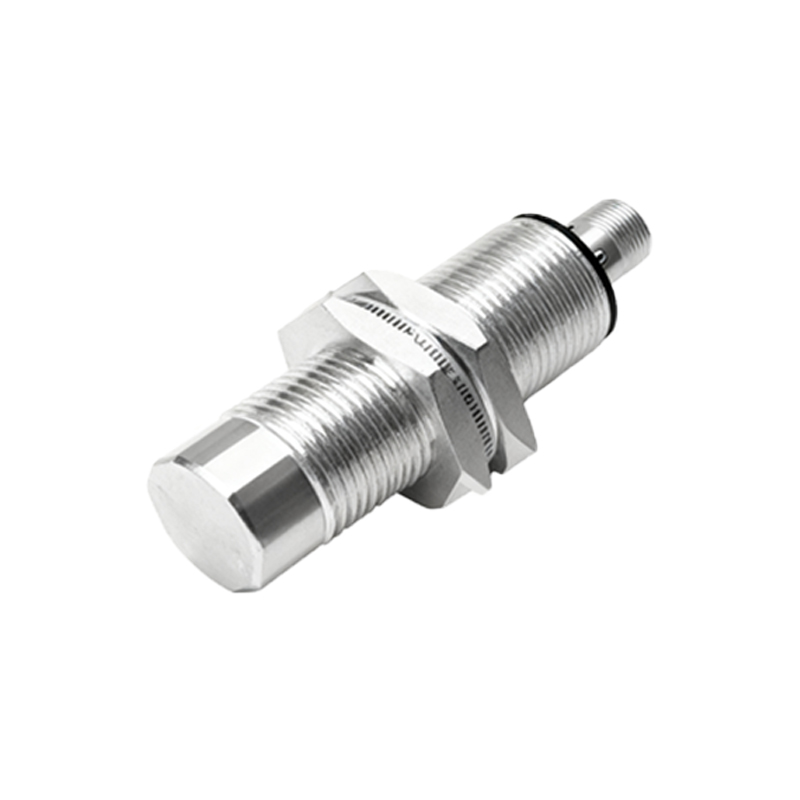
The three-wire sensor provides a more robust and flexible solution, separating the power supply lines from the switching output. It features three distinct wires: brown (or red) for positive supply voltage (+V), blue for common negative (0V), and black (or sometimes white or blue) for the output signal. This configuration allows for two output types: NPN (sinking) and PNP (sourcing). An NPN sensor switches the negative (0V) line to the load, while a PNP sensor switches the positive (+V) line to the load. This clear separation eliminates the off-state leakage current issue and minimizes the voltage drop on the load circuit, providing a much cleaner and more powerful switching signal. The load is connected between the output wire and the opposite supply rail (for PNP: load between output and 0V; for NPN: load between output and +V). Three-wire sensors are the standard for modern PLC systems due to their reliable, full-voltage switching capability. They allow for easier troubleshooting and are less susceptible to electrical noise interference in complex control panels.
Critical Selection Factors
Choosing between a two-wire and three-wire sensor involves several technical considerations:
1. Load Compatibility: For two-wire sensors, verify the load's minimum operating current is above the sensor's off-state current and its minimum operating voltage is below the supply voltage minus the sensor's on-state voltage drop. Three-wire sensors have no such restriction for standard digital inputs.
2. Wiring and Cost: Two-wire systems use less cable, which can reduce material and installation costs in large-scale applications. Three-wire systems, while requiring more wire, offer superior performance and reliability.
3. Output Configuration: Three-wire sensors offer a choice between NPN and PNP, which must match the input circuit of the controller (e.g., PLC). This is a crucial decision based on regional conventions and controller design.
4. Application Environment: In environments with high levels of electrical noise or where very low-power loads are used, three-wire sensors are generally preferred due to their superior noise immunity and lack of leakage current.
5. Fail-Safe Considerations: Some advanced three-wire sensors offer NO (Normally Open) and NC (Normally Closed) configurations, which can be critical for designing fail-safe circuits.
In conclusion, the choice between a two-wire and three-wire proximity sensor is not merely a matter of preference but a calculated engineering decision. Two-wire sensors offer simplicity and direct replacement for mechanical switches, ideal for basic on/off control with compatible loads. Three-wire