In the realm of industrial automation and control systems, proximity sensors are indispensable components for non-contact detection of objects. Among the various types available, the five-wire DC proximity sensor stands out for its unique configuration and reliable performance. This article delves into the operational principles, key advantages, typical applications, and critical selection criteria for these versatile sensors.
At its core, a five-wire DC proximity sensor operates on the principle of electromagnetic induction or, in the case of capacitive models, changes in capacitance. The most common type is the inductive sensor, which generates a high-frequency electromagnetic field from its active face. When a metallic target enters this field, eddy currents are induced in the target, causing a change in the oscillation amplitude within the sensor's coil. This change is detected by the internal circuitry, which subsequently triggers a switching action. The "five-wire" designation is crucial. Unlike simpler two-wire or three-wire sensors, a five-wire sensor typically features two wires for the power supply (usually a wide-range DC voltage like 10-30V DC), one wire for the normally open (NO) output signal, one wire for the normally closed (NC) output signal, and a fifth wire for the common reference or ground. This configuration provides both complementary output signals simultaneously, offering greater flexibility in control logic design.
The primary advantage of this dual-complementary output is enhanced system reliability and diagnostic capability. By monitoring both the NO and NC states, a control system can perform plausibility checks. For instance, if both outputs are active or inactive simultaneously, it can indicate a sensor fault or wiring issue, enabling predictive maintenance and reducing downtime. Furthermore, five-wire sensors often exhibit excellent noise immunity due to their separate signal and power lines, making them suitable for electrically noisy industrial environments found near large motors, welding equipment, or frequency drives. They also typically offer short-circuit and overload protection on the output side.
Applications for five-wire DC proximity sensors are widespread across manufacturing, packaging, material handling, and automotive assembly. They are frequently used for precise position detection of machine parts, such as confirming the open/closed status of a gripper or clamp, end-of-travel detection on linear actuators, and presence verification of metal workpieces on conveyor lines. Their dual outputs allow for direct control of different actions based on the target's presence or absence without additional logic controllers in simple setups. For example, the NO signal might start a process, while the NC signal could activate a safety warning light when the target is absent.
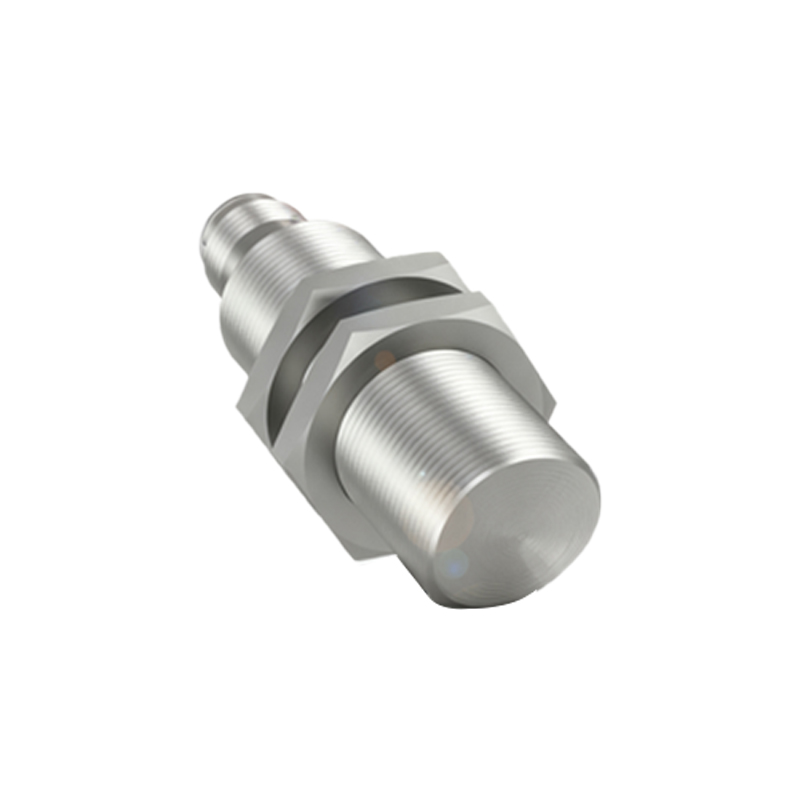
Selecting the appropriate five-wire DC proximity sensor requires careful consideration of several parameters. First, the sensing distance, or nominal range, must be chosen based on the application's mechanical constraints, typically allowing for a 10-20% derating for reliability. The target material is also critical; standard inductive sensors detect ferrous metals (like steel) at the rated distance but have a reduced range for non-ferrous metals (like aluminum or copper). The housing material (often nickel-plated brass, stainless steel, or PBT plastic) should be selected to withstand the environmental conditions, including exposure to coolants, oils, or washdowns. Key electrical specifications include the operating voltage range, output current capacity (ensuring it can drive the connected load, such as a PLC input or relay), and switching frequency for high-speed applications. Finally, the output configuration—whether sourcing (PNP) or sinking (NPN)—must be compatible with the control system's input module. Most five-wire sensors are available in both logic families.
Installation and wiring are straightforward but demand attention. Maintaining the proper clearance around the sensor head is essential to prevent false triggers from adjacent metal structures. The use of shielded cables is recommended in high-noise environments, with the shield grounded at the control panel end only. Regular maintenance involves keeping the sensing face clean from debris and metallic dust accumulation, which can reduce the effective sensing range.
In conclusion, the five-wire DC proximity sensor is a sophisticated and robust solution for demanding industrial sensing tasks. Its dual complementary outputs provide a layer of diagnostic intelligence and control flexibility that simpler sensors cannot match. By understanding their operating principles and meticulously matching their specifications to the application requirements, engineers can ensure reliable, long-lasting performance in automated systems, contributing to increased productivity and operational safety.