In the rapidly evolving landscape of automotive safety and driver assistance systems, reverse parking radar technology has undergone a significant transformation. While ultrasonic sensors have long been the standard for proximity detection during low-speed maneuvers, laser-based sensors are emerging as a sophisticated alternative, offering enhanced precision and functionality. This article delves into the technical principles, advantages, implementation challenges, and future outlook of laser sensors within reverse parking radar systems, tailored for automotive engineers and industry professionals.
At its core, a laser parking sensor operates on the principle of Time-of-Flight (ToF) or phase-shift measurement. The sensor emits a modulated laser beam, typically in the near-infrared spectrum, which is invisible and safe for human eyes. When this beam strikes an object within its field of view, it is reflected back to a photodetector within the sensor module. By precisely measuring the time delay between emission and reception (ToF) or the phase shift of the modulated signal, the sensor's onboard processor can calculate the distance to the object with remarkable accuracy, often within a few centimeters. This direct measurement contrasts with ultrasonic sensors, which rely on the speed of sound and can be more susceptible to environmental factors like temperature and wind.
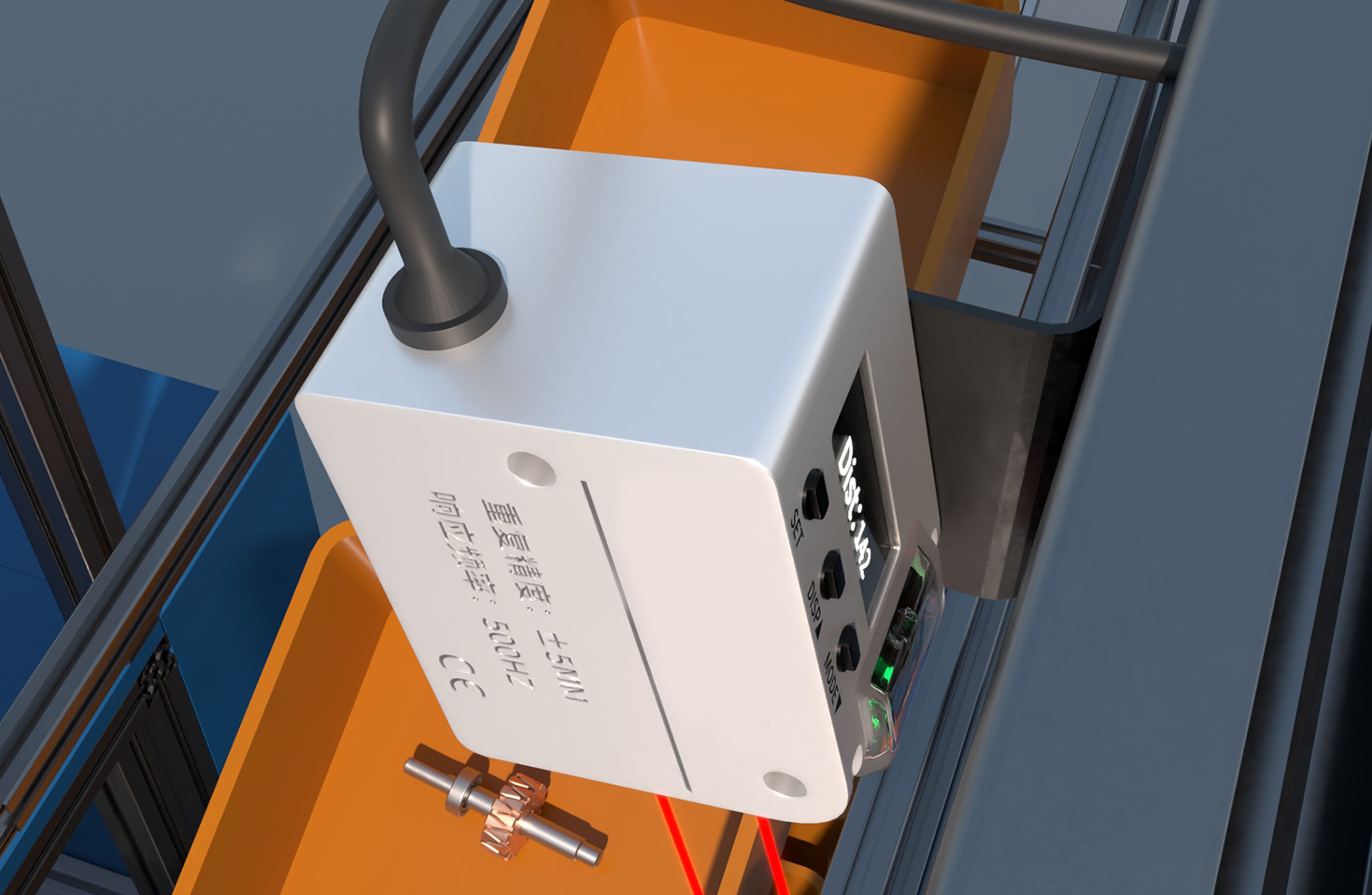
The technical advantages of integrating laser sensors into parking radar systems are compelling. First and foremost is superior spatial resolution and accuracy. Laser beams are highly collimated, allowing for precise targeting and the creation of detailed point-cloud maps of the vehicle's rear surroundings. This enables not just simple distance alerts but also the potential for object classification—distinguishing between a curb, a pole, or a child's bicycle. Secondly, laser sensors offer a longer effective range compared to typical ultrasonic systems, providing earlier warnings. Furthermore, they exhibit minimal susceptibility to acoustic noise and atmospheric conditions like rain or fog that do not heavily obscure the near-IR wavelength, though heavy precipitation remains a challenge. Their fast response time and ability to operate at higher vehicle speeds also make them suitable for integration into more comprehensive 360-degree surround-view monitoring systems.
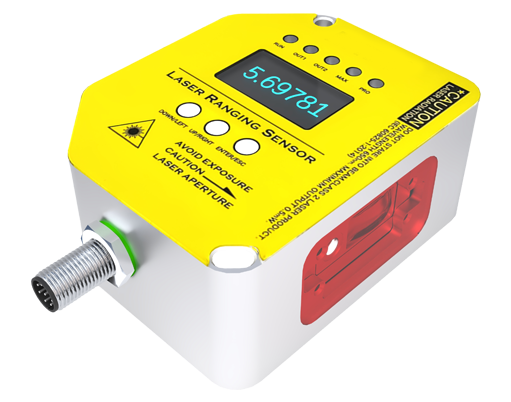
However, the path to widespread adoption is not without its engineering hurdles. The primary challenge is cost. Laser sensor modules, especially those using VCSEL (Vertical-Cavity Surface-Emitting Laser) arrays and sophisticated detectors, are currently more expensive to manufacture than ultrasonic transducers. Environmental robustness is another critical concern. While less affected by noise, laser sensors can suffer from performance degradation in adverse weather conditions such as heavy snow, dense fog, or when the lens is covered in dirt, ice, or grime. This necessitates robust housing designs, hydrophobic coatings, and potentially integrated cleaning mechanisms. Finally, system integration requires careful consideration of mounting locations, calibration procedures, and data fusion algorithms. Laser sensors must be seamlessly integrated with other vehicle systems like cameras, ultrasonic sensors, and the central ECU to create a redundant and reliable perception layer, a concept central to sensor fusion in ADAS (Advanced Driver-Assistance Systems).
From an implementation perspective, modern laser parking systems often employ a solid-state scanning approach or a static multi-beam array. This eliminates moving parts, enhancing reliability. The data output is typically a digital stream (e.g., via CAN FD or Automotive Ethernet) containing distance measurements and object metadata, which is processed by a dedicated parking assist control unit. This unit correlates data from multiple sensors, constructs an environmental model, and triggers appropriate warnings through visual displays on the infotainment screen and audible alerts.
Looking forward, the role of laser sensors in parking applications is set to expand within the broader context of autonomous driving. They are a key enabler for automated valet parking and high-precision maneuvering in tight spaces. As the cost of lidar technology continues to decrease due to advancements in automotive-grade solid-state lidar, we can expect to see hybrid systems where short-range lidar modules specifically designed for near-field perception complement or even replace traditional parking radar architectures. Furthermore, the evolution towards standardized sensor interfaces and more powerful domain controllers will simplify the integration of these high-fidelity sensors.
In conclusion, laser sensors represent a significant technological step forward for reverse parking radar systems. Their high accuracy, detailed environmental mapping, and speed of operation offer tangible benefits for vehicle safety and automated functionality. For automotive engineers, the task involves navigating the cost-performance trade-offs, solving environmental durability issues, and architecting systems that effectively fuse laser data with other sensor modalities. As the industry marches toward higher levels of vehicle automation, the precision offered by laser-based proximity detection will undoubtedly become an increasingly vital component of the vehicle's sensory suite, making parking safer, more precise, and eventually, entirely hands-free.