In the intricate world of industrial automation and control systems, proximity sensors stand as silent sentinels, enabling precise, non-contact detection of objects. While often discussed in broad terms, their application and selection criteria become highly specialized when considering environments metaphorically associated with the fundamental elements: water (hydraulic systems), wood (processing and material handling), and air (pneumatic systems). This article delves into the technical nuances of employing inductive, capacitive, and ultrasonic proximity sensors in these distinct domains, focusing on performance, environmental challenges, and selection best practices.
Within hydraulic systems, the "water" element presents a challenging environment characterized by high pressure, potential fluid immersion, and metallic component movement. Here, inductive proximity sensors are predominantly deployed. Their operating principle, based on generating an electromagnetic field to detect ferrous and non-ferrous metals, makes them ideal for monitoring piston position in hydraulic cylinders, detecting valve spool movement, or confirming the presence of metal fittings. Key considerations extend beyond mere detection. Sensors must be constructed with robust housings, typically stainless steel (e.g., V4A/AISI 316L), to withstand corrosive hydraulic fluids and high-pressure washdowns. IP ratings become critical; an IP67 rating is often a minimum, with IP69K being essential for systems requiring frequent high-pressure, high-temperature cleaning. Furthermore, the sensor's switching frequency must align with the often-high-speed reciprocation of hydraulic pistons. Shielding is another vital factor. In the dense metallic environment of a hydraulic power unit, shielded (flush-mountable) sensors are preferred to prevent side-activation from adjacent metal structures, ensuring accurate and reliable position feedback critical for system control and safety.
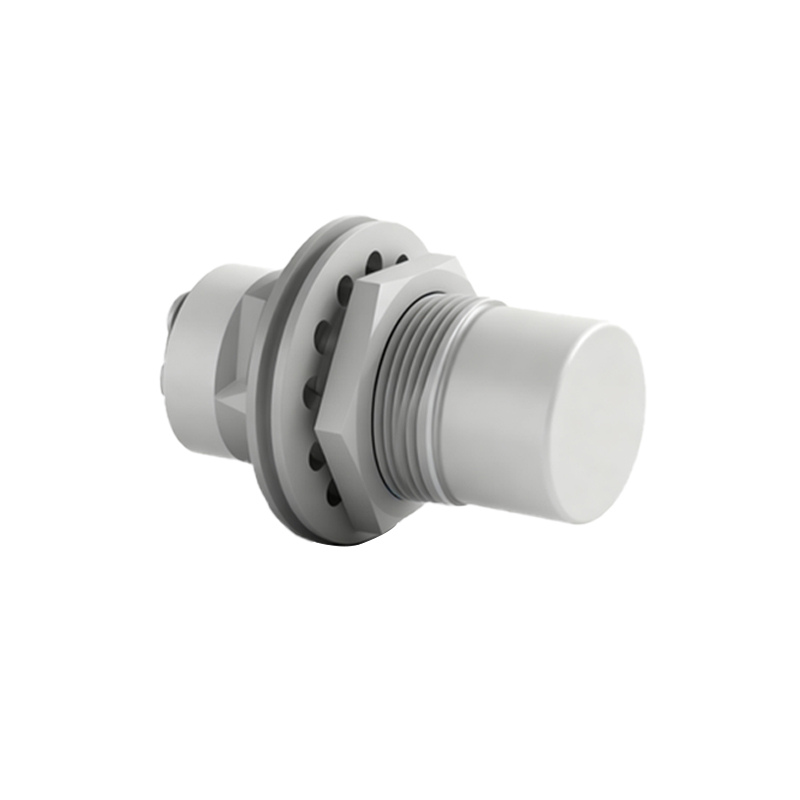
Transitioning to "wood" and general material handling, the application landscape shifts dramatically. Here, the target materials are typically non-metallic: wood panels, composite boards, plastics, and glass. Inductive sensors are ineffective here, making capacitive proximity sensors the technology of choice. These sensors generate an electrostatic field and detect changes in capacitance caused by the presence of any material, regardless of conductivity. In wood processing, they are indispensable for tasks such as monitoring board feed on conveyor lines, detecting stack height in automated palletizers, or ensuring proper material presence at saw or routing stations. However, their sensitivity, while a strength, is also a challenge. Capacitive sensors can be influenced by ambient humidity, dust accumulation (sawdust), and even variations in material density. Modern units address this with robust environmental compensation circuits and adjustable sensitivity potentiometers, allowing engineers to "tune out" background interference from conveyor belts or machine frames. Enclosure design is also tailored, often featuring polymer sensing faces resistant to impacts from rough lumber. For precise distance measurement in woodworking applications, such as controlling planer tool depth, laser-based or ultrasonic sensors may be employed for their higher accuracy over longer ranges.
The "air" element, representing pneumatic systems, shares some similarities with hydraulic applications but with distinct operational parameters. Pneumatic systems operate at lower pressures but often at higher cycle speeds. Inductive sensors again play a starring role in detecting the position of pneumatic cylinder pistons, often via built-in magnets in the piston and corresponding magnetic proximity sensors (reed or Hall-effect types). These tubular sensors are compact and easily integrated into cylinder bodies. The primary environmental concern is not fluid ingress but contamination from airborne particulates like dust, oil aerosols, and metal shavings common in factory air lines. Therefore, while high IP ratings for water resistance may be less critical, robust sealing against particulate matter (as indicated by IP6X dust-tight ratings) is paramount. Furthermore, in high-speed packaging or assembly lines powered by pneumatics, the sensor's response time must be exceptionally fast, often in the microsecond range, to keep pace with rapid cylinder actuation cycles. For detecting non-metallic objects in pneumatic feed systems, such as plastic pellets or rubber gaskets, capacitive sensors are similarly utilized, with careful shielding to ignore the metallic background of the vibratory bowls or tracks.
Selection transcends simply matching the target material. A holistic system integration approach is required. Engineers must evaluate the electrical requirements: NPN vs. PNP output configurations to match the PLC's input card, 2-wire vs. 3-wire vs. 4-wire (analog) designs, and voltage ratings (10-30V DC being standard). Connection methods, from quick-disconnect M8/M12 connectors to fixed cable outlets, impact maintenance and replacement ease. In all three environments—hydraulic, wood processing, and pneumatic—environmental robustness is the unifying theme. Resistance to shock, vibration, temperature extremes, and electromagnetic interference (EMI) from motors and drives is non-negotiable for ensuring long-term reliability and minimizing downtime.
In conclusion, the