In the world of automation and smart technology, the ability to detect the presence or absence of an object without physical contact is fundamental. This capability is provided by proximity sensors, a category of non-contact sensing devices. Among these, the quest for the smallest, most compact proximity sensor is driven by the increasing miniaturization of electronic devices and machinery. This article delves into the technology behind these sensors, their various types, and the critical factors in selecting the right one for an application.
Proximity sensors operate by emitting an electromagnetic field or a beam of radiation, such as infrared light, and then looking for changes in the field or return signal. The object being detected is often referred to as the sensor's "target." The primary advantage is the lack of physical contact, which eliminates mechanical wear and tear, allowing for higher reliability and longer operational life. They are also capable of high-speed operation, detecting objects that move rapidly.
Several technologies underpin proximity sensors, each with its own strengths and ideal use cases. Inductive proximity sensors are perhaps the most common for industrial applications. They generate an oscillating electromagnetic field. When a metallic target enters this field, it induces eddy currents within the target, which causes a change in the oscillation amplitude. This change is detected by the sensor's circuitry, triggering an output signal. These sensors are robust, resistant to environmental factors like dust and oil, and are excellent for detecting metals. However, they are generally limited to ferrous and non-ferrous metals and have a relatively short sensing range.
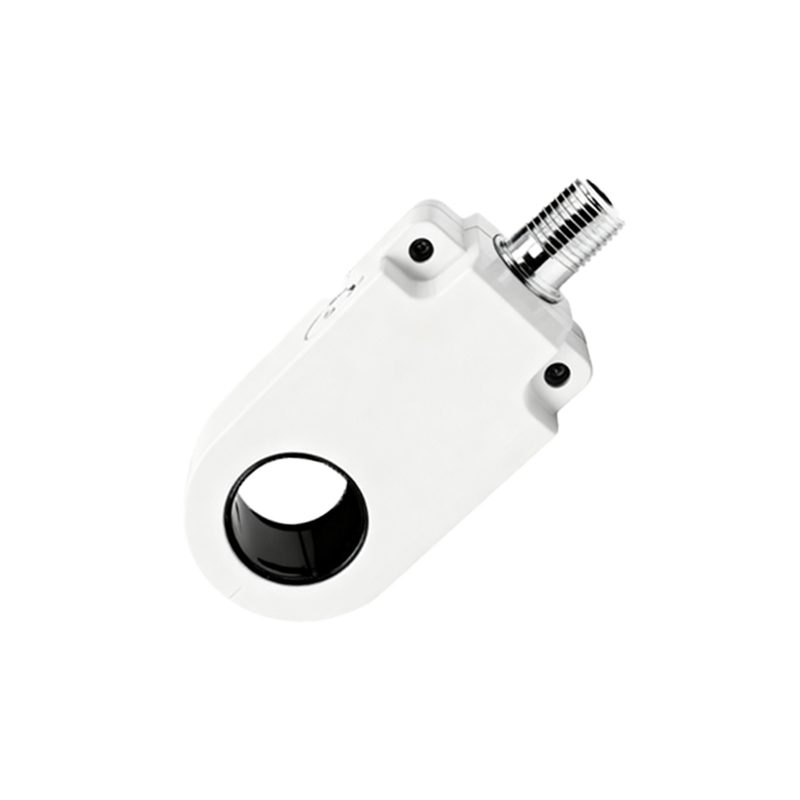
Capacitive proximity sensors, on the other hand, can detect both metallic and non-metallic materials, including liquids, powders, and plastics. They function by generating an electrostatic field. Any object that enters this field alters the capacitance of the sensor's circuit. This change is measured to detect the object's presence. This makes them versatile for applications like liquid level detection, material handling, and presence sensing of non-metallic objects. Their sensing range can be adjusted but is typically similar to inductive sensors.
For applications requiring longer sensing distances or detection of non-metallic objects where capacitive sensors might be less reliable, photoelectric sensors are often the choice. These sensors consist of a light emitter (usually an LED) and a receiver. They detect objects by either the interruption (beam-break) or reflection (reflective) of the light beam. Some advanced versions use time-of-flight calculations for precise distance measurement. While not always classified strictly as "proximity" sensors in all contexts, their function is analogous and they are crucial in packaging, assembly, and safety systems.
Ultrasonic sensors use sound waves beyond the human hearing range. They emit a pulse of ultrasonic sound and measure the time it takes for the echo to return from a target. This allows them to measure distance as well as detect presence. They are effective for detecting objects of virtually any material, shape, or color, and are used in level measurement, collision avoidance, and parking assistance systems.
The drive for miniaturization has led to the development of extremely small proximity sensors. These "micro" or "sub-miniature" sensors are essential in compact consumer electronics like smartphones and tablets, where they are used to disable the touchscreen when the device is held to the ear during a call. They are also critical in miniaturized robotics, medical devices, and precision assembly equipment. Creating a small sensor involves significant engineering challenges: maintaining a reliable sensing range and signal integrity while reducing the size of the coil (for inductive types) or the optical components (for photoelectric types). Advances in integrated circuit design and packaging have been key to this progress.
Selecting the smallest proximity sensor is not just about physical dimensions. Engineers must consider a balance of factors. The sensing range must be sufficient for the application, but a longer range often requires a larger sensor head. The target material dictates the sensor technology—inductive for metals, capacitive for a wider range, photoelectric for precise long-range detection. Environmental conditions are paramount; sensors may need to be resistant to washdowns, chemicals, extreme temperatures, or electromagnetic interference. The output type (e.g., digital NPN/PNP, analog) must be compatible with the control system. Finally, the mounting constraints and available space will ultimately determine the acceptable physical size.
In conclusion, proximity sensors are indispensable components in modern industrial and consumer applications. The smallest sensors represent the cutting edge of miniaturization, enabling smarter, more compact designs. Understanding the core technologies—inductive, capacitive, photoelectric, and ultrasonic—is the first step. A successful implementation requires a careful evaluation of the target, environment, required performance, and spatial constraints. By matching the right sensor technology and size to the application's specific demands, designers can achieve reliable, efficient, and non-contact detection, forming the silent, unseen backbone of automated systems.