Laser confinement sensors represent a critical advancement in industrial safety and automation, offering precise, non-contact detection capabilities essential for modern manufacturing environments. These sensors operate by emitting a laser beam that forms an invisible protective field or curtain around hazardous areas. When an object or person breaches this confined beam, the sensor triggers an immediate safety response, such as halting machinery or activating alarms. Unlike traditional mechanical guards or photoelectric sensors, laser confinement sensors provide a highly focused and adjustable detection zone, minimizing false triggers while ensuring robust protection.
The core technology relies on modulated infrared laser diodes and advanced receiver units. The laser beam is typically pulsed at specific frequencies, allowing the sensor to distinguish between ambient light and the actual beam interruption. This modulation enhances reliability in environments with variable lighting conditions, such as welding stations or outdoor applications. Modern variants incorporate self-checking diagnostics, continuously monitoring the integrity of the beam and system components to comply with safety standards like ISO 13849 and IEC 61496.
In practical applications, laser confinement sensors are deployed in robotic workcells, press brakes, and automated assembly lines. For instance, in automotive manufacturing, they safeguard workers near robotic arms by creating adaptive barriers that adjust to the robot’s movement patterns. The sensors’ high resolution enables detection of small objects, such as tools or fingers, at ranges up to several meters. Integration with Programmable Logic Controllers (PLCs) via interfaces like Ethernet/IP or PROFINET allows seamless communication within broader safety networks.
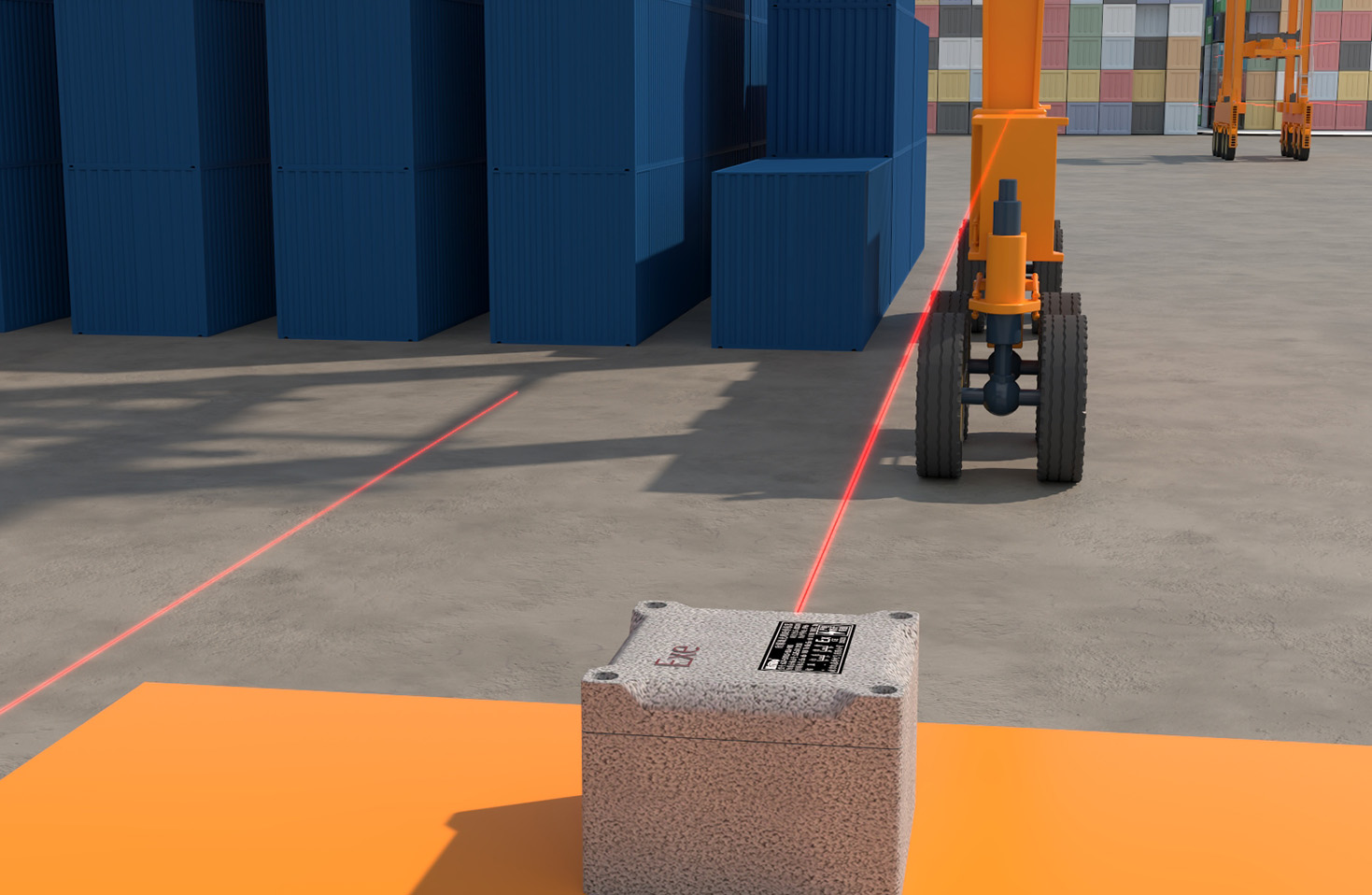
Key advantages include flexibility in configuration—users can define multiple zones or patterns via software—and resilience to contaminants like dust or oil, common in industrial settings. However, proper alignment and periodic maintenance are crucial, as misalignment can compromise safety. Emerging trends involve combining these sensors with AI-driven vision systems to predict intrusion risks and optimize production flow.
As industries embrace Industry 4.0, laser confinement sensors are evolving toward smarter, interconnected solutions. They not only prevent accidents but also contribute to operational efficiency by reducing downtime caused by false stops. For engineers, selecting the right sensor involves evaluating factors like detection range, response time, and environmental ratings. Ultimately, these devices exemplify how precision engineering can harmonize safety with productivity, paving the way for safer, more adaptive factories.
