Laser tracking sensors represent a critical technology in modern industrial automation, offering high-precision measurement and real-time tracking capabilities. These sensors are widely utilized across various sectors, including robotics, aerospace, automotive manufacturing, and quality control systems. Understanding their classification is essential for selecting the appropriate sensor for specific applications. This article delves into the primary categories of laser tracking sensors, their operational principles, and key considerations for implementation.
The first major classification is based on measurement principles. Time-of-Flight (ToF) sensors calculate distance by measuring the time taken for a laser pulse to travel to a target and back. They are suitable for long-range applications, such as large-scale metrology in shipbuilding or construction, where distances can exceed several meters. However, their accuracy may be affected by environmental factors like atmospheric conditions. In contrast, triangulation-based sensors use geometric principles to determine position by analyzing the angle of reflected laser light. These sensors excel in short to medium-range scenarios, providing micron-level precision ideal for assembly line inspection or robotic guidance. Another category includes interferometric sensors, which rely on wave interference patterns to detect minute displacements, often used in ultra-precise calibration tasks.

Secondly, laser tracking sensors can be categorized by their functionality. Single-point sensors focus on tracking one specific target, commonly employed in tasks like alignment or vibration monitoring. Multi-point or array sensors, on the other hand, can simultaneously track multiple objects, enhancing efficiency in complex environments like warehouse logistics or collaborative robotics. Additionally, some sensors integrate vision systems, combining laser data with camera imagery to offer enhanced spatial awareness and object recognition. This hybrid approach is gaining traction in smart manufacturing, where adaptability and data fusion are paramount.
The third classification revolves around application-specific designs. For instance, outdoor laser trackers are built with robust housings and environmental sealing to withstand dust, moisture, and temperature fluctuations, making them suitable for field operations in mining or agriculture. Indoor sensors, often used in controlled settings like laboratories or cleanrooms, prioritize high resolution and minimal interference. Furthermore, dynamic tracking sensors are engineered for high-speed applications, such as monitoring moving vehicles on production lines, while static sensors are optimized for stationary measurements in quality assurance.
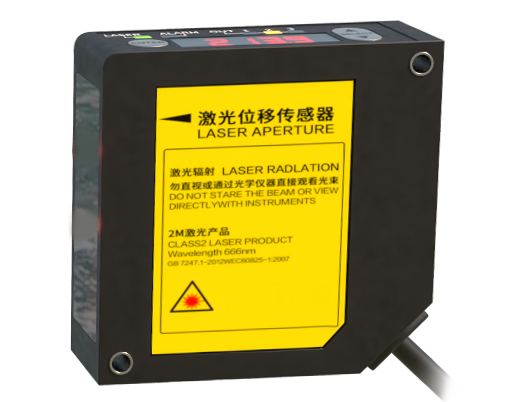
Key factors influencing sensor selection include accuracy requirements, range, response time, and environmental conditions. For example, in automotive welding, a triangulation sensor with fast response ensures precise seam tracking, whereas aerospace component inspection might demand an interferometric sensor for sub-micron accuracy. Integration with existing systems, such as PLCs or IoT platforms, is also crucial for seamless operation. As Industry 4.0 advances, laser tracking sensors are evolving with features like wireless connectivity and AI-driven analytics, enabling predictive maintenance and adaptive control.
In summary, laser tracking sensors are diverse tools tailored to industrial needs. By categorizing them based on measurement principles, functionality, and applications, engineers can make informed decisions to optimize performance and reliability. Future trends may include miniaturization, enhanced energy efficiency, and greater interoperability with digital twins, further expanding their role in automated ecosystems.
