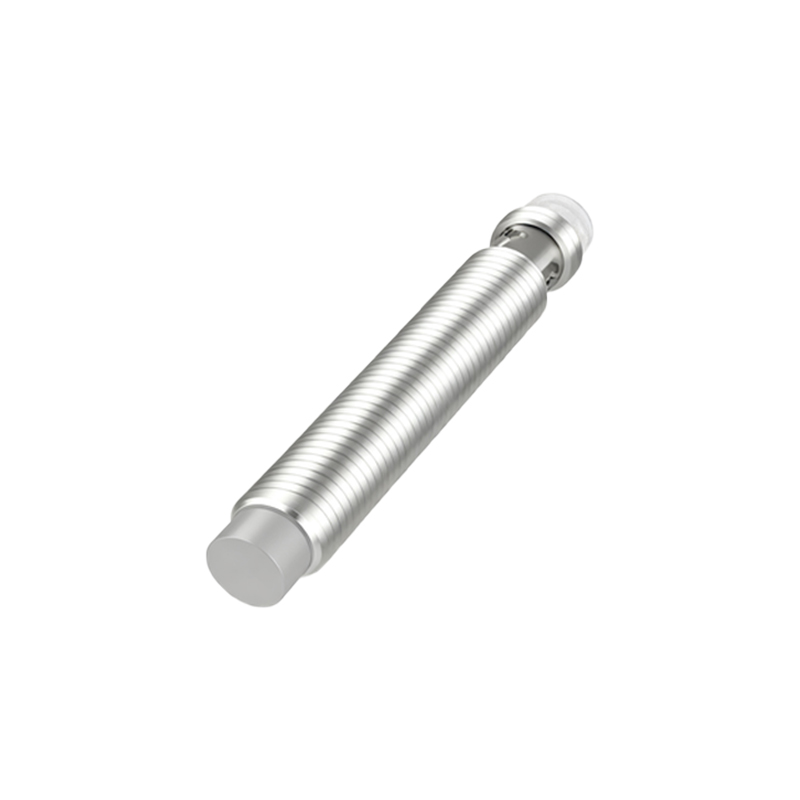
Inductive proximity sensors are fundamental components in modern industrial automation, designed specifically for the non-contact detection of metallic objects. Among their various applications, the detection of ferrous metals—primarily iron and steel—represents one of their most critical and widespread uses. This article delves into the operational principles, key characteristics, and practical considerations for employing inductive proximity sensors in detecting ferrous targets.
At its core, an inductive proximity sensor operates on the principle of electromagnetic induction. The sensor contains a coil wound around a ferrite core, which is part of an oscillator circuit. When an alternating current passes through this coil, it generates a high-frequency oscillating electromagnetic field at the active face of the sensor. When a conductive metal object, such as a piece of iron, enters this field, eddy currents are induced on the surface of the target. These eddy currents draw energy from the oscillator, resulting in a reduction of its oscillation amplitude. The sensor's internal circuitry monitors this amplitude change. Once the amplitude drop exceeds a predefined threshold—corresponding to the object being within the specified sensing distance—the sensor's output state switches, signaling the presence of the target.
For ferrous metal detection, these sensors exhibit distinct advantages. Ferrous materials, characterized by their high magnetic permeability, interact more intensely with the electromagnetic field compared to non-ferrous metals like aluminum or copper. This results in a significantly longer nominal sensing range for iron and steel. For instance, a standard sensor might have a sensing distance (Sn) of 5mm for steel. This value is typically the reference point, and the effective sensing distance for other materials is often expressed as a reduction factor relative to steel. The high permeability of ferrous metals also allows for more stable and reliable detection, even in the presence of surface contaminants like oil, dust, or coolants, as these non-conductive substances do not significantly interfere with the electromagnetic field.
Several technical specifications are paramount when selecting an inductive sensor for iron detection. The nominal sensing distance (Sn) is the theoretical range under standardized conditions for a defined target (usually a square of mild steel, 1mm thick, with sides equal to the sensor's diameter or three times Sn). The operating distance (Sr) is the practical range that accounts for manufacturing tolerances and temperature variations, typically 90% of Sn. Hysteresis, the difference between the switch-on and switch-off points, is crucial for preventing output chatter when a target is at the sensing limit. For ferrous detection, sensors often feature a high switching frequency, enabling them to detect rapidly moving parts on assembly lines or conveyor systems.
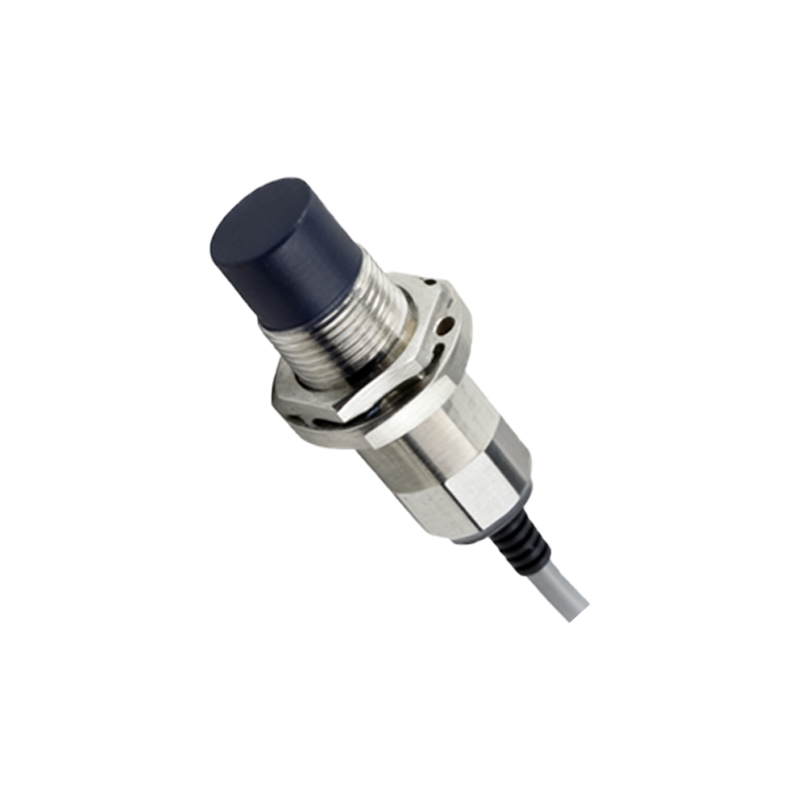
Installation and environmental factors require careful attention. Inductive sensors are susceptible to interference from external magnetic fields and other adjacent metal objects. To ensure accurate performance, manufacturers specify minimum lateral and flush-mounting distances. Installing a sensor too close to a metal mounting surface or another sensor can reduce its effective sensing range. Furthermore, while robust, sensors must be chosen with appropriate housing materials (e.g., stainless steel, nickel-plated brass, or PBT plastic) and ingress protection (IP) ratings (like IP67 or IP69K) to withstand harsh industrial environments involving washdowns, metal chips, and mechanical impacts.
Advanced sensor designs offer enhanced functionality for complex applications. Factor-1 sensors are calibrated specifically for all metals, providing the same sensing range for both ferrous and non-ferrous targets, simplifying inventory and application. Analog output sensors provide a continuous signal proportional to the distance to the target, useful for position monitoring. Additionally, weld-field immune models are engineered to resist the intense magnetic fields generated during resistance welding processes, a common requirement in automotive manufacturing where iron components are prevalent.
In conclusion, inductive proximity sensors are exceptionally well-suited for the reliable, non-contact detection of ferrous metals. Their operation, based on the generation of eddy currents, offers a robust solution that is largely unaffected by non-conductive environmental factors. By understanding the principles of electromagnetic induction, key specifications like sensing distance and hysteresis, and critical installation guidelines, engineers can effectively integrate these sensors into automated systems for tasks ranging from simple part presence verification to complex position control, ensuring efficiency and reliability in the detection of iron and steel components.