In the realm of industrial measurement and process control, achieving accurate, non-contact temperature readings is paramount for efficiency, safety, and product quality. Laser temperature sensors, often referred to as infrared (IR) thermometers or pyrometers, have become indispensable tools across numerous sectors. This article delves into the operating principles, key applications, and critical factors for selecting the right laser temperature sensor for your specific needs.
Fundamental Operating Principle
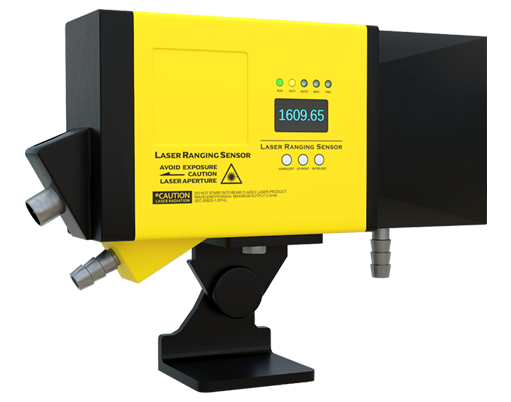
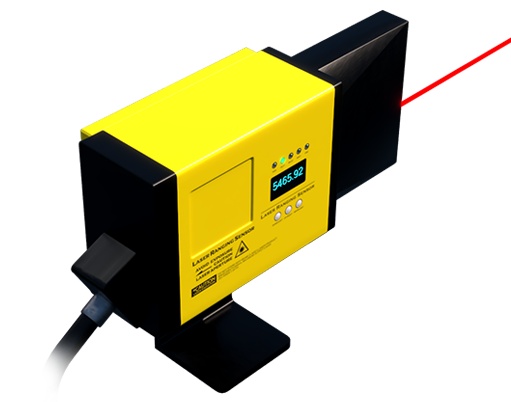
At their core, laser temperature sensors operate on the principle of detecting infrared radiation emitted by all objects above absolute zero. The amount and wavelength of this radiation are directly related to the object's surface temperature, as described by Planck's law and the Stefan-Boltzmann law. The sensor's optics collect this emitted IR energy and focus it onto a detector. This detector, typically a thermopile, photodiode, or other semiconductor device, converts the radiant energy into an electrical signal. This signal is then processed, compensated for ambient conditions, and translated into a temperature reading displayed on the unit. The integrated laser sighting dot is purely for aiming purposes; it does not measure temperature. Its function is to indicate the center of the measurement spot, ensuring the sensor is pointed at the correct target area.
Key Advantages Over Contact Methods
The non-contact nature of laser thermometry offers significant benefits. It allows for temperature measurement of moving objects, such as conveyor belts, rotating machinery, or fast-moving web processes, without physical interference. It is ideal for measuring surfaces that are hazardous, difficult to access, or where contact would contaminate the product (e.g., in food processing or cleanrooms). Furthermore, it enables rapid response times, capturing temperature changes in milliseconds, which is crucial for monitoring dynamic thermal processes. It also prevents sensor wear and damage from hostile environments like extreme heat, corrosive substances, or high-voltage applications.
Primary Industrial Applications
The versatility of laser temperature sensors makes them suitable for a wide array of industries:
* Manufacturing & Metal Processing: Monitoring furnace temperatures, checking molten metal temperatures, controlling welding and heat-treating processes, and inspecting formed parts.
* Building Diagnostics & Energy Audits: Identifying heat loss points, detecting insulation deficiencies, locating moisture intrusion, and assessing HVAC system performance.
* Automotive: Diagnosing engine performance issues, checking brake disc temperatures, and evaluating exhaust system components.
* Electrical & Electronics: Troubleshooting electrical panels for hot connections, monitoring transformer temperatures, and inspecting circuit boards for overheating components.
* Food Safety & Processing: Ensuring proper cooking, holding, and storage temperatures without contaminating products, and monitoring refrigeration units.
* Research & Development: Providing precise thermal data in laboratory settings for material testing, prototype evaluation, and process development.
Critical Selection Parameters
Choosing the correct sensor is not a one-size-fits-all endeavor. Several technical parameters must be considered:
1. Temperature Range: Ensure the sensor's specified range comfortably covers the minimum and maximum temperatures you need to measure.
2. Spectral Response (Emissivity): Different materials emit IR radiation differently. The sensor must be matched to the target material's emissivity, a value between 0 and 1 that indicates its efficiency as an IR emitter. Many modern sensors allow for adjustable emissivity settings.
3. Optical Resolution (Distance-to-Spot Ratio D:S): This ratio determines the size of the measurement area at a given distance. A high ratio (e.g., 50:1) means you can measure a small spot from a farther distance, which is critical for small targets or distant objects.
4. Response Time: The speed at which the sensor reacts to a temperature change. Faster response times (e.g., 150 ms) are needed for rapidly changing processes.
5. Environmental Conditions: Consider the operating environment. Factors like ambient temperature extremes, dust, steam, or electromagnetic interference may necessitate sensors with protective housings, air purging, or water-cooling jackets.
6. Output & Connectivity: Determine the required output signal (e.g., 4-20 mA, 0-10 V, thermocouple simulation, or digital protocols like Modbus) for integration into data loggers, PLCs, or control systems.
Installation and Best Practices
For reliable measurements, proper installation and usage are essential. Always ensure the sensor's lens is clean and free of obstructions. Aim perpendicular to the target surface whenever possible, as angled measurements can be inaccurate. Be aware of and minimize the effects of environmental IR sources, such as reflected sunlight or background heat. For accurate readings, it is often necessary to know and correctly set the emissivity value for the target material. Regular calibration against a known reference source is recommended to maintain measurement integrity over time.
In conclusion, laser temperature sensors are powerful, flexible instruments that solve complex thermal measurement challenges. By understanding their underlying technology, recognizing their advantages, and carefully evaluating the selection criteria against your application's demands, engineers and technicians can effectively leverage these tools to enhance process control, ensure safety, and optimize operational efficiency across countless industrial and scientific fields.