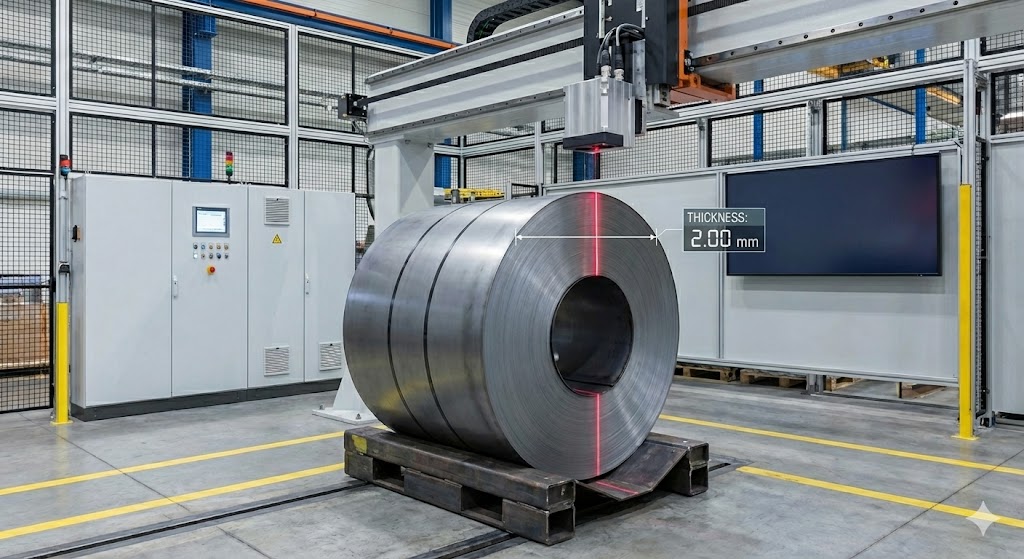
Laser distance sensors have become indispensable tools across a wide range of industries, from manufacturing and construction to robotics and logistics. These devices offer unparalleled precision, speed, and reliability in non-contact measurement, driving efficiency and quality control in complex applications. As demand grows for smarter automation and data-driven processes, the companies that design and produce these advanced sensors are at the forefront of technological innovation. This article explores the landscape of leading laser distance sensor manufacturers, their core technologies, and the transformative impact of their products on modern industrial operations.
The fundamental principle behind laser distance measurement is often based on time-of-flight (ToF), phase-shift, or triangulation methods. ToF sensors calculate distance by measuring the time it takes for a laser pulse to reflect off a target and return, ideal for long-range measurements. Phase-shift sensors analyze the modulation phase of a continuous laser wave, providing high accuracy for medium ranges. Triangulation sensors use a laser point and a receiver at a known angle to determine distance, excelling in short-range, high-precision applications. Leading manufacturers continuously refine these technologies, enhancing resolution, reducing measurement times, and improving performance in challenging environments like varying ambient light or on reflective surfaces.
Several key players dominate the global market for laser distance sensors, each with distinct strengths and specializations. Companies like KEYENCE, SICK AG, and Banner Engineering are renowned for their robust sensor portfolios tailored for factory automation. KEYENCE’s IL series, for instance, is celebrated for its ultra-fast sampling rates and compact design, enabling precise inspection in high-speed assembly lines. SICK AG, a pioneer in sensor intelligence, offers devices with integrated evaluation capabilities, suitable for complex positioning and monitoring tasks in logistics and automotive sectors. Banner Engineering focuses on user-friendly, durable sensors that perform reliably in harsh industrial conditions, often incorporating intuitive setup interfaces.
Beyond these giants, innovative firms such as Leuze electronic, Baumer, and Omron are pushing boundaries with specialized solutions. Leuze electronic excels in safety-related distance measurement for automated guided vehicles (AGVs) and robotic systems, ensuring both operational efficiency and personnel safety. Baumer is noted for its high-precision analog and digital output sensors used in semiconductor manufacturing and precision engineering. Omron integrates sensing with control systems, providing seamless connectivity for Industry 4.0 applications. These manufacturers invest heavily in R&D to address emerging needs, such as miniaturization, increased energy efficiency, and enhanced connectivity via IO-Link or Ethernet protocols.

The applications of laser distance sensors are vast and continually expanding. In automotive manufacturing, they ensure precise component alignment and gap measurement. In construction, handheld laser distance meters from companies like Bosch and Leica Geosystems streamline surveying and layout work. Within logistics, sensors enable accurate parcel dimensioning, palletizing, and warehouse inventory management by measuring object sizes and positions in real-time. Robotics heavily relies on these sensors for navigation, object detection, and precise manipulation, allowing collaborative robots to work safely alongside humans. Furthermore, in aerospace and heavy machinery, laser sensors monitor structural deformations and alignments with micron-level accuracy, critical for maintenance and safety.

Selecting the right laser distance sensor manufacturer depends on specific application requirements. Factors include measurement range, accuracy, response time, environmental robustness (IP ratings, temperature tolerance), output interfaces, and ease of integration. For high-speed production lines, a sensor with sub-millisecond response and resistance to vibrations is crucial. Outdoor or dusty environments demand sensors with high ingress protection and compensation for ambient light interference. Increasingly, smart sensors with self-diagnostic features and digital communication capabilities are preferred for predictive maintenance and data analytics integration.
The future of laser distance sensing is intertwined with trends like Industrial IoT (IIoT) and artificial intelligence. Next-generation sensors are evolving into intelligent data points that not only measure distance but also analyze patterns, predict anomalies, and communicate with cloud platforms. Manufacturers are developing sensors with embedded edge computing to reduce latency and network load. Additionally, advancements in laser diode and detector technology promise even smaller form factors, lower power consumption, and higher performance-to-cost ratios. As industries strive for greater autonomy and precision, the role of innovative laser sensor manufacturers will only grow more central, enabling smarter, safer, and more efficient operations worldwide.
In conclusion, laser distance sensor manufacturers are pivotal enablers of modern industrial advancement. Through continuous innovation in measurement technology, durability, and connectivity, they provide the essential tools that drive automation, quality assurance, and operational intelligence across sectors. Understanding the offerings and expertise of leading companies helps engineers and decision-makers implement the most effective sensing solutions, paving the way for enhanced productivity and technological progress.