In the realm of industrial automation and machine control, the reliable detection of object presence or position is paramount. Two fundamental components that serve this critical function are proximity sensors and limit switches. While their end goal is similar—to provide a control signal based on a physical condition—their operating principles, applications, and performance characteristics differ significantly. For electrical engineers and system designers, understanding these differences is crucial for selecting the optimal component for any given application, ensuring system reliability, efficiency, and longevity.
Fundamental Operating Principles
At their core, limit switches are electromechanical devices. They operate on a simple, physical principle: a mechanical actuator (like a lever, roller, or plunger) is physically displaced by the target object. This movement actuates an internal set of electrical contacts, either opening or closing a circuit to send a signal to the programmable logic controller (PLC) or other control system. The operation is tactile and requires direct physical contact between the actuator and the target.
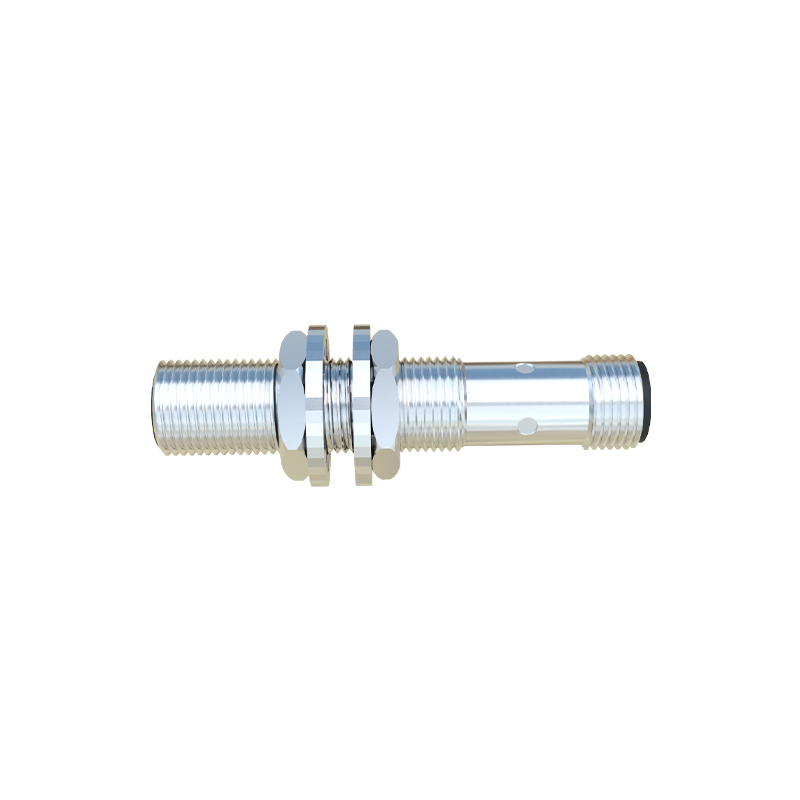
Proximity sensors, in contrast, are solid-state electronic devices. They detect the presence of a target without any physical contact. The most common types are inductive, capacitive, and photoelectric. Inductive proximity sensors generate an electromagnetic field and detect the eddy current losses caused by a metallic target entering this field. Capacitive sensors detect changes in capacitance caused by the presence of any material, metallic or non-metallic. Photoelectric sensors use a beam of light (visible, infrared, or laser) to detect an object's interruption or reflection. The detection event triggers a solid-state switching element (like a transistor) to change state.
Comparative Analysis: Key Parameters
Lifespan and Reliability: This is one of the most decisive factors. Limit switches have moving parts that are subject to mechanical wear, fatigue, and eventual failure from repeated actuation. Their operational life is typically measured in millions of cycles. Proximity sensors, with no moving parts, offer exceptionally high reliability and lifespans, often rated for tens or even hundreds of millions of cycles. They are immune to wear from the actuation process itself.
Operating Speed: The mechanical movement in a limit switch introduces inherent latency. While high-speed models exist, they are generally slower in response time compared to proximity sensors. Proximity sensors, being electronic, can have extremely fast response frequencies, often in the kilohertz range, making them suitable for high-speed counting or positioning applications.
Environmental Resilience: Limit switches can be vulnerable to environmental contaminants like dust, chips, and liquids, which can interfere with the mechanical action or corrode contacts. However, they are generally robust against electrical noise. Proximity sensors are typically housed in sealed, rugged bodies (often rated IP67 or higher) that protect against dust and washdowns. However, certain types (especially capacitive) can be susceptible to false triggering from environmental factors like humidity, or in the case of inductive sensors, from adjacent metal.
Target Material and Requirements: Standard inductive proximity sensors only detect metals. Capacitive sensors detect a wider range of materials. Limit switches are fundamentally material-agnostic; they require only a physical force sufficient to operate the actuator. However, the target must be sturdy enough to repeatedly actuate the switch without deforming.
Installation and Adjustment: Limit switches often require precise mechanical alignment and may need adjustment of the actuator arm's angle or length. Proximity sensors require careful consideration of the sensing distance and mounting to avoid interference, but their installation is often simpler as they only need to be positioned within the nominal sensing range.
Cost Considerations: Initially, basic limit switches are often less expensive than proximity sensors. However, a total cost of ownership analysis frequently favors proximity sensors due to their longer service life, reduced maintenance downtime, and higher reliability in demanding cycles.
Application Scenarios: Choosing the Right Tool
The choice between a proximity sensor and a limit switch is not about which is universally better, but which is more appropriate for the specific application conditions.
Choose a Limit Switch When:
The application requires confirmation of physical contact or a specific mechanical force (e.g., confirming a door is fully closed and latched).
The target is non-metallic, irregularly shaped, or requires a large operating differential (the distance between the operate and release points).
The environment has high levels of electromagnetic interference (EMI) where a solid-state sensor might be prone to noise.
The budget is extremely constrained for initial hardware, and the duty cycle is low.
A simple, easily understood mechanical "hard stop" indication is needed for safety or manual override purposes.
Choose a Proximity Sensor When:
High-speed operation or counting is required.
The duty cycle is very high, demanding long-term reliability