In the realm of precision measurement and industrial automation, the demand for tailored sensing solutions is paramount. Off-the-shelf laser displacement sensors, while versatile, often fall short when confronted with unique application-specific challenges. This is where the process of customizing laser displacement sensors becomes a critical engineering endeavor, bridging the gap between standard specifications and exact operational requirements.
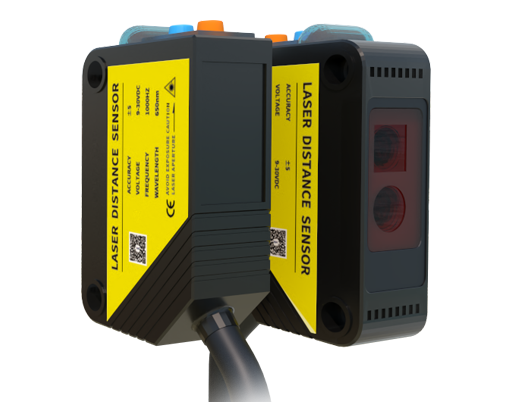
Laser displacement sensors operate on the principle of optical triangulation or time-of-flight measurement. A laser diode projects a focused beam onto a target surface. The reflected light is captured by a receiving element, typically a CCD or PSD array. Displacement of the target alters the position of the reflected spot on the receiver, and sophisticated internal algorithms calculate the distance with high accuracy. Customization begins by interrogating the fundamental parameters of this process to align with the application's ecosystem.
The primary driver for customization is the measurement scenario. Key considerations include:

* Target Surface Characteristics: Standard sensors are calibrated for diffuse, matte surfaces. Customization addresses challenges posed by shiny, mirror-like, transparent, or absorptive materials. This may involve modulating laser wavelength (switching from red to blue lasers for certain plastics or hot metals), adjusting optical filters, or implementing specialized algorithms to filter spurious reflections.
* Environmental Extremes: Industrial environments can be harsh. Custom designs incorporate robust housings with specific IP (Ingress Protection) ratings for dust and water resistance. For high-temperature applications near furnaces or welding stations, sensors are fitted with protective windows, air purge fittings, and internal cooling mechanisms. Similarly, cryogenic or high-vibration settings demand unique mechanical and electronic hardening.
* Form Factor and Integration: Space constraints often dictate a non-standard sensor shape. Engineers work to miniaturize the optical head, redesign mounting interfaces, or separate the processing unit from the sensing head via fiber optics. Custom cable lengths, connector types (M8, M12, industrial Ethernet), and output protocols (Analog 4-20mA, digital RS-422, Ethernet/IP, PROFINET) are specified for seamless integration into existing control systems.

* Performance Specifications: Beyond standard resolution and linearity, custom projects may require ultra-high speed for dynamic measurements on fast-moving production lines, extended measurement ranges beyond catalog limits, or exceptional repeatability for quality control in semiconductor manufacturing. This can lead to the selection of specialized laser sources, high-speed processors, and calibration against master artifacts traceable to national standards.
The collaboration between the client's engineering team and the sensor manufacturer's application specialists is the cornerstone of a successful custom project. The process typically follows a structured path:
1. Application Audit: A detailed analysis of the measurement object, environmental conditions, required accuracy, speed, and integration needs.
2. Feasibility Study & Prototyping: Often, preliminary tests are conducted using configurable standard sensors or engineering prototypes to validate the core measurement concept under real or simulated conditions.
3. Specification Finalization: Based on audit and test results, a detailed performance specification document is agreed upon, covering all electrical, mechanical, optical, and software parameters.
4. Design & Manufacturing: The customized design is finalized. This stage may involve custom optics design, PCB layout modifications, firmware development for unique filtering or output logic, and specialized calibration routines.
5. Validation & Delivery: Pre-delivery samples undergo rigorous testing against the agreed specification. Upon approval, the batch is manufactured and delivered, often accompanied by custom calibration certificates and integration guidelines.
Investing in a custom laser displacement sensor, while involving higher initial cost and longer lead time than selecting a standard model, delivers significant long-term value. It eliminates workarounds, reduces measurement uncertainty, increases system reliability, and ultimately optimizes the overall process efficiency. For mission-critical applications in aerospace metrology, precision assembly, rolling mill gap control, or biomedical device manufacturing, a bespoke sensor is not merely an option but an engineering necessity. The goal is to create not just a sensor, but a seamlessly integrated measurement node that delivers flawless data, driving quality, automation, and innovation forward.