In the realm of industrial automation and precision measurement, beam laser sensors stand as a cornerstone technology. These devices, which project a visible or invisible laser beam to detect the presence, position, or displacement of an object, have revolutionized processes requiring non-contact, high-speed, and high-accuracy sensing. Unlike diffuse reflection sensors that rely on light bouncing back from the target, a typical through-beam laser sensor consists of two separate units: a transmitter and a receiver. The transmitter emits a focused, coherent laser beam, which is received by the opposing unit. An object interrupting this beam triggers a detection signal. This fundamental principle grants them exceptional performance in challenging environments.
The core advantages of beam laser sensors are numerous. First is their long sensing range, which can extend up to several hundred meters in high-performance models, far surpassing photoelectric or ultrasonic sensors. Second, they exhibit high stability and precision. The collimated laser beam is minimally affected by ambient light, surface color, texture, or material of the target object. Whether detecting a transparent glass bottle, a shiny metal part, or a matte black plastic component, the sensor reliably triggers upon beam interruption. This makes them indispensable in packaging, material handling, and assembly lines where product variability is high. Third, their response time is extremely fast, often in the microsecond range, enabling detection of high-speed objects on fast-moving production lines or conveyor systems.
A critical application area is in safety systems, where safety laser scanners create a curtain or field of beams to protect hazardous areas around machinery, such as robotic cells or press brakes. Any intrusion into this protective field immediately signals the machine to stop. In dimensional gauging and edge detection, paired laser sensors are used to measure object width, diameter, or precise position by timing the beam interruption. Furthermore, in the electronics industry, they are vital for wafer handling and component placement where absolute precision and cleanliness (non-contact) are paramount.
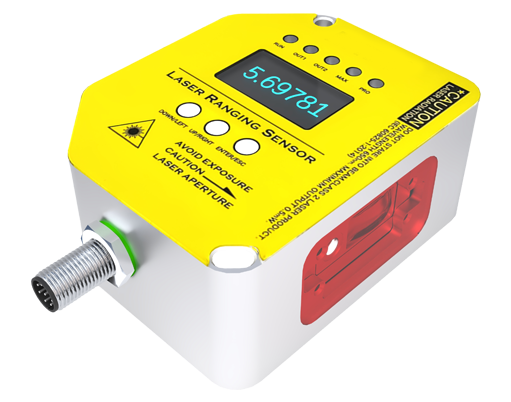
Selecting the appropriate beam laser sensor requires careful consideration of several technical parameters. The operating wavelength is primary; common visible red lasers (e.g., 650nm) aid in alignment, while infrared lasers (e.g., 850nm, 905nm) offer better performance in dusty environments or for covert operations. The sensing distance must be specified with a sufficient safety margin. Environmental ratings are crucial; an IP67 or IP69K enclosure is necessary for washdown areas in food & beverage or pharmaceutical plants. The output type (PNP/NPN, analog, IO-Link) must be compatible with the host controller. For demanding applications, models with adjustable sensitivity or a built-in alignment indicator can significantly ease installation and maintenance.
Installation and alignment, while straightforward in concept, demand attention. The transmitter and receiver must be securely mounted to prevent vibration-induced misalignment. Using alignment tools or models with a visible beam greatly simplifies this process. Regular maintenance involves keeping the lenses clean from dust, oil, or condensation, which can attenuate the beam strength. Modern sensors often feature diagnostic LEDs or IO-Link communication to provide real-time status on beam integrity, signal strength, and operating health, facilitating predictive maintenance.
Looking ahead, the integration of beam laser sensors with Industrial IoT (IIoT) platforms is a growing trend. Smart sensors with embedded intelligence can communicate detailed process data, not just a simple on/off signal, to higher-level systems for analytics and optimization. Furthermore, advancements in laser diode technology continue to yield sensors with smaller footprints, lower power consumption, and even longer ranges.

In conclusion, beam laser sensors are a mature yet continuously evolving technology that provides a robust solution for reliable object detection across a vast spectrum of industrial applications. Their unparalleled combination of range, speed, and immunity to target surface conditions ensures their continued dominance in automated systems where performance and reliability cannot be compromised. Engineers and system integrators must thoroughly understand their operating principles and selection criteria to fully leverage their capabilities, thereby enhancing system efficiency, safety, and productivity.