Cylindrical laser distance sensors are pivotal components in modern industrial automation, offering precise non-contact measurement capabilities. These sensors operate by emitting a laser beam toward a target object and calculating the distance based on the time-of-flight (ToF) principle or phase-shift analysis. The cylindrical housing design ensures durability and ease of integration into machinery, making them suitable for harsh environments like manufacturing floors, robotics, and logistics systems.
One key advantage of cylindrical laser sensors is their high accuracy, often achieving sub-millimeter precision. This reliability stems from advanced optics and signal processing algorithms that minimize errors from ambient light or surface variations. For instance, in automotive assembly lines, these sensors verify part dimensions and alignments, reducing defects and enhancing quality control. Similarly, in warehouse automation, they facilitate inventory management by measuring package sizes and positions on conveyor belts.
The operational range of cylindrical laser sensors varies, with models available for short-distance (e.g., 0.05 to 10 meters) and long-distance (up to 100 meters) applications. Factors like target reflectivity, temperature fluctuations, and mechanical vibrations can influence performance, but manufacturers incorporate compensation mechanisms to maintain consistency. For example, sensors with IP67 ratings resist dust and moisture, ensuring longevity in outdoor or humid settings.
Integration with industrial networks, such as Ethernet/IP or PROFINET, allows real-time data transmission to control systems. This connectivity supports predictive maintenance by monitoring sensor health and detecting anomalies early. Additionally, user-friendly software interfaces enable calibration and configuration without extensive technical expertise, streamlining deployment across sectors like construction, agriculture, and aerospace.
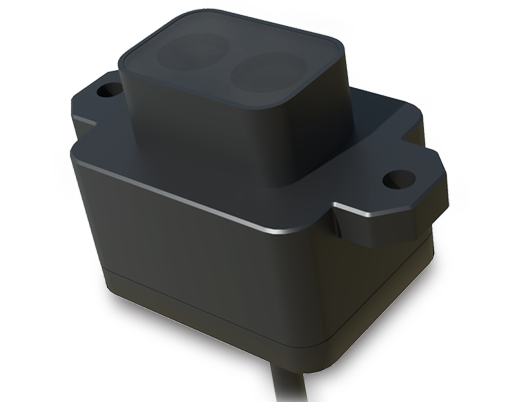
In robotics, cylindrical laser sensors aid in navigation and object detection, enabling autonomous machines to operate safely in dynamic environments. Their compact form factor allows mounting on robotic arms or mobile platforms without obstructing movement. As Industry 4.0 evolves, these sensors contribute to smart factories by providing actionable insights for process optimization, reducing downtime, and boosting efficiency.
Despite their benefits, selecting the right sensor requires considering parameters like measurement speed, resolution, and environmental tolerances. Regular maintenance, such as lens cleaning and firmware updates, ensures sustained accuracy. Overall, cylindrical laser distance sensors represent a versatile solution for precision measurement, driving innovation in industrial automation through robust design and advanced technology.
