Laser sensors have become indispensable tools across numerous industrial sectors, offering unparalleled precision, reliability, and versatility for measurement and detection tasks. Their fundamental operating principle involves emitting a focused beam of coherent light—the laser—and analyzing the properties of the reflected signal. The time-of-flight, phase shift, or triangulation methods are then employed to calculate critical parameters such as distance, position, height, or thickness with micron-level accuracy. This capability makes them superior to many traditional mechanical or ultrasonic sensors in challenging environments.
Among the most prevalent types is the Laser Distance Sensor. Utilizing time-of-flight or phase-shift measurement, these sensors provide non-contact measurement of ranges, often over several meters. They are extensively used in logistics for pallet dimensioning, in construction for level monitoring, and in robotics for navigation and obstacle avoidance. Their key advantages include long-range capability and high measurement speed.
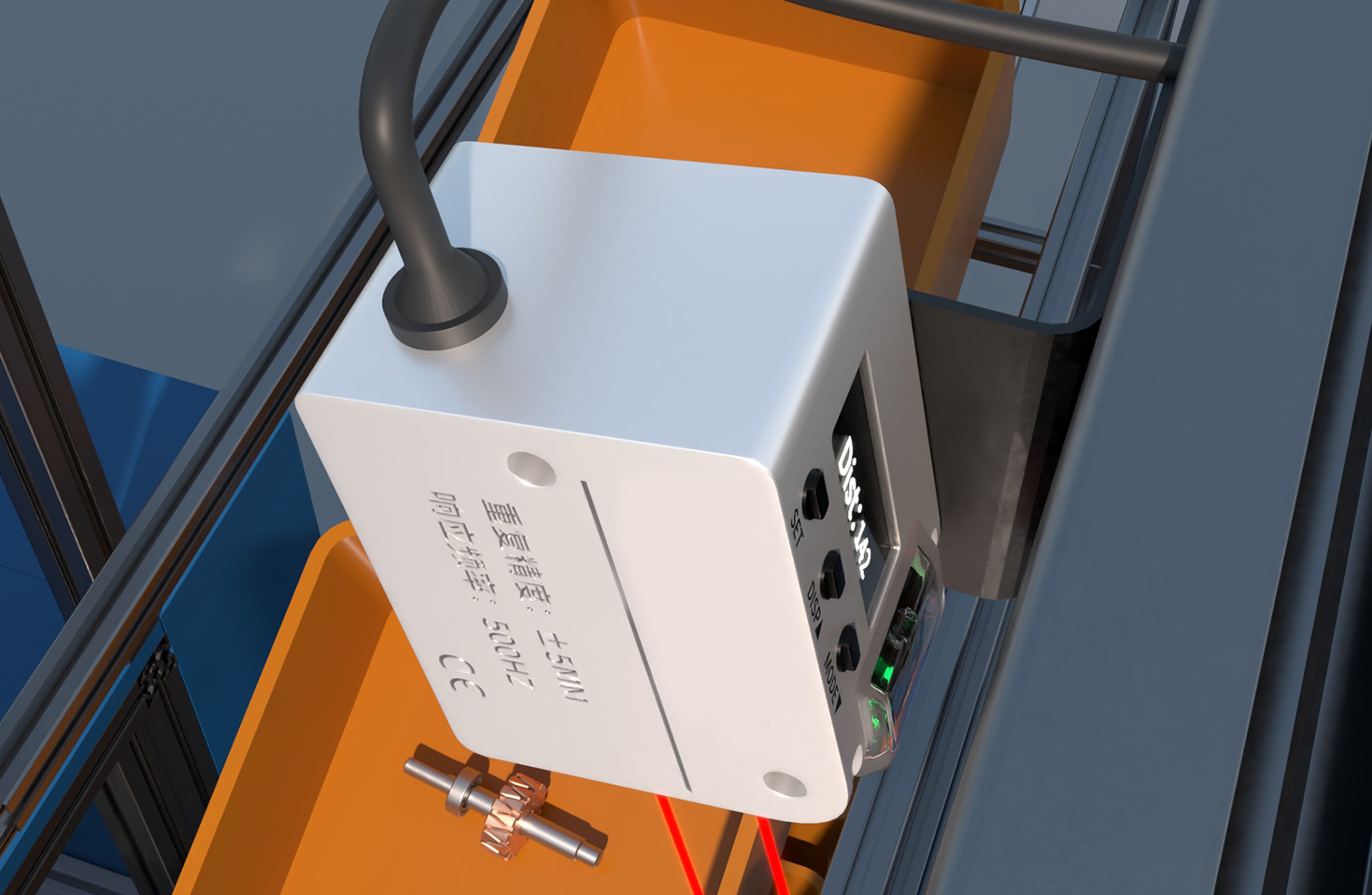
Laser Displacement Sensors, often based on triangulation, excel in high-precision, short-range applications. A laser diode projects a spot onto the target, and the reflected light is focused onto a position-sensitive detector. Any change in the target's distance causes a shift in the light spot's position on the detector. This technology is crucial for quality control on production lines, measuring vibration, inspecting surface profiles, and ensuring precise part positioning in assembly processes.

For presence detection and precise positioning, Laser Photoelectric Sensors are the go-to choice. They function by detecting the presence or absence of a laser beam. In the through-beam variant, an emitter and a separate receiver are aligned; an object is detected when it interrupts the beam. The retro-reflective type uses a single unit and a reflector, while the diffuse-reflective model detects light scattered directly from the target. These sensors are vital in packaging, material handling, and automated assembly for counting, jam detection, and edge guiding.
A more advanced category is the Laser Profile Sensor or line scanner. Instead of a single point, it projects a laser line onto an object. A camera captures the deformation of this line, enabling the creation of a detailed 2D or 3D profile of the target. This is revolutionary for inspecting complex contours, weld seam tracking, volume calculation, and complete surface defect analysis in automotive and electronics manufacturing.
Selecting the appropriate laser sensor requires careful consideration of several factors. Measurement Range and Standoff Distance define the operational envelope. Accuracy and Resolution determine the smallest detectable change. Spot Size affects the minimum feature that can be measured. The Target Surface properties—color, material, reflectivity, and texture—significantly influence performance; highly reflective or dark, absorbent surfaces often require sensors with specialized algorithms or adjustable sensitivity. Finally, the Environmental Conditions such as ambient light, dust, fog, temperature, and vibrations must be compatible with the sensor's ingress protection (IP) rating and design specifications.
The integration of laser sensors with Industrial Internet of Things (IIoT) platforms and programmable logic controllers (PLCs) is now standard. This enables real-time data acquisition, predictive maintenance alerts, and seamless feedback for closed-loop process control, driving efficiency and reducing waste.
In conclusion, from simple on/off detection to complex 3D profiling, laser sensors provide critical data that fuels modern automation. Understanding the distinct types—distance, displacement, photoelectric, and profile sensors—along with their underlying principles and selection criteria, empowers engineers to deploy these powerful instruments effectively, enhancing productivity, quality, and safety in industrial operations.