In the realm of automation, safety, and smart systems, the ability to detect the presence, absence, or distance of an object without physical contact is paramount. Among the various technologies enabling this capability, the microwave proximity sensor stands out for its unique set of characteristics and robust performance in challenging environments. Unlike their optical or ultrasonic counterparts, these sensors utilize electromagnetic waves in the microwave frequency spectrum, typically ranging from 1 GHz to 30 GHz, to sense objects. This fundamental operating principle grants them distinct advantages that make them indispensable in numerous industrial and commercial applications.
The core operation of a microwave proximity sensor is based on the Doppler effect or the measurement of wave reflection. In a common configuration, the sensor emits a continuous microwave signal. When this transmitted wave encounters a moving object, its frequency shifts upon reflection. The sensor's receiver detects this frequency shift (Doppler shift), which is directly proportional to the speed of the target relative to the sensor. This makes them exceptionally good at detecting motion. Alternatively, by analyzing the phase shift or the time-of-flight of a reflected pulsed signal, these sensors can also accurately determine the distance to a stationary or moving object. The key component is a dielectric resonator oscillator or a Gunn diode that generates the microwave radiation, which is then directed via an antenna.
One of the most significant advantages of microwave sensors is their exceptional penetration capability. They can reliably operate through various non-metallic materials such as plastic, glass, drywall, and even thin wooden panels. This allows for concealed installation, protecting the sensor from direct exposure, dirt, and mechanical damage. For instance, a sensor can be mounted behind a plastic cover on a machine or inside a housing, maintaining aesthetic appeal while providing full functionality. Furthermore, they are largely unaffected by environmental factors that commonly plague other sensors. Ambient light, whether sunlight or complete darkness, has no impact on their performance. Dust, fog, smoke, and steam, which can scatter optical beams or absorb ultrasonic waves, pose minimal interference to microwaves, ensuring consistent and reliable detection.
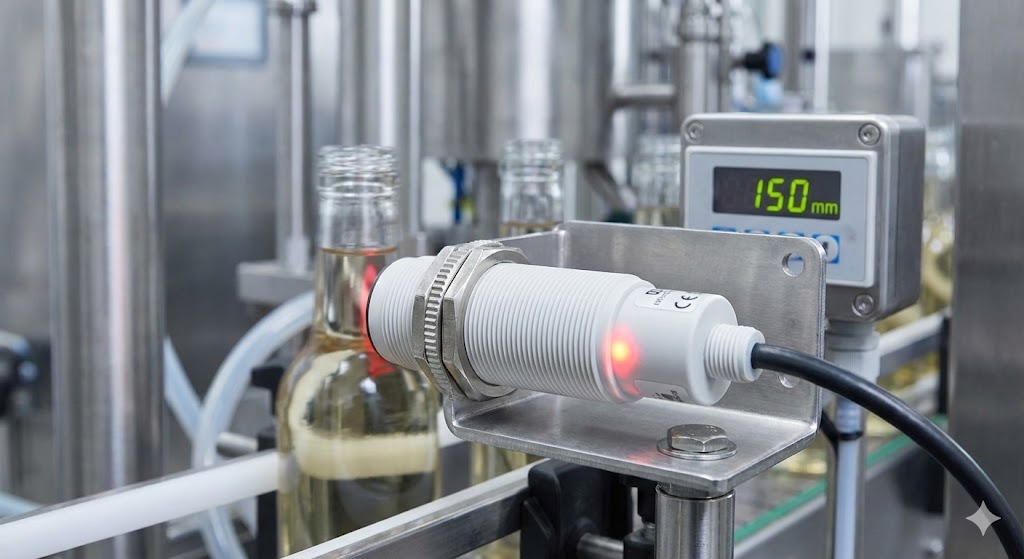
This environmental resilience makes microwave proximity sensors the preferred choice for demanding outdoor and industrial settings. Typical applications are vast and varied. In industrial automation, they are used for presence detection on conveyor belts, monitoring material levels in silos (even through container walls), and controlling automatic doors. In the automotive sector, they form the basis of blind-spot detection systems, parking aids, and adaptive cruise control radars. For building management and security, they enable automatic lighting control in warehouses or parking garages, and serve as motion detectors in alarm systems, capable of covering large areas. Their ability to ignore small animals or fluttering leaves, when properly tuned, reduces false alarms in outdoor security applications.

When selecting and implementing a microwave proximity sensor, several technical parameters require consideration. The operating frequency influences the sensor's resolution and penetration power; lower frequencies penetrate materials better but offer less spatial resolution. The sensing range must be matched to the application, from a few centimeters to several tens of meters. The output type is also crucial, ranging from simple digital (on/off) signals for presence detection to analog voltage or current outputs proportional to distance, or even serial data interfaces for complex systems. Proper installation is key: the sensor should be aimed away from large stationary reflective surfaces (like metal walls) to avoid background clutter, and the sensitivity should be adjusted to suit the specific target material and desired detection zone.
In comparison to other technologies, microwave sensors fill a specific niche. Infrared (PIR) sensors detect heat and are passive, but require a temperature differential and can be fooled by environmental heat sources. Ultrasonic sensors are good for short-range level detection but are sensitive to temperature variations and wind. Laser sensors offer high precision but are typically more expensive and can be impaired by dirt on the lens. The microwave sensor's combination of material penetration, environmental immunity, and reliable motion sensing offers a compelling solution where others may fail.
In conclusion, the microwave proximity sensor is a powerful and versatile tool in the sensor technology arsenal. Its operation based on high-frequency electromagnetic waves provides a unique blend of capabilities, most notably the power to sense through non-conductive materials and remain unfazed by harsh environmental conditions. From streamlining industrial processes to enhancing vehicle safety and enabling intelligent building systems, these sensors provide the reliable, non-contact detection needed to build more automated, efficient, and secure environments. As technology advances, we can expect further miniaturization, integration, and intelligence embedded into these sensors, expanding their role in the evolving landscape of the Internet of Things and Industry 4.0.