In the world of automation and robotics, the ability to perceive the immediate environment is not just an advantage—it's a fundamental necessity. This critical function is fulfilled by robot proximity sensors, the unsung heroes that provide machines with a sense of "touch" and spatial awareness. These devices detect the presence, absence, or distance of nearby objects without any physical contact, enabling robots to operate safely, precisely, and efficiently.
At their core, proximity sensors work by emitting a field or beam and monitoring for changes in that field or the return signal. The specific technology behind this principle varies, leading to several distinct types, each with its own strengths and ideal use cases.
Inductive proximity sensors are among the most common in industrial robotics. They generate an electromagnetic field and detect the eddy current losses caused when a metallic object enters this field. Their key advantages include high switching frequency, robustness in dirty or wet environments, and insensitivity to non-metallic materials like dust or oil. You will typically find them in robotic arms for precise part positioning, detecting metal components on a conveyor, or ensuring a gripper has correctly closed on a metallic workpiece.
For applications involving non-metallic materials—plastic, wood, cardboard, or liquids—capacitive proximity sensors are the go-to choice. They function by detecting changes in capacitance caused by any object that enters their electrostatic field. This makes them versatile for level detection in bins, material handling of packaged goods, or detecting the presence of any object regardless of its composition.
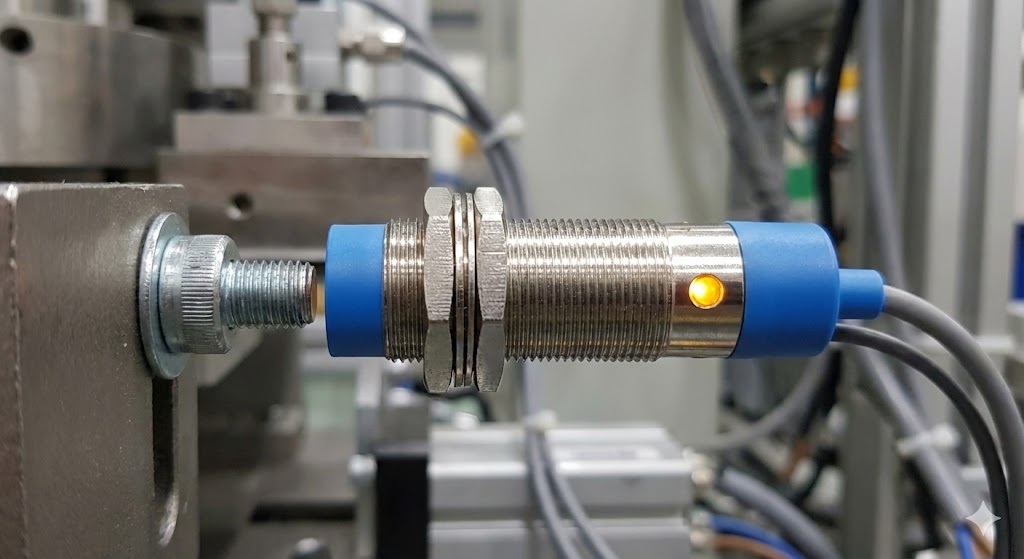
Optical proximity sensors, which include through-beam, retro-reflective, and diffuse (photoelectric) models, use light beams. A through-beam sensor, with separate emitter and receiver units, offers the longest sensing range and highest reliability, perfect for safety curtains or counting objects on a high-speed line. Diffuse sensors, where the emitter and receiver are in one housing, detect objects by the reflection of light off the target itself, ideal for short-range detection and varying surface colors.
Ultrasonic sensors measure distance by emitting high-frequency sound waves and calculating the time for the echo to return. They excel at detecting objects of virtually any material, shape, or color, and are unaffected by dust, smoke, or light conditions. In robotics, they are invaluable for bulk level sensing, palletizing, and providing collision avoidance for autonomous mobile robots (AMRs) navigating dynamic warehouses.
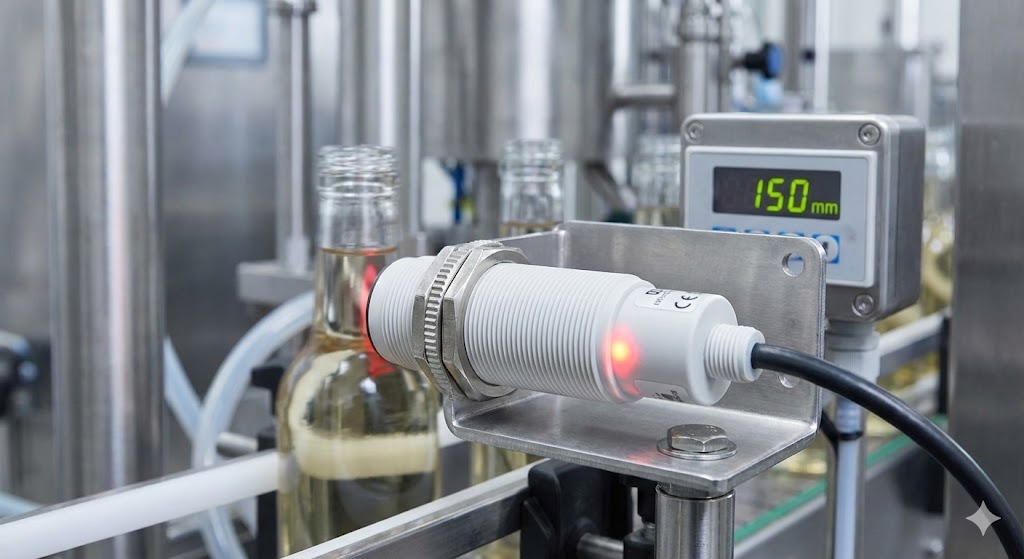
The latest frontier includes laser-based time-of-flight (ToF) sensors, which provide extremely accurate distance measurements over longer ranges, enabling high-precision mapping and navigation for sophisticated collaborative robots (cobots) and automated guided vehicles (AGVs).
Selecting the right proximity sensor for a robotic application requires careful consideration of several factors. The target material is primary: metal objects suggest inductive, while non-metals require capacitive or optical. The required sensing range dictates the technology; inductive and capacitive are typically short-range, while ultrasonic and laser can reach several meters. Environmental conditions like dust, moisture, or vibration will influence the housing rating (e.g., IP67). The needed output signal—discrete on/off or analog distance data—determines the sensor's interface with the robot controller. Finally, response time and installation constraints (size, mounting) are crucial for high-speed or space-limited applications.
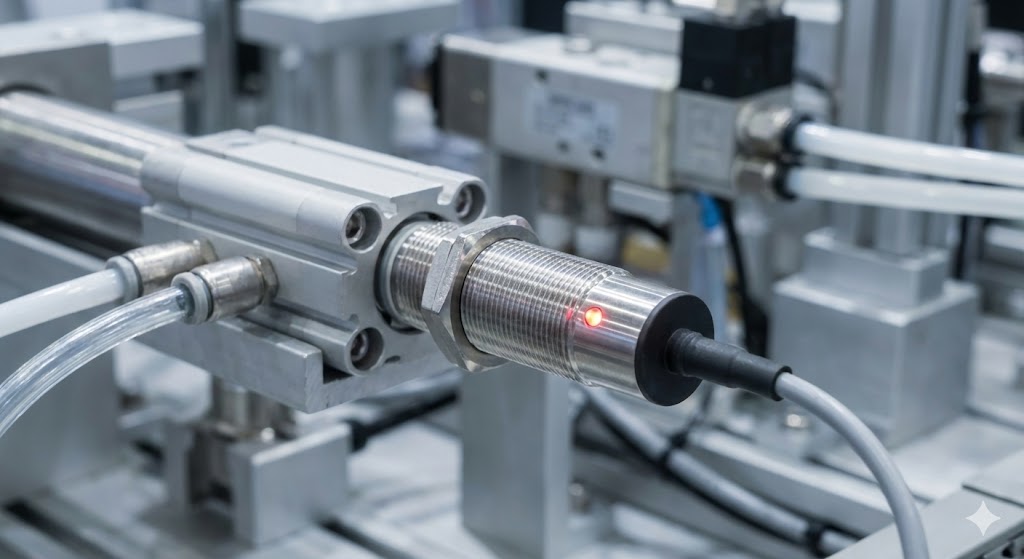
The applications are vast and growing. On a production line, proximity sensors enable precise pick-and-place operations, assembly verification, and quality control. In collaborative workspaces, they are the backbone of safety systems, allowing cobots to slow down or stop when a human enters a predefined zone. For mobile robots, arrays of proximity sensors create a protective bubble, facilitating obstacle avoidance and safe navigation in unpredictable environments. They also play a vital role in bin-picking, automated welding, and packaging machinery.
In conclusion, robot proximity sensors are indispensable components that bridge the gap between programmed instruction and real-world interaction. They empower robots with the situational awareness needed for complex, sensitive, and safe operations. As robotics continues to evolve towards greater autonomy and collaboration, the role of advanced, intelligent proximity sensing will only become more central, driving efficiency and innovation across manufacturing, logistics, and beyond.