In the rapidly evolving landscape of industrial automation, proximity sensors play a pivotal role in enabling precise, non-contact detection of objects. Among the various configurations available, the 10-level proximity sensor circuit board represents a sophisticated advancement, offering enhanced granularity and reliability for complex applications. This article delves into the design principles, operational mechanics, and practical implementations of such circuit boards, tailored for engineers and technical professionals in the electrical and automation sectors.
A 10-level proximity sensor circuit board is engineered to detect objects at ten distinct distance thresholds or sensitivity levels. Unlike binary sensors that merely indicate presence or absence, this multi-level capability allows for nuanced monitoring, such as gauging the approach of an object in stages or triggering different actions based on precise proximity. The core of the board typically integrates a sensing element—often based on inductive, capacitive, or ultrasonic technologies—coupled with a microcontroller unit (MCU) that processes analog signals into digital outputs corresponding to the ten levels. For inductive sensors, commonly used in metal detection, a coil generates an electromagnetic field; disruptions caused by a metallic target alter the field, with the magnitude of change correlating to distance. The circuit board’s analog front-end amplifies and conditions this signal, while the MCU, programmed with threshold algorithms, classifies it into one of the ten levels. This design demands careful calibration to ensure minimal cross-talk between levels and robust performance in noisy industrial environments.
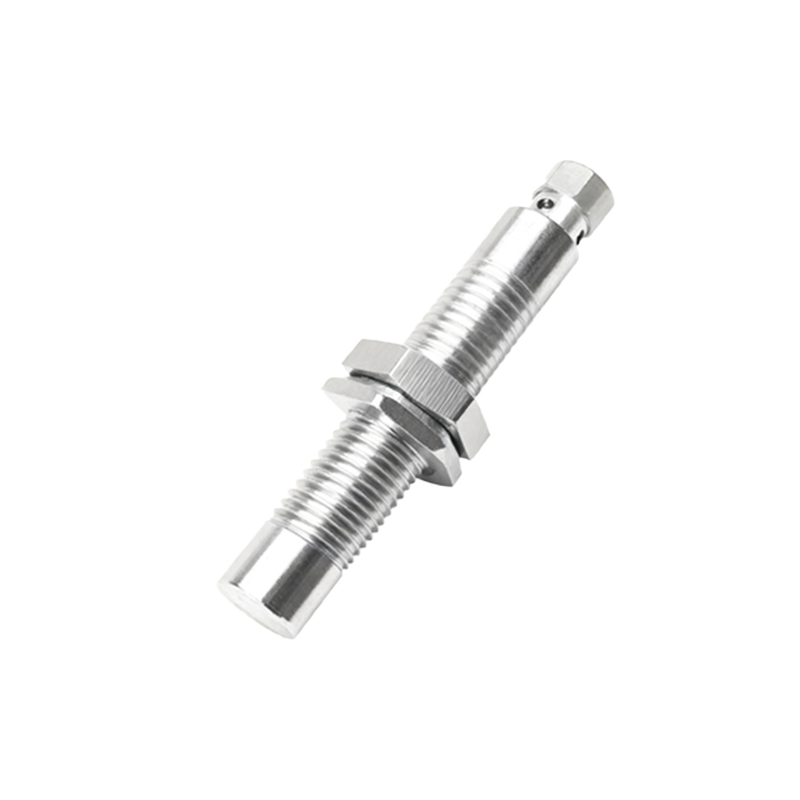
Key components on the board include the oscillator circuit for generating the sensing field, signal conditioning modules with operational amplifiers, and a stable power supply regulator to maintain consistency across levels. Noise immunity is critical, often addressed through shielding, filtering techniques, and the use of differential signaling. Additionally, modern designs incorporate communication interfaces like IO-Link, CAN bus, or Ethernet/IP, enabling seamless integration into Industry 4.0 frameworks for real-time data exchange and predictive maintenance. From a fabrication standpoint, the printed circuit board (PCB) layout must minimize parasitic capacitance and inductance, with careful routing to avoid interference between high-frequency and analog sections. Surface-mount technology (SMT) is preferred for compactness and reliability, with components rated for industrial temperature ranges (-40°C to 85°C) to withstand harsh conditions.
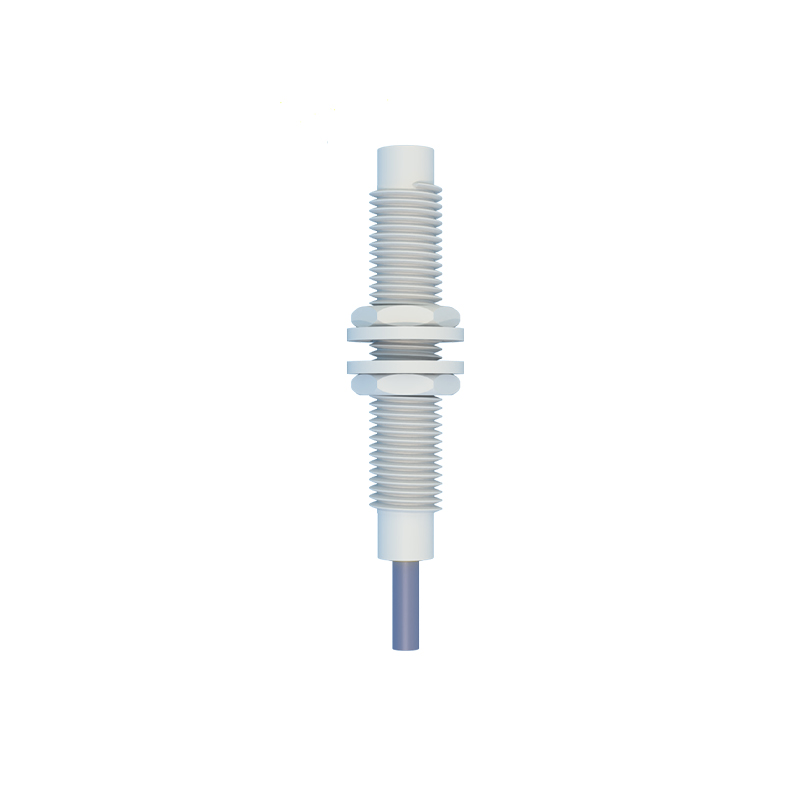
In practical applications, 10-level proximity sensor circuit boards are deployed in scenarios requiring tiered responses. For instance, in automated guided vehicles (AGVs), they can detect obstacles at multiple distances, slowing down gradually as an object nears and stopping only at the closest threshold, thereby improving safety and efficiency. In packaging machinery, these sensors monitor material levels in bins, triggering refills at specific depletion stages to prevent downtime. Another use case is in robotic assembly lines, where precise positioning of components is achieved by detecting proximity at various points, ensuring accurate placement without physical contact. The adaptability of these boards also extends to condition monitoring, such as detecting wear in machinery by sensing the gradual displacement of parts over time.
When selecting or designing a 10-level proximity sensor circuit board, engineers must consider factors like sensing range, response time, and environmental robustness. Inductive sensors suit metallic targets with ranges up to 20mm, while capacitive versions can detect non-metallic materials but are sensitive to humidity. Ultrasonic sensors offer longer ranges but may be affected by temperature fluctuations. Calibration during production involves setting precise thresholds using known distances, often aided by software tools that streamline the process. Maintenance is minimal due to the non-contact nature, but regular checks for contamination or damage are recommended to sustain accuracy.
Looking ahead, trends point toward further miniaturization and integration of smart features, such as self-diagnostic capabilities and adaptive threshold adjustment via machine learning algorithms. As industries embrace more automated and interconnected systems, the demand for high-resolution proximity sensing will only grow, solidifying the role of multi-level sensor circuit boards as indispensable components in modern electrical engineering. By understanding their design and applications, professionals can leverage these tools to enhance operational precision and drive innovation in automation projects.