In the realm of industrial automation and precision control, proximity sensors are indispensable components. Among these, a specialized category known as zero-distance proximity sensors plays a critical role in applications demanding extreme accuracy and direct contact or near-contact detection. This article delves into what zero-distance proximity sensors are, how they operate, their various types, and their pivotal applications across industries.
A zero-distance proximity sensor, as the name implies, is designed to detect the presence or absence of a target object at an effective sensing distance of virtually zero. Unlike standard proximity sensors that can detect objects from a few millimeters to several centimeters away, these sensors are engineered to operate when the target is in direct contact or within an extremely minute gap from the sensing face. The core principle revolves around achieving a high-resolution detection threshold where even microscopic displacements or direct surface contact triggers a reliable output signal. This is paramount in scenarios where the margin for error is negligible.
The operational principles of zero-distance proximity sensors vary based on their underlying technology. The most common types include inductive, capacitive, and optical variants, each suited for specific material properties and environmental conditions.
Inductive zero-distance proximity sensors are predominantly used for detecting metallic objects. They generate an electromagnetic field from a coil and oscillator circuit. When a ferrous or non-ferrous metal target comes into direct contact or extremely close to the active surface, it causes a change in the oscillation amplitude or frequency. This change is processed by the sensor's circuitry to produce a discrete output, typically a switch signal. Their robustness against contaminants like dust, oil, or coolant makes them ideal for harsh machining environments, such as in CNC machines for tool touch-off or part presence verification on conveyor lines.
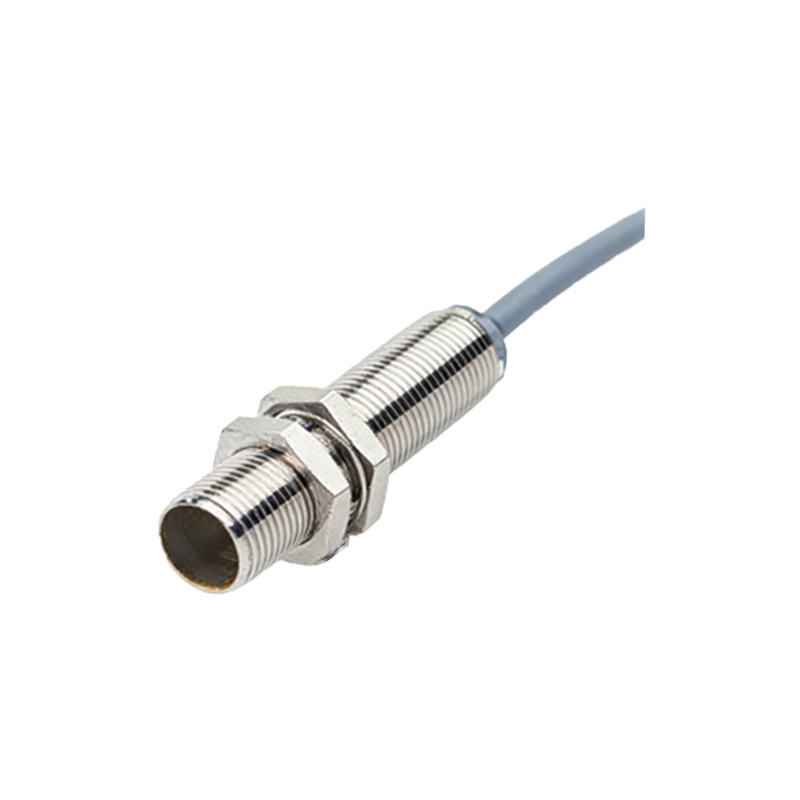
Capacitive zero-distance proximity sensors, on the other hand, can detect both metallic and non-metallic materials, including liquids, plastics, and glass. They function by measuring changes in capacitance between the sensor's electrode and the target. When an object enters the electric field at zero distance, it alters the dielectric constant, leading to a detectable change in capacitance. This capability is invaluable in packaging industries for detecting thin films, paper, or liquid levels in containers where the sensor must be flush with the material surface.
Optical zero-distance proximity sensors, often implemented as through-beam or diffuse-reflective models with minimized dead zones, utilize a light emitter and receiver. In a zero-distance configuration, these sensors are calibrated to detect an object only when it interrupts the light path at the sensor's face or is within a minuscule reflective distance. Fiber optic versions are particularly useful in confined spaces or for detecting tiny objects, finding applications in electronics assembly and precision positioning systems.
The defining advantage of zero-distance proximity sensors is their exceptional repeatability and accuracy. By eliminating the standard sensing range, they mitigate errors caused by target position variations, temperature fluctuations, or electrical noise that might affect traditional sensors. This results in highly consistent performance for critical tasks like precision end-position detection in linear actuators, wafer handling in semiconductor manufacturing, or quality control checks where part placement must be exact.
In practical industrial applications, these sensors are the backbone of many high-precision processes. In automotive manufacturing, they ensure robotic welding arms are precisely positioned against body panels. In pharmaceutical packaging, they verify that blister packs are correctly sealed by detecting the aluminum foil at zero distance. Furthermore, in printing and paper processing machinery, they monitor paper jams or sheet count by sensing the paper edge directly.
Selecting the appropriate zero-distance proximity sensor requires careful consideration of factors such as the target material, environmental conditions (temperature, humidity, exposure to chemicals), required output type (PNP/NPN, analog, IO-Link), and housing design for easy integration. Manufacturers often offer variants with ruggedized housings made of stainless steel or PBT plastic to withstand mechanical impact and industrial washdowns.
Maintenance of these sensors is generally minimal due to their non-contact (or minimal-contact) nature, but ensuring the sensing face remains clean from persistent debris or buildup is crucial for optimal performance. Regular calibration checks, as per manufacturer guidelines, help maintain long-term accuracy.
In conclusion, zero-distance proximity sensors represent a niche yet vital segment of sensor technology, enabling advancements in automation where precision is non-negotiable. Their ability to provide reliable detection at the point of contact empowers engineers to design more accurate, efficient, and dependable systems. As industries continue to push the boundaries of miniaturization and precision, the role of these sensors will only become more prominent, driving innovation in smart manufacturing and beyond.