Proximity sensors are indispensable components in modern industrial automation, providing non-contact detection of objects within a defined sensing range. Their ability to operate without physical contact ensures reliability, longevity, and high-speed operation in demanding environments. Understanding the various types is crucial for selecting the right sensor for a specific application. This guide details the primary categories based on their underlying detection principles.
The most common and widely used type is the Inductive Proximity Sensor. These sensors generate an electromagnetic field and detect the presence of conductive metals, primarily ferrous metals like steel and iron. When a metal object enters this oscillating field, it induces eddy currents within the object, causing a change in the sensor's oscillation amplitude. This change is detected by the internal circuitry, triggering an output signal. Inductive sensors are renowned for their robustness, high switching frequency, and immunity to environmental factors like dust, oil, and moisture. They are ideal for applications such as metal part detection, position verification in machinery, and counting metallic objects on conveyor lines. Their limitation is clear: they only detect metals.
For detecting non-metallic objects, including liquids, plastics, wood, and glass, Capacitive Proximity Sensors are the preferred choice. These sensors function similarly to an open capacitor. The sensor's active face and the grounded sensor body form one plate of a capacitor, with the target object acting as the other plate. As an object enters the sensing field, it alters the dielectric constant and the capacitance of the system. The sensor's oscillator circuit detects this change in capacitance and switches the output state. Capacitive sensors can detect virtually any material and are often used for level detection in tanks (liquids or granules), presence detection of plastic bottles, and monitoring of non-metallic materials in packaging processes. They can be sensitive to environmental changes like humidity and require careful adjustment of the sensitivity potentiometer.
Magnetic Proximity Sensors, specifically Reed Switch sensors, operate based on the presence of a magnetic field, typically from a permanent magnet. The sensor contains two ferromagnetic reeds sealed within a glass tube filled with inert gas. When a magnet approaches, the reeds magnetize and attract each other, closing the electrical contact. When the magnet moves away, the reeds spring back to their open position. These sensors are simple, cost-effective, and can be packaged in very small housings. They are commonly used for detecting the open/closed status of doors and windows, as limit switches in pneumatic cylinders (where a magnet is embedded in the piston), and in low-speed rotational sensing. Their main drawbacks include relatively low switching speeds and potential contact wear over billions of cycles, though reedless Hall-effect-based magnetic sensors offer a solid-state alternative.
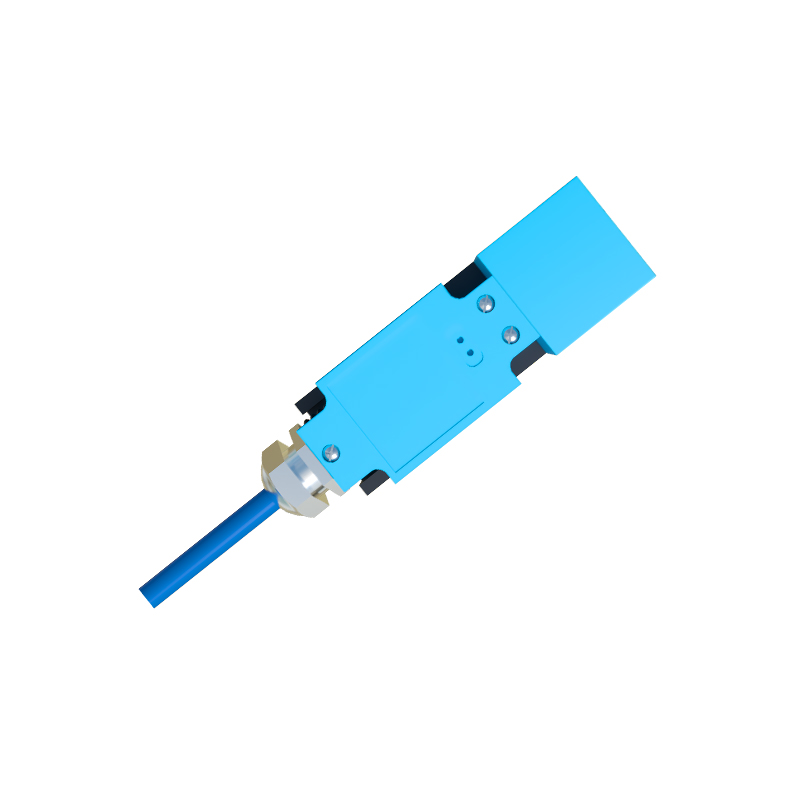
Ultrasonic Proximity Sensors utilize sound waves beyond the human hearing range (typically 40-400 kHz). They consist of a transmitter that emits ultrasonic pulses and a receiver that listens for the echo. The sensor calculates the time interval between the emitted pulse and the received echo to determine the distance to the target object. This principle, known as time-of-flight, allows these sensors to perform precise distance measurement and presence detection regardless of the object's material, color, or transparency. They excel in applications involving bulk material level control, transparent object detection (like glass bottles), parking assistance systems, and robotic palletizing. Factors such as temperature, air turbulence, and the object's sound-absorbing properties can affect their performance.
Optical Proximity Sensors, often called photoelectric sensors, use light to detect objects. They comprise a light emitter (usually an LED producing visible red, infrared, or laser light) and a receiver. They are further subdivided into three main modes. Through-beam sensors have separate emitter and receiver units; an object is detected when it interrupts the light beam. This mode offers the longest sensing range and high reliability. Retro-reflective sensors use a single unit and a reflector; detection occurs when the object blocks the light beam reflected back to the receiver. Diffuse or proximity mode sensors have the emitter and receiver in one housing and detect light reflected directly off the target object. Optical sensors are versatile, capable of detecting a vast range of materials at high speeds and are used for object counting, label detection, and assembly verification. They can be susceptible to ambient light interference, color variations, and dirty environments.
In conclusion, the selection of a proximity sensor type—inductive, capacitive, magnetic, ultrasonic, or optical—is dictated by the nature of the target material, the required sensing distance, environmental conditions, and the specific application needs. Inductive sensors are kings of metal detection, capacitive sensors handle non-metallics, magnetic sensors offer simple magnetic actuation, ultrasonic sensors provide precise distance measurement, and optical sensors deliver high-speed versatility. A thorough evaluation of these factors ensures optimal system performance, reliability, and cost-efficiency in any industrial automation setup