Proximity sensors are fundamental components in modern industrial automation, enabling non-contact detection of objects within a specified range. These devices operate on various physical principles, primarily categorized into inductive, capacitive, and photoelectric types. Each type is engineered to suit specific environmental conditions and target materials, ensuring reliability and precision in diverse applications.
Inductive proximity sensors are widely used for detecting metallic objects. Their operation relies on electromagnetic induction. The sensor contains an oscillator circuit that generates a high-frequency electromagnetic field at its active surface. When a metallic target enters this field, eddy currents are induced on the target's surface. These currents draw energy from the oscillator, causing a reduction in oscillation amplitude. An integrated evaluation circuit monitors this change and triggers a switching signal—typically opening or closing a solid-state or relay output. Key advantages include high switching frequency, robustness against environmental contaminants like dust or oil, and insensitivity to non-metallic materials. Common applications involve position sensing of machine parts, end-of-travel detection in actuators, and metal counting in conveyor systems.
Capacitive proximity sensors function by detecting changes in capacitance. The sensor's active face and the target act as two electrodes of a capacitor. An internal oscillator generates an electrical field. When any material—conductive or non-conductive—enters this field, the dielectric properties between the electrodes change, altering the capacitance. This change increases the oscillation amplitude, which is processed by the circuit to produce an output signal. These sensors can detect a vast range of materials, including liquids, powders, plastics, and wood. They are particularly valuable in level detection for tanks (liquids or granules), material handling, and presence detection of non-metallic objects. However, they can be influenced by environmental factors like humidity or temperature variations, requiring careful calibration.
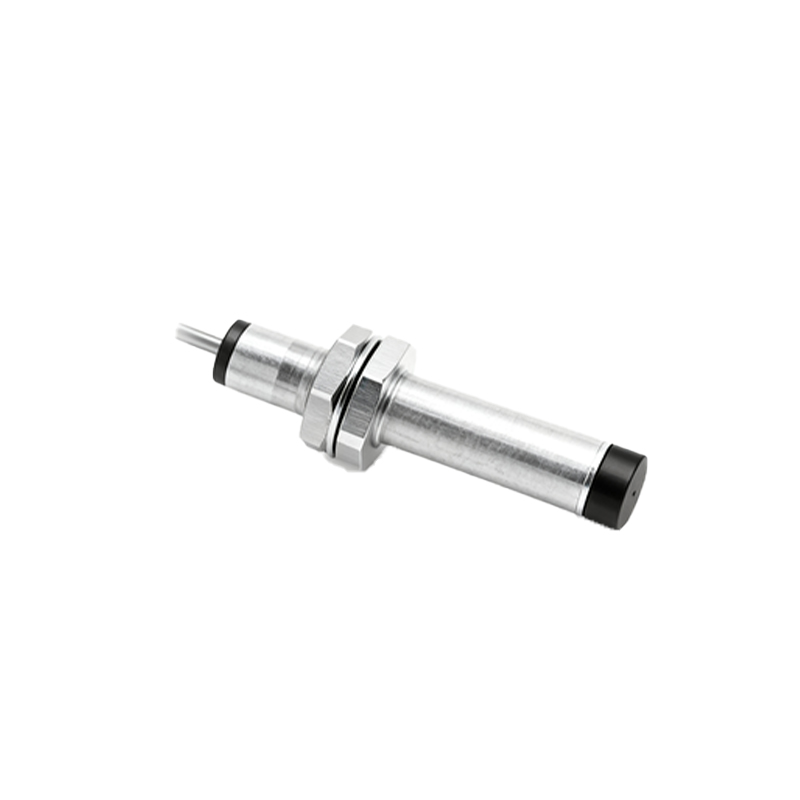
Photoelectric proximity sensors operate on optical principles, using a light emitter (usually LED) and a receiver. They are subdivided into through-beam, retro-reflective, and diffuse reflection types. In the diffuse (proximity) mode, the sensor emits a light beam; when an object is present, light is reflected back to the receiver. The sensor evaluates the intensity of the returned light to determine object presence. These sensors offer long detection ranges and can detect objects of almost any material, color, or surface finish. They are ideal for packaging, material handling, and assembly line automation. Challenges may include interference from ambient light or highly reflective surfaces, often mitigated by modulated infrared light and specialized filters.
Selection criteria for proximity switches involve several technical parameters. Sensing distance, or nominal range, defines the maximum detection distance under standardized conditions. Factors like target material, size, and shape can affect this distance. Hysteresis is a critical feature that prevents output chattering when the target is near the switching point, ensuring stable operation. Switching frequency denotes how many on/off cycles per second the sensor can handle, crucial for high-speed applications. Environmental ratings, such as IP (Ingress Protection) codes, indicate resistance to dust and water, while temperature ratings ensure performance in harsh conditions.
Installation and wiring practices significantly impact sensor performance. Proper mounting, avoiding metal-to-metal flush installation unless specified, and maintaining adequate clearance from adjacent metal objects prevent electromagnetic interference. Wiring should follow manufacturer guidelines, typically involving DC two-wire or three-wire configurations, with attention to polarity, load current, and short-circuit protection. Regular maintenance, including cleaning the active surface and checking for mechanical damage, sustains long-term reliability.
In summary, proximity sensors are indispensable for automation, offering non-contact, wear-free operation. Understanding their underlying principles—inductive for metals, capacitive for diverse materials, and photoelectric for versatile detection—enables optimal selection and integration. As Industry 4.0 advances, these sensors continue to evolve with enhanced intelligence, connectivity via IO-Link, and miniaturization, driving efficiency and innovation across manufacturing, automotive, food processing, and logistics sectors.