In the realm of industrial automation and machine safety, proximity sensors are indispensable components. Their ability to detect the presence or absence of an object without physical contact makes them crucial for counting, positioning, and monitoring applications. A common and critical question that arises in system design is: Can proximity sensors detect stainless steel? The answer is not a simple yes or no; it depends heavily on the type of proximity sensor and the specific properties of the stainless-steel target.
The core principle of operation defines a sensor's capability. The three primary types of proximity sensors are inductive, capacitive, and photoelectric. For detecting metals, inductive sensors are the most common choice. They generate an electromagnetic field. When a metallic object enters this field, eddy currents are induced on the surface of the metal, causing a change in the sensor's oscillation amplitude. This change is detected and triggers the sensor's output switch. The effectiveness of this process is directly tied to the target material's electrical conductivity and magnetic permeability.
This is where stainless steel presents a unique challenge. Stainless steel is not a single material but a family of alloys. Its key characteristic, corrosion resistance, is achieved by adding chromium, which forms a passive oxide layer. However, this composition significantly affects its electromagnetic properties. Stainless steels are broadly categorized into ferritic, martensitic, and austenitic grades.
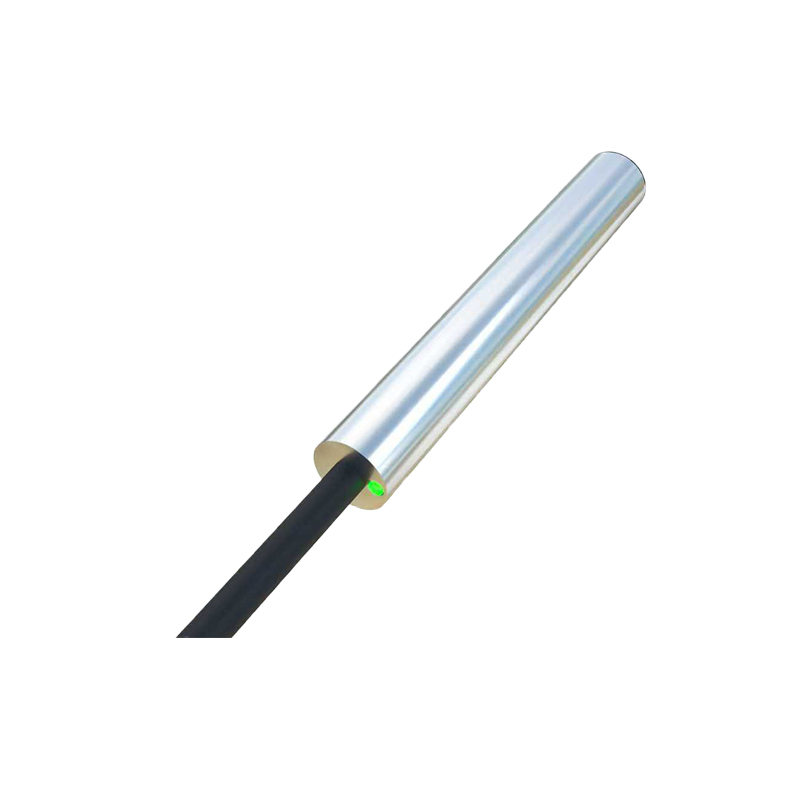
Ferritic and martensitic stainless steels (e.g., 430, 410) are magnetic. They have higher magnetic permeability, similar to mild steel. Standard inductive proximity sensors detect these grades effectively, though the sensing distance may be slightly reduced compared to mild steel, typically by 10-30%. This reduction is specified by a correction factor, often found in sensor datasheets.
The real challenge lies with austenitic stainless steels, such as the ubiquitous 304 and 316 grades. These are generally non-magnetic or very weakly magnetic. Their low magnetic permeability and lower electrical conductivity (compared to copper or aluminum) make them difficult targets for standard inductive sensors. The eddy currents generated are weaker, leading to a substantially reduced sensing range. For a standard inductive sensor calibrated for mild steel, the effective sensing distance for 304 stainless steel can be as low as 60-70% of the rated nominal range. In some cases, detection may be unreliable or impossible at the sensor's standard rated distance.
Fortunately, sensor technology offers solutions. Specialized inductive proximity sensors are designed specifically for detecting non-ferrous metals like aluminum, brass, copper, and notably, austenitic stainless steel. These sensors often operate at higher frequencies, which improves their sensitivity to the electrical conductivity of the target rather than relying solely on magnetic permeability. They provide a much more stable and reliable detection range for stainless steel, though it will still be less than for mild steel. When selecting a sensor for such an application, consulting the manufacturer's datasheet for the exact reduction factor (or sensing distance graph) for your specific stainless-steel grade is paramount.
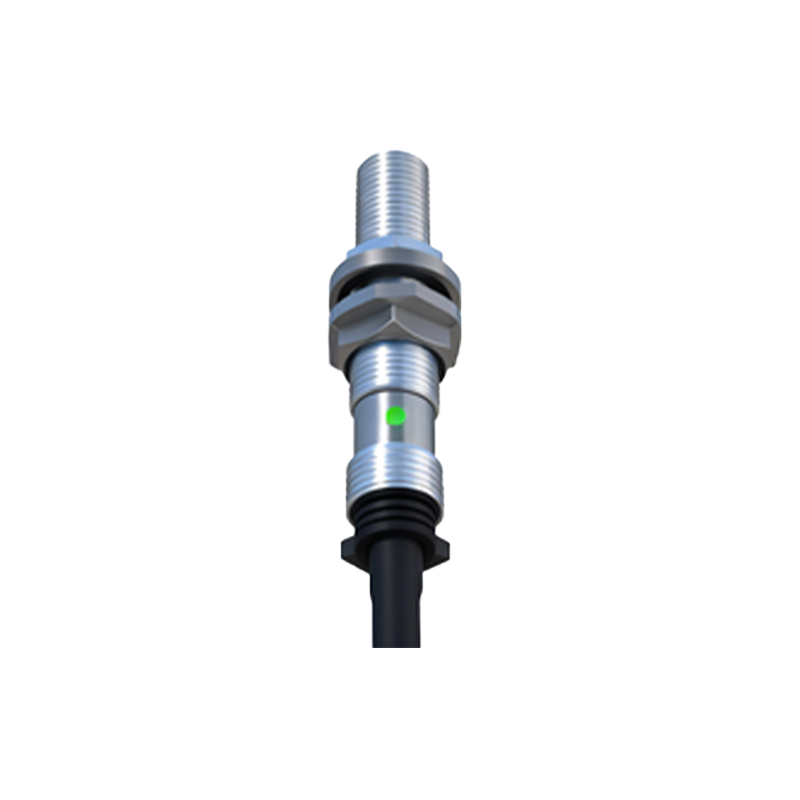
Capacitive proximity sensors offer another alternative. They detect any material that affects an electrostatic field, including metals, plastics, liquids, and powders. A capacitive sensor can reliably detect stainless steel regardless of its magnetic properties. However, they are also sensitive to environmental factors like moisture, dust, and non-target materials, which can lead to false triggers in harsh industrial settings. They are often used when the application involves non-metallic materials or when the target's material properties are highly variable.
Photoelectric sensors, which use a light beam, can also detect stainless steel, but the surface finish is critical. A polished, mirror-like stainless-steel surface can reflect the beam away from the receiver, causing detection failure. A matte or brushed finish provides more diffuse reflection and is generally detectable. Ultrasonic sensors are another viable, material-independent option, though they may be overkill for simple metal detection.
In conclusion, proximity sensors can detect stainless steel, but successful implementation requires careful selection. For magnetic stainless steels (ferritic/martensitic), standard inductive sensors work well with an adjusted range. For non-magnetic austenitic stainless steels (304, 316), specialized inductive sensors or capacitive sensors are the recommended choices. Always verify the sensing distance using the correction factors provided for the specific sensor model and target material. Ignoring these material-specific factors is a common pitfall that leads to system malfunctions. By understanding the sensor technology and the metallurgy of the target, engineers can ensure robust and reliable detection in any application involving stainless steel.