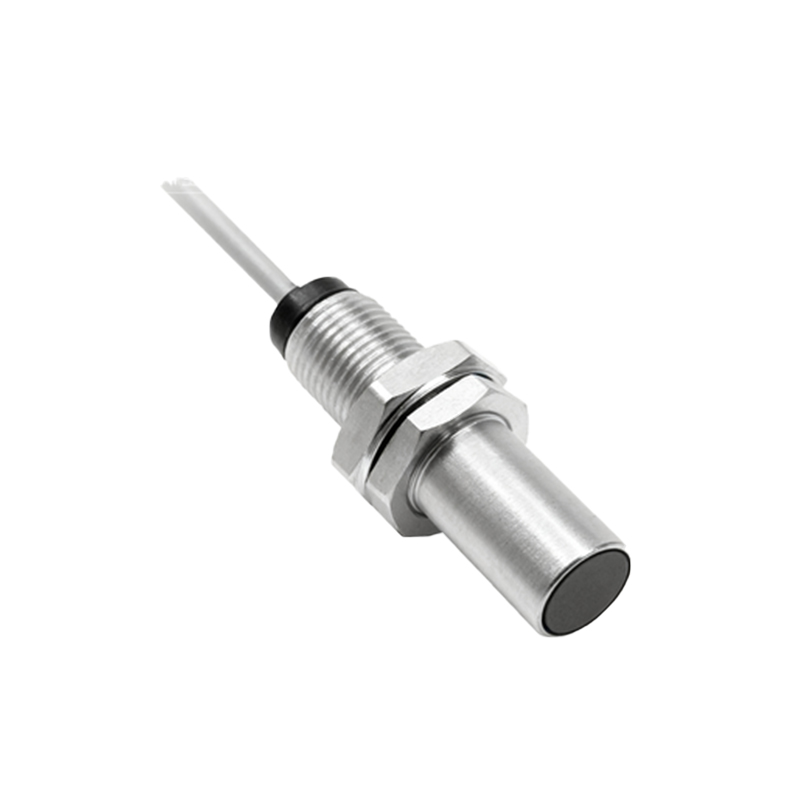
In the realm of industrial automation and control systems, proximity sensors stand as indispensable components for non-contact object detection. Their ability to sense the presence or absence of a target without physical contact ensures reliability, longevity, and high-speed operation in demanding environments. This article delves into the core operating principles of the primary types of proximity sensors, elucidating their mechanisms and typical applications.
The most prevalent category is the inductive proximity sensor. Its fundamental principle is based on electromagnetic induction. The sensor contains a coil wound around a ferrite core, which is part of an oscillator circuit. When an alternating current flows through this coil, it generates an oscillating electromagnetic field at the sensor's active face. In the absence of a conductive target, the oscillator operates at a specific amplitude. When a metallic object (ferrous or non-ferrous) enters this field, eddy currents are induced on the surface of the target. These eddy currents draw energy from the oscillator, causing a reduction in its oscillation amplitude. An internal detection circuit monitors this amplitude change. Once the amplitude drop reaches a predetermined threshold, the sensor's output state switches, signaling the detection of an object. The sensing distance depends on the material's conductivity and permeability, with ferrous metals typically offering the longest range. Inductive sensors are exclusively for metal detection and are widely used in machine tools, robotics, and conveyor systems for position sensing, counting, and limit detection.
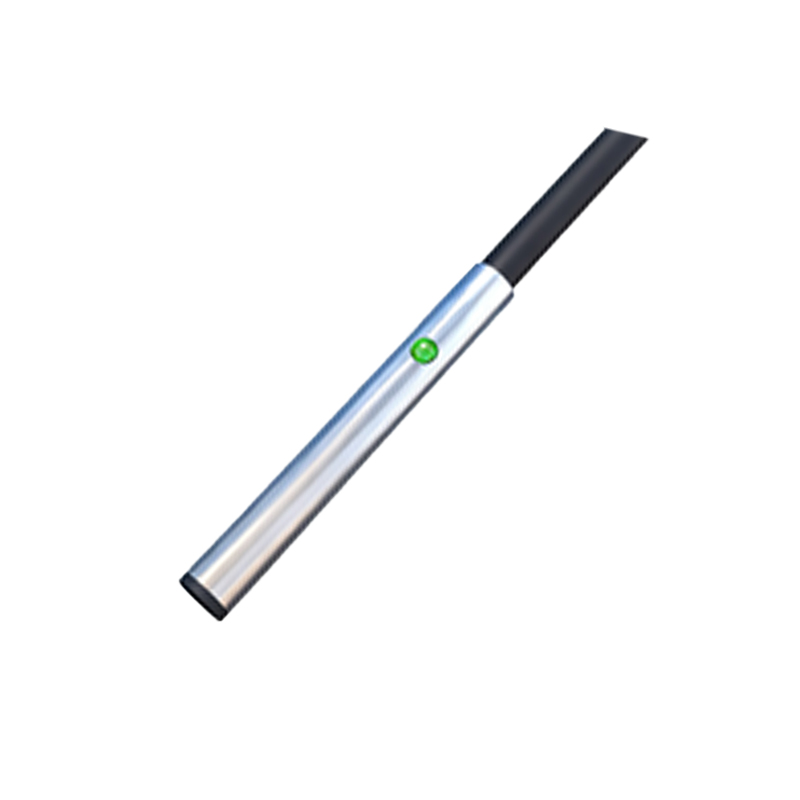
In contrast, capacitive proximity sensors can detect both conductive and non-conductive materials, including liquids, plastics, wood, and granular substances. They operate on the principle of capacitance change. The sensor's active face forms one plate of a capacitor, with the ground or a separate reference electrode acting as the other plate. The oscillator circuit in a capacitive sensor is tuned so that it does not oscillate under no-target conditions. As a target approaches the active face, it alters the dielectric constant of the space between the plates, effectively increasing the capacitance of the system. When the capacitance reaches a sufficient level, it allows the oscillator to begin oscillating. Subsequent circuitry processes this oscillation, leading to an output switch. The sensitivity can often be adjusted to compensate for different material types or to ignore certain backgrounds. This makes capacitive sensors ideal for level detection in tanks (liquids or powders), material handling, and presence detection of non-metallic objects.
Another key type is the photoelectric proximity sensor, which utilizes light beams. It consists of a light emitter (usually an LED producing visible red, infrared, or laser light) and a receiver. The operating principle involves the modulation, transmission, and reception of this light. There are three main sub-types based on the method of detection. The through-beam (or opposed) type has separate emitter and receiver units placed opposite each other. Detection occurs when the target object interrupts the light beam traveling from the emitter to the receiver. This type offers the longest sensing range and high reliability. The retro-reflective type houses both emitter and receiver in the same housing, using a reflector to bounce the light beam back. The target is detected when it blocks this reflected beam. The diffuse (or proximity) type also has a combined emitter and receiver, but it detects the target based on the light reflected directly from the target's surface. The amount of reflected light received triggers the output. Photoelectric sensors are versatile for detecting objects of various materials, colors, and sizes, applied in packaging, assembly line control, and door systems.
Magnetic proximity sensors, or reed switches, are designed specifically to detect permanent magnets. They contain two ferromagnetic reeds sealed in a glass tube filled with inert gas. When a magnetic field of sufficient strength from a magnet approaches, the reeds magnetize and attract each other, making contact and closing the switch circuit. When the magnet moves away, the reeds spring back to their open position. These sensors are simple, cost-effective, and used in applications like detecting the position of cylinder pistons or in security systems.

Ultrasonic proximity sensors operate by emitting high-frequency sound waves (typically beyond human hearing) and evaluating the reflected echo. A piezoelectric transducer emits ultrasonic pulses and then switches to receive mode. The time interval between the emission and the reception of the echo is measured. Since the speed of sound in air is known, the distance to the target can be calculated precisely (Time-of-Flight principle). They are excellent for detecting objects regardless of color, transparency, or material, and are commonly used for distance measurement, level sensing of bulk materials, and presence detection in challenging environments with dust or vapor.
Understanding these core principles—electromagnetic induction for inductive, capacitance variation for capacitive, light beam modulation for photoelectric, magnetic field actuation for magnetic, and sound wave echo for ultrasonic—is crucial for selecting the appropriate sensor. Factors such as target material, required sensing distance, environmental conditions (dust, moisture, temperature), switching frequency,