For engineers, procurement specialists, and system integrators, determining the price of a laser proximity sensor is a critical step in project budgeting and component selection. Unlike a simple commodity, the cost of these sophisticated devices is not a single number but a spectrum influenced by a complex interplay of technical specifications, brand positioning, and market dynamics. This guide delves into the key factors affecting laser sensor pricing and provides realistic price ranges to inform your purchasing decisions.
The most significant determinant of price is the underlying technology and performance specifications. Standard diffuse reflective sensors, which detect objects by measuring reflected light, are generally the most economical. Their prices are influenced by sensing range, with basic models for short-range detection (e.g., 0-300mm) being the most affordable. As you move to more advanced types like background suppression (BGS) or true background suppression (TGS) sensors, which can ignore objects beyond a set distance, prices increase due to more complex optics and electronics. The pinnacle of performance and cost is held by laser time-of-flight (ToF) sensors and triangulation-based measurement sensors. These offer extreme precision, very long ranges (often up to several meters), and high-resolution measurement capabilities, commanding a premium price.
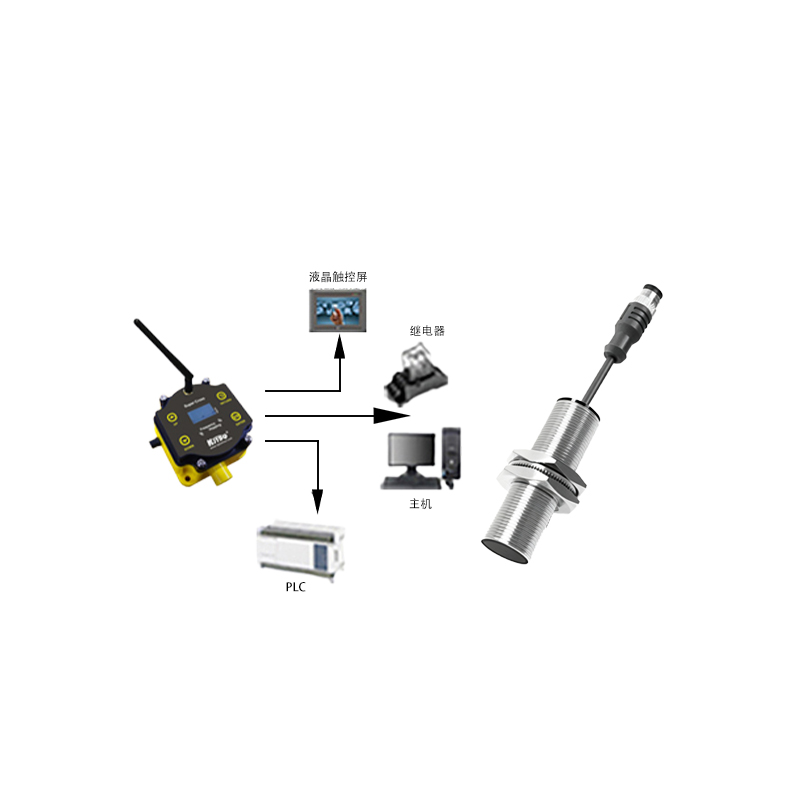
Key performance metrics directly correlate with cost. Higher measurement resolution or repeatability, often required in precision assembly or inspection, necessitates superior components and calibration. Similarly, a faster response time or switching frequency allows for use in high-speed automation, adding to the expense. The class of the laser source (typically Class 1 or Class 2 for industrial safety) and the resulting optical design also impact cost. Features like programmable logic, advanced diagnostics via IO-Link communication, robust housing ratings (IP67/IP69K), and specialized output types (e.g., analog 4-20mA, NPN/PNP, push-pull) all contribute to a higher price point compared to basic, fixed-function models.
Brand reputation and origin constitute another major pricing tier. Established global leaders like Keyence, Banner Engineering, SICK, and Omron are synonymous with high reliability, exceptional support, and cutting-edge innovation. Their products typically occupy the premium segment of the market. Mid-range pricing is often found with other reputable international brands like Pepperl+Fuchs, Turck, and Balluff, which offer excellent performance and reliability. The most cost-sensitive segment features sensors from various Asian manufacturers and generic suppliers. While potentially offering significant upfront savings, engineers must carefully evaluate long-term factors like consistency, durability, technical support, and lifecycle costs.

Market factors such as order volume, distribution channel, and geographic region also play a role. OEMs integrating sensors into machinery can secure substantial discounts through volume purchasing agreements. Buying directly from a manufacturer's representative might offer better technical support but at a different price point than through a large industrial distributor. Furthermore, regional tariffs, local certification requirements (like UL or CE), and shipping logistics can cause final landed costs to vary.
So, what are the actual price ranges? It is crucial to note that these are approximate end-user list prices in USD and can fluctuate widely.
Entry-Level / Basic Diffuse Sensors: For simple presence detection at short ranges, prices can start from $50 to $150.
Standard Performance Sensors: Common BGS sensors with moderate range (up to 1m) and good reliability typically range from $150 to $400.
High-Performance / Precision Sensors: Long-range ToF sensors, high-speed models, or precision measurement sensors with advanced features generally fall between $400 and $1,200.
Specialized & Ruggedized Sensors: Sensors designed for harsh environments (extreme temperatures, washdown) or with very specialized functions (e.g., clear object detection, high-gloss surface handling) can exceed $1,200.
For effective procurement, engineers should first meticulously define the application requirements: necessary range, accuracy, response speed, environmental conditions, and required interfaces. Avoid over-specifying, as paying for unneeded performance inflates cost. Obtain quotes from multiple suppliers for comparable specifications, ensuring you compare total cost of ownership, not just unit price. Consider the value of reliable technical support, warranty, and local availability, especially for critical production lines. For non-standard applications, engaging with a supplier's application engineer early can prevent costly mis-specification.
In summary, the price of a laser proximity sensor is a direct reflection of its capabilities, brand assurance, and suitability for the intended industrial task. A disciplined approach to specification, coupled with an understanding of the market landscape, empowers professionals to select the optimal sensor that balances performance, reliability, and cost-effectiveness for their specific automation challenge.