In the realm of industrial automation, robotics, and smart systems, proximity sensors are indispensable components. Among the various types available, the 12 proximity sensor, often referring to sensors operating at a 12V DC supply voltage or sometimes to specific model series, plays a critical role in non-contact detection. This article delves into the core function, working principles, and diverse applications of these ubiquitous devices.
Fundamentally, a 12 proximity sensor is an electronic device designed to detect the presence or absence of an object within its sensing range without any physical contact. It achieves this by emitting a field or beam of electromagnetic radiation (like infrared light or an electromagnetic field) and then monitoring for changes in the return signal or field. When a target object enters this field, it causes a detectable alteration—such as reflecting light back, absorbing energy, or disturbing an electromagnetic field. The sensor's internal circuitry processes this change and triggers a switching action, typically in the form of a solid-state output (PNP or NOMOS transistor) that changes state (e.g., from OFF to ON). This output signal can then be fed into a Programmable Logic Controller (PLC), microcontroller, or other control systems to initiate actions like stopping a conveyor, counting parts, or activating a safety mechanism.
The "12" in its common designation usually signifies a standard operating voltage of 12V DC, which is a prevalent power supply level in automotive, industrial control panels, and many electronic systems. This voltage compatibility makes them highly versatile and easy to integrate. It's crucial to note that specifications can vary by manufacturer; some models might be part of a "Series 12" family with specific housing sizes or sensing characteristics. Always consult the datasheet for precise electrical and performance parameters.
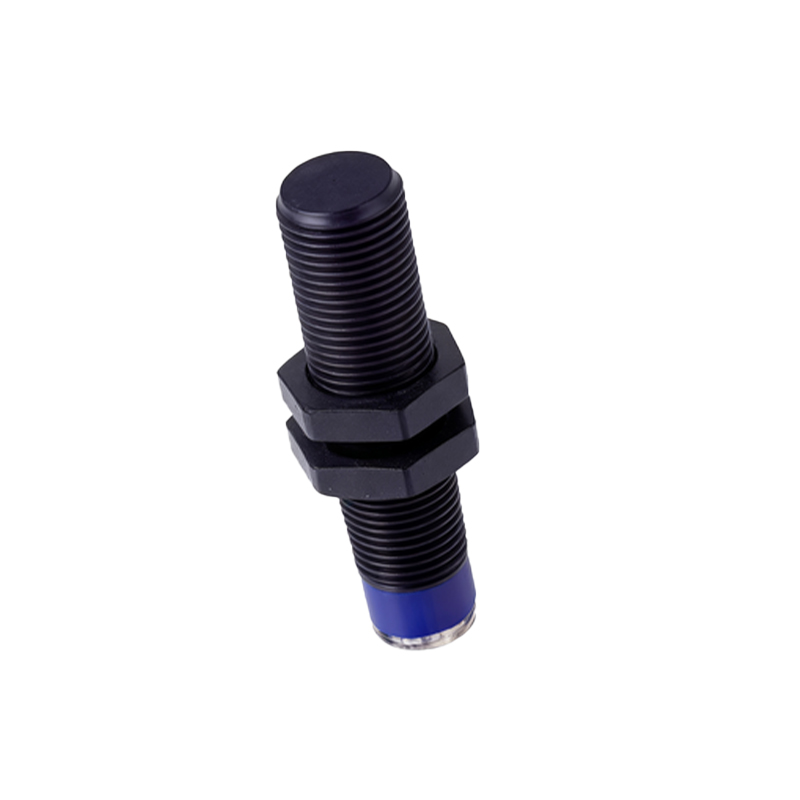
Several technologies underpin 12V proximity sensors, each suited for different materials and environments. Inductive proximity sensors are the most common type for detecting metallic objects. They generate an oscillating electromagnetic field. When a metal target enters this field, it induces eddy currents, causing a change in oscillation amplitude that is detected. These are ideal for factory automation involving machinery and metal parts. Capacitive proximity sensors, on the other hand, can detect both metallic and non-metallic materials (plastics, wood, liquids) by sensing changes in capacitance caused by the target object entering an electrostatic field. Photoelectric sensors, another major category, use a light beam (often infrared) and detect its reflection or interruption. They are excellent for long-range detection and can sense virtually any material.
The applications for 12 proximity sensors are vast and span numerous industries. In automotive manufacturing, they are used for precise positioning of robotic arms during welding or assembly, and for detecting the presence of components on production lines. In packaging machinery, they ensure correct bottle cap placement or verify that a box is in position for filling. Within automated storage and retrieval systems (AS/RS), these sensors provide critical feedback on pallet positioning. They are also integral to consumer electronics, such as detecting when a smartphone is held to the ear to turn off the screen, or in home appliances like dishwashers to monitor door closure. Furthermore, their robustness makes them suitable for harsh environments, finding use in agricultural equipment, construction machinery, and material handling systems where reliability is paramount.
Selecting the right 12 proximity sensor requires consideration of several factors: the material of the target object (metal, plastic, liquid), the required sensing distance (nominal range), the operating environment (presence of dust, water, oils—dictating the IP rating), the output configuration (NPN vs. PNP, normally open vs. normally closed), and the physical size and mounting style. Proper installation is equally important; sensors must be mounted securely, with adequate clearance from metal surfaces (for inductive types) to prevent false triggering, and kept clean from obstructions that could affect performance.
In conclusion, the 12 proximity sensor is a fundamental building block of modern automated systems. By providing reliable, non-contact detection of objects, it enables precise control, enhances safety, and improves efficiency across a staggering array of applications. Its compatibility with standard 12V DC systems further cements its role as a go-to solution for engineers and system integrators worldwide. Understanding its function and capabilities is essential for designing effective and responsive automated processes.