Capacitive level proximity sensors are fundamental components in modern industrial automation and process control. Unlike their mechanical or optical counterparts, these sensors operate on the principle of capacitance change, offering a non-contact, reliable, and versatile solution for detecting the presence or level of a wide range of materials. For electrical and instrumentation engineers, a deep understanding of their operation, advantages, and limitations is crucial for optimal system design.
At its core, a capacitive sensor functions as an open capacitor. The active face of the sensor and the grounded sensor body form one electrode, while the target material (or the surrounding environment) acts as the second electrode. The sensor generates an electrostatic field. When a material enters this detection field, it alters the dielectric constant (permittivity) of the space between the electrodes. This change in capacitance is measured by the sensor's internal oscillator circuit. Once the change exceeds a predefined threshold, the sensor's output state switches, signaling detection. A key advantage is their ability to sense virtually any material, be it conductive like water or metals, or non-conductive like plastics, wood, grains, or powders. For non-conductive materials, the sensitivity adjustment is particularly critical, as the dielectric constant varies significantly.
The industrial applications for capacitive level proximity sensors are extensive. They are commonly deployed for high or low-level detection in silos, bins, and hoppers containing bulk solids such as plastic pellets, flour, or cement. In liquid processing, they monitor levels in tanks for water, chemicals, or oils, often through non-metallic container walls, enabling non-invasive measurement. They serve as reliable point-level switches to prevent overfilling or run-dry conditions in pumps. Furthermore, their sensitivity allows them to detect materials in packaging, such as liquid inside a bottle or the presence of a label on a container, making them invaluable in packaging machinery.
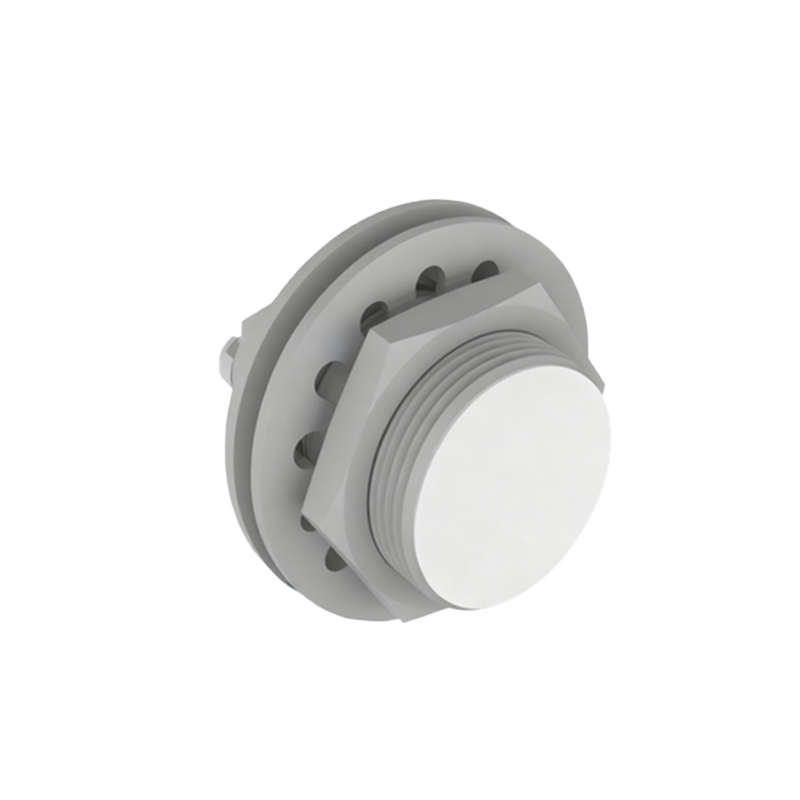
Selecting the right capacitive sensor requires careful consideration of several parameters. First is the sensing distance, which is typically shorter than inductive sensors and is highly dependent on the target material's properties. Engineers must consult derating curves for non-metallic targets. The housing material and design are vital; sensors for harsh environments feature robust, chemically resistant housings (e.g., PEEK, PTFE, or stainless steel) with high IP (Ingress Protection) ratings. Output type is another decision point: standard options include DC PNP/NPN, analog current (4-20 mA), or IO-Link for smart sensor capabilities, which provide diagnostic data and parameterization remotely. The operating frequency is important in applications with multiple sensors to prevent crosstalk. Temperature range and media compatibility must align with the process conditions to ensure long-term reliability.

Installation and commissioning are straightforward but demand attention. Mounting the sensor correctly, ensuring a stable background (avoiding moving machinery or vibrating surfaces nearby), and performing a proper teach-in or calibration are essential steps. For level detection in conductive materials, a compensating or guard electrode is often used to negate the effects of material buildup on the sensor face. Regular maintenance involves checking for coating or contamination on the active surface, which can cause false triggering.
In comparison to other technologies, capacitive sensors fill a unique niche. Ultrasonic and radar sensors are better for continuous level measurement over longer distances. Inductive sensors are superior and more stable for detecting metals only. Capacitive sensors excel in cost-effective, point-level detection of diverse materials, especially non-conductives, where other non-contact methods may fail. The advent of intelligent sensors with IO-Link communication has enhanced their value, enabling predictive maintenance, condition monitoring, and easy integration into Industry 4.0 frameworks.
For the practicing engineer, mastering capacitive sensing technology translates to designing more robust, flexible, and efficient control systems. By carefully matching the sensor's specifications—sensing range, housing, output, and environmental ratings—to the application's specific material and process requirements, one can ensure reliable operation, reduce downtime, and optimize material handling processes across countless industries, from food and beverage to pharmaceuticals and chemical manufacturing.