In the realm of industrial automation, reliability and precision are non-negotiable. Among the myriad of components that ensure seamless operation, the M18 inductive proximity sensor stands as a fundamental pillar. Characterized by its robust 18mm cylindrical threaded housing, this sensor is engineered for durability in demanding environments, offering non-contact detection of metallic objects with exceptional consistency.
The operating principle of an M18 inductive proximity sensor is elegantly straightforward, rooted in electromagnetic induction. The sensor's face contains a coil that is part of an oscillating circuit. When a metallic target—typically ferrous metals like steel or iron, though models are available for non-ferrous metals like aluminum or copper—enters the sensor's active electromagnetic field, eddy currents are induced in the target. This causes a dampening or loading effect on the oscillator's amplitude. An integrated evaluation circuit detects this change and triggers a solid-state switching signal. This entire process occurs without any physical contact, eliminating mechanical wear and tear, a key advantage over traditional limit switches.
Key specifications define the performance envelope of these ubiquitous sensors. The sensing range, a critical parameter, typically varies from 1mm to 8mm for standard M18 models, with factors like target material and size influencing the effective range. Most industrial-grade M18 sensors feature a shielded (flush-mountable) design, allowing installation flush with a metal bracket without affecting performance, or an unshielded (non-flush) design for slightly extended range. Output configurations are versatile, including NPN (sinking) and PNP (sourcing) transistor outputs, as well as Normally Open (NO) or Normally Closed (NC) logic, providing compatibility with a vast array of PLCs (Programmable Logic Controllers) and control systems. Operating voltage commonly spans from 10-30V DC, with some models supporting wider ranges.
The application spectrum for M18 proximity switches is vast. They are indispensable for position sensing, such as verifying the presence of a metal part on a conveyor, detecting the end-of-travel of a pneumatic cylinder via a metal piston rod flag, or confirming the closure of a metal door or guard. In high-speed counting applications on packaging lines, they tally metal cans or caps with remarkable speed and accuracy. Their inherent robustness, often boasting IP67 or IP68 ingress protection ratings, makes them ideal for harsh settings where exposure to coolants, oils, dust, and vibration is commonplace, such as in CNC machining centers, automotive assembly lines, and material handling systems.
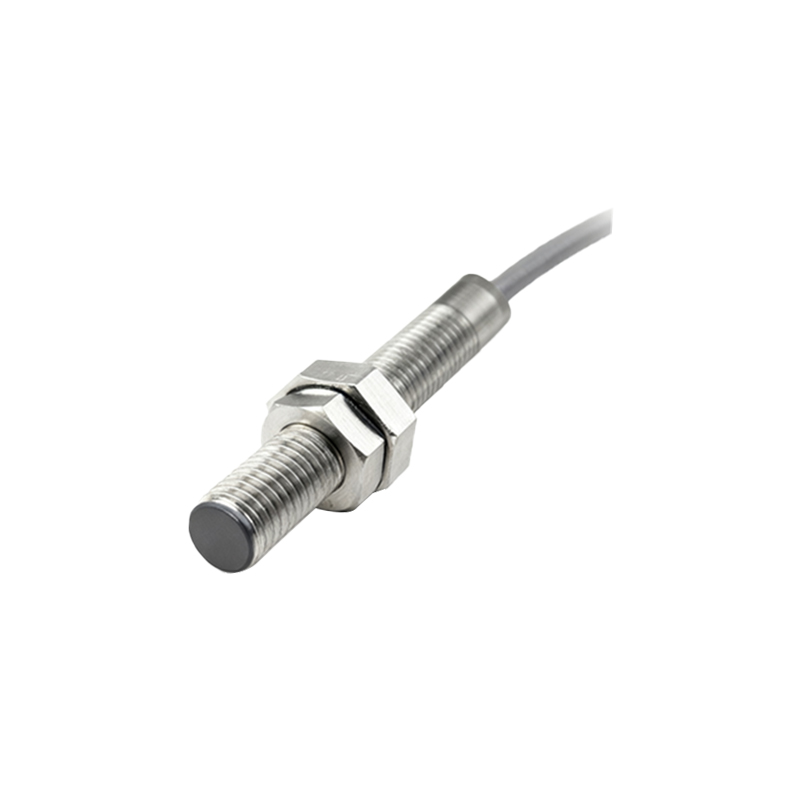
Selecting the right M18 sensor requires careful consideration of the operating environment and task. For detecting ferrous metals in tight spaces, a shielded sensor is optimal. For mixed-metal applications or where a longer range is needed for non-ferrous targets, specialized models are required. The choice between NPN and PNP output is dictated by the input card of the controlling PLC. Furthermore, factors like switching frequency (response speed), temperature tolerance, and connection type (pre-wired cable or quick-disconnect) must align with the specific application demands.

Installation and maintenance practices are straightforward but crucial. Ensuring proper mounting torque, maintaining the recommended clearance around the sensing face (especially for unshielded models), and protecting the cable from excessive flexing and abrasion are essential for long service life. While these sensors are famously maintenance-free, periodic checks for physical damage, buildup of metallic swarf on the sensing face, and signal integrity are recommended as part of a preventative maintenance routine.
In conclusion, the M18 inductive proximity sensor is more than just a component; it is a testament to efficient, reliable, and contactless automation. Its standardized form factor, proven technology, and adaptability have cemented its status as a global industry workhorse. For engineers and technicians designing or maintaining automated systems, a deep understanding of this sensor's capabilities and correct implementation is paramount to achieving optimal machine performance, enhanced safety, and reduced downtime.