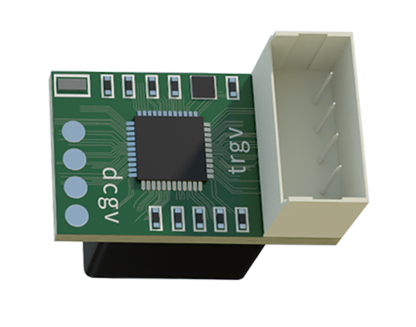
In the rapidly evolving landscape of smartphone technology, the autofocus (AF) laser sensor has emerged as a critical component for enhancing camera performance. This sophisticated sensor operates by emitting a low-power laser beam to measure the distance between the camera and the subject. By calculating the time it takes for the laser to reflect back, the sensor provides precise depth information, enabling the camera lens to adjust focus almost instantaneously. This technology is particularly advantageous in low-light conditions or when capturing fast-moving objects, where traditional contrast-detection autofocus systems may struggle.
The integration of AF laser sensors in smartphones represents a significant leap from conventional focusing methods. Unlike phase-detection autofocus (PDAF), which relies on light splitting and comparison, laser autofocus uses active triangulation. This method involves a laser diode and a sensor that work in tandem to map the environment. When the laser pulse is emitted, it hits the subject and bounces back to the sensor. The system then analyzes the reflection pattern to determine exact distance, allowing for rapid and accurate focus locking. This process typically occurs within milliseconds, making it ideal for scenarios like portrait photography or video recording where focus accuracy is paramount.
From an engineering perspective, the design of AF laser sensors involves meticulous attention to power efficiency and miniaturization. Smartphone manufacturers must balance sensor size with performance, ensuring that the laser operates within safe power limits to avoid eye damage or interference with other device functions. Advanced models incorporate infrared lasers, which are invisible to the human eye, to maintain user comfort. Additionally, these sensors are often paired with software algorithms that optimize focus based on scene analysis, further improving image clarity. The synergy between hardware and software allows for features such as real-time bokeh effects and enhanced augmented reality (AR) applications, where depth perception is crucial.

In practical applications, AF laser sensors contribute significantly to user experience. For instance, in mobile photography, they enable sharper images with reduced blur, especially in dynamic environments like sports events or outdoor adventures. Videographers benefit from smooth focus transitions during recording, minimizing the "hunting" effect common in older autofocus systems. Moreover, as smartphones increasingly serve as tools for productivity and creativity, these sensors support functionalities like document scanning and 3D modeling by providing accurate spatial data. The technology also plays a role in security features, such as facial recognition, where precise distance measurement aids in authentication processes.
Looking ahead, the future of AF laser sensors in smartphones is poised for further innovation. With the rise of computational photography and AI-driven imaging, sensors may evolve to offer multi-wavelength laser systems for enhanced depth mapping across various lighting conditions. Integration with LiDAR (Light Detection and Ranging) technology, already seen in some high-end devices, could expand capabilities for immersive AR experiences and improved night photography. However, challenges remain, including cost reduction for mass adoption and addressing potential privacy concerns related to laser scanning. As research continues, we can expect these sensors to become more efficient, compact, and versatile, solidifying their role in the next generation of smart devices.
In summary, AF laser sensors are a cornerstone of modern smartphone cameras, delivering speed and precision that elevate mobile imaging. By leveraging active distance measurement, they overcome limitations of passive autofocus methods, ensuring users capture clear, focused moments effortlessly. As technology advances, their applications will likely broaden, driving innovation in both consumer electronics and related fields like robotics and automotive systems. For engineers and enthusiasts alike, understanding this technology highlights the intricate interplay between physics, electronics, and software that defines today's digital era.