In the realm of industrial automation, the reliability and precision of sensing technology are paramount. Among the myriad of components that form the backbone of modern manufacturing and control systems, proximity sensors hold a critical position. The 3015b model represents a specific class of these devices, engineered for robustness and accuracy in demanding environments. This article delves into the technical specifications, operational principles, typical applications, and best practices for integrating the 3015b proximity sensor into industrial setups.
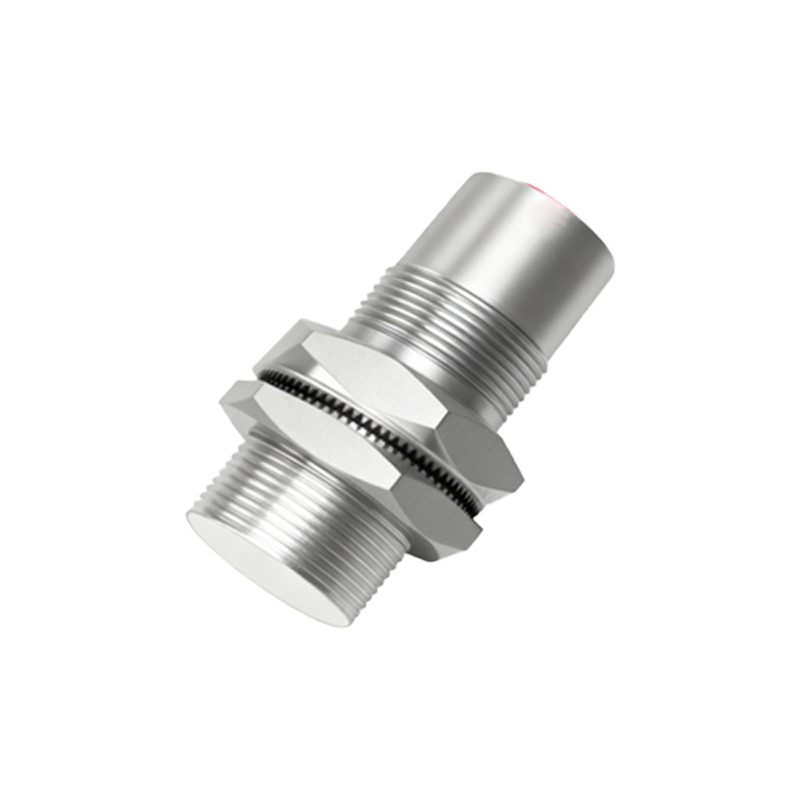
At its core, a proximity sensor like the 3015b is a non-contact device designed to detect the presence or absence of an object within its sensing range without any physical contact. The "3015b" designation typically refers to a specific form factor, sensing distance, and electrical configuration. While exact specifications can vary by manufacturer, a model numbered similarly often indicates a cylindrical housing, such as an M30 (30mm diameter) threaded barrel, with a 15mm nominal sensing distance. The 'b' suffix may denote particular output characteristics, such as a normally open (NO) or normally closed (NC) PNP or NAMUR output configuration. It is crucial to consult the specific manufacturer's datasheet for precise details, as numbering conventions are not universally standardized.
The 3015b commonly utilizes inductive sensing technology. This means it generates an electromagnetic field from its active face. When a metallic object (typically ferrous metals like steel or iron, though some models can detect non-ferrous metals at reduced ranges) enters this field, it causes a change in the oscillation amplitude within the sensor's internal LC circuit. This change is detected and processed by the sensor's electronics, triggering a switching action at its output. This principle makes it immune to environmental factors like dust, oil, and moisture—provided the sensor has an appropriate IP (Ingress Protection) rating, such as IP67 or IP69K, which is common for industrial-grade models like the 3015b.
Key performance parameters for a 3015b sensor include its nominal sensing distance (Sn), which is 15mm. The operational or effective sensing distance (Sr) is typically 0-12.15mm (81% of Sn) to account for manufacturing tolerances and temperature variations. The hysteresis, the difference between the switch-on and switch-off points, ensures stable switching and prevents chatter. Its response frequency indicates how many detection cycles it can perform per second, a vital factor for high-speed production lines. The supply voltage range, often 10-30V DC for standard models, defines its compatibility with control systems. The output type—be it a 3-wire PNP (sourcing) or NAMUR (intrinsically safe for hazardous areas)—determines its wiring and interface with Programmable Logic Controllers (PLCs) or other control units.
The applications for the 3015b proximity sensor are extensive across various industries. In automotive manufacturing, it is used for part presence verification on assembly lines, checking if a component like a piston or gear is correctly positioned before a robotic arm performs an operation. In packaging machinery, it detects the position of metallic cams or the presence of foil-lined packages. On metalworking CNC machines, it serves as a homing or limit switch for tool changers or axis movement. Its rugged construction allows it to perform reliably in harsh conditions found in material handling, wood processing (for detecting metal fasteners), and heavy machinery.
Installation and wiring are straightforward but require attention to detail. The sensor should be mounted securely using its threaded body, ensuring the target object approaches the sensing face axially for optimal performance. Adequate clearance around the sensor is necessary to prevent false triggers from adjacent metal structures (a factor known as flush or non-flush mounting capability). Wiring must follow the manufacturer's diagram: brown wire to DC+, blue wire to DC-, and the black (or white) wire as the switched output signal to the PLC input. For NAMUR versions, connection to an isolated barrier or amplifier is mandatory. Regular maintenance involves checking for physical damage, buildup of metallic swarf on the sensing face, and verifying the output signal under load.
When selecting a 3015b sensor, engineers must consider the target material, required sensing distance, environmental conditions (temperature, chemicals, washdown requirements), electrical interface, and housing material (often nickel-plated brass or stainless steel). Choosing a reputable manufacturer known for quality and consistency is essential for long-term system uptime.

In conclusion, the 3015b proximity sensor is a versatile and durable workhorse in industrial automation. Its inductive sensing principle offers a reliable solution for position detection, counting, and end-of-travel sensing in countless metallic object applications. By understanding its technical nuances—from its 15mm sensing range to its specific output configuration—engineers and technicians can effectively deploy this sensor