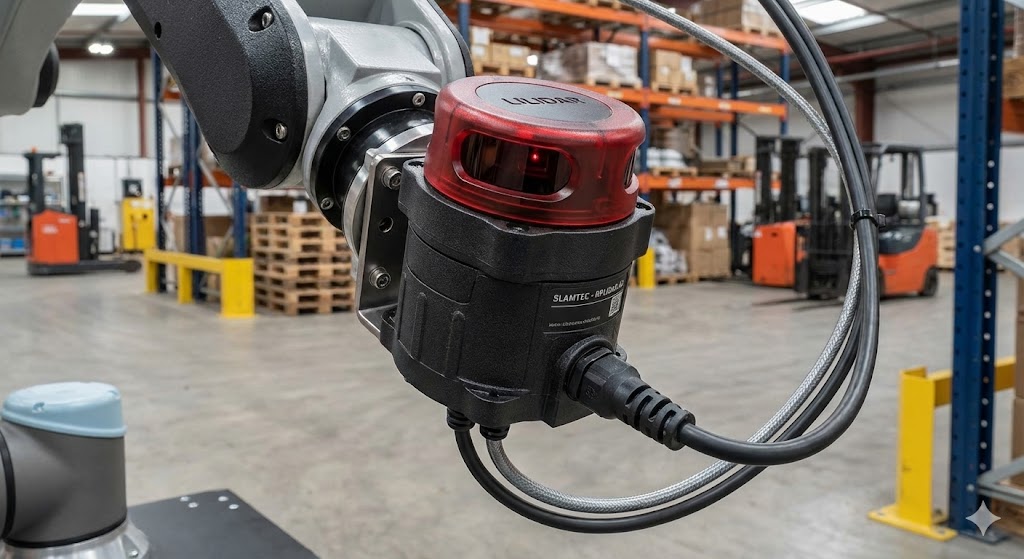
The landscape of industrial measurement and automation has been fundamentally reshaped by the continuous evolution of laser distance sensor technology. At the heart of this progress lies a robust and competitive field of patent activity, where engineering ingenuity translates into tangible performance advantages. This article delves into the key technological domains currently driving patent filings in laser distance sensing, offering a technical overview for industry professionals.
A primary focus area in recent patents is the enhancement of measurement precision and stability under challenging environmental conditions. Traditional time-of-flight (ToF) and phase-shift methods are being refined through sophisticated signal processing algorithms. Patents are emerging for systems that employ advanced digital filtering techniques, such as wavelet transforms and adaptive Kalman filters, to isolate the true laser return signal from intense background optical noise or in the presence of airborne particulates like dust and mist. Furthermore, innovations in temperature compensation circuits are critical. New patents describe integrated thermal management systems that actively monitor and adjust the laser diode's operating parameters and the detector's response, ensuring sub-millimeter accuracy across a wide industrial temperature range from -10°C to 60°C.
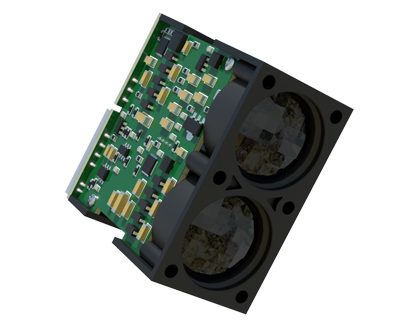
The miniaturization of sensor packages while maintaining or increasing functionality represents another hotbed of patent activity. Engineers are achieving this through novel optical path designs using micro-mirrors and hybrid aspherical lenses, which reduce the physical footprint without compromising optical efficiency. Concurrently, there is significant patent coverage around the integration of system-on-chip (SoC) solutions. These patents cover custom ASICs that combine the laser driver, high-speed photon detector, time-to-digital converter (TDC), and a microcontroller core into a single package. This integration drastically reduces power consumption, minimizes electromagnetic interference (EMI), and enhances reliability for embedded applications in mobile robotics and compact machinery.
Connectivity and data fusion are increasingly prominent in patent portfolios. Modern laser sensors are no longer isolated measurement devices but integral nodes in the Industrial Internet of Things (IIoT). Patents detail secure, real-time communication protocols that enable seamless integration with PLCs, robotic controllers, and cloud-based analytics platforms. Another growing area involves the fusion of laser distance data with other sensor inputs. Patents describe systems where a laser sensor is co-packaged with an inertial measurement unit (IMU) or a vision camera. Algorithm patents cover how distance data is combined with accelerometer or visual data to create robust 3D profiles or to enable precise navigation and obstacle avoidance for autonomous guided vehicles (AGVs), even in dynamic, unstructured environments.
Safety and reliability, paramount in industrial settings, are also key drivers of innovation. A significant number of patents address laser eye safety through intelligent power modulation. These systems dynamically adjust the output power of the laser based on the detected range and reflectivity of the target, ensuring it operates within Class 1 safety limits at all times without sacrificing performance for distant, low-reflectivity objects. Additionally, patent literature reveals advanced self-diagnostic and predictive maintenance features. Sensors are now patented with built-in functions to monitor laser diode degradation, lens contamination levels, and internal temperature gradients, providing early warnings to prevent unplanned downtime.
Finally, the application-specific customization of laser sensor technology is generating specialized patents. For instance, in the construction industry, patents cover ruggedized sensors with enhanced algorithms for measuring to uneven surfaces like concrete or soil. In logistics, patents focus on high-speed scanning sensors capable of capturing the dimensions of parcels on fast-moving conveyor belts with extreme accuracy. Each of these specialized developments is protected by intellectual property that addresses unique market needs.
In conclusion, the patent landscape for laser distance sensors is dynamic and multifaceted, reflecting the technology's critical role in industrial automation. Current innovations are concentrated on achieving unparalleled accuracy in harsh conditions, enabling smaller and more integrated form factors, fostering intelligent connectivity, guaranteeing operational safety, and tailoring solutions for niche applications. For engineers and technology managers, monitoring these patent trends is not merely an academic exercise but a crucial strategy for anticipating the next wave of capabilities that will define competitive advantage in precision measurement and automated systems.