In the rapidly evolving landscape of modern logistics and supply chain management, intelligent warehousing has emerged as a cornerstone of operational efficiency. At the heart of this transformation lies laser sensor technology, a critical component driving automation, precision, and real-time data acquisition. Laser sensors, utilizing coherent light beams to measure distance, detect objects, and monitor movements, have become indispensable in creating responsive and adaptive warehouse environments.
The core principle of laser sensors in warehousing applications revolves around time-of-flight (ToF) or triangulation methods. These sensors emit laser pulses toward a target, such as a pallet, package, or robotic vehicle, and calculate distances based on the reflection time or angle. This allows for millimeter-level accuracy in positioning, which is essential for tasks like automated storage and retrieval systems (AS/RS), inventory management, and autonomous guided vehicle (AGV) navigation. Unlike traditional photoelectric or ultrasonic sensors, laser sensors offer superior performance in challenging conditions, including varying ambient light, dust, or temperature fluctuations, ensuring reliable operation 24/7.
One of the most impactful applications is in automated inventory tracking. Laser scanners integrated with warehouse management systems (WMS) can rapidly identify and locate items on shelves without manual intervention. By generating precise 3D maps of storage areas, these sensors enable dynamic slotting optimization, reducing search times and minimizing errors. For instance, in high-density storage facilities, laser-guided systems facilitate seamless item retrieval, enhancing throughput by up to 40% compared to conventional methods.
Moreover, laser sensors play a pivotal role in safety and collision avoidance. In warehouses where humans collaborate with robots, sensors create virtual safety zones using laser curtains or light barriers. They detect intrusions in real-time, triggering immediate shutdowns or alerts to prevent accidents. This not only protects personnel but also safeguards expensive machinery from damage, contributing to lower operational risks and insurance costs.

The integration of laser sensors with Internet of Things (IoT) platforms and artificial intelligence (AI) further amplifies their capabilities. Data from sensors feed into predictive analytics models, enabling proactive maintenance of equipment and optimizing energy consumption. For example, sensors can monitor conveyor belt alignments or detect early signs of wear in robotic arms, scheduling repairs before failures occur. This predictive approach reduces downtime and extends the lifespan of warehouse assets.
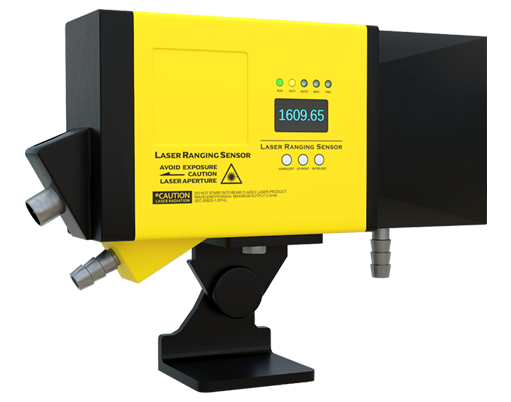
Despite their advantages, implementing laser sensor technology requires careful consideration. Factors such as sensor range, resolution, and environmental compatibility must align with specific warehouse layouts. Regular calibration and maintenance are necessary to sustain accuracy, especially in high-vibration settings. However, with advancements in solid-state lasers and cost reductions, these sensors are becoming more accessible for small to medium-sized enterprises, democratizing smart warehousing solutions.

Looking ahead, trends like 5G connectivity and edge computing will enhance the speed and responsiveness of laser sensor networks. Future warehouses may see fully autonomous systems where sensors communicate seamlessly with AGVs and drones, enabling lights-out operations with minimal human oversight. As sustainability gains emphasis, laser technology also supports green initiatives by optimizing space utilization and reducing waste through precise inventory control.
In conclusion, laser sensors are not merely accessories but foundational elements in the intelligent warehousing revolution. By delivering unmatched precision, safety, and data insights, they empower businesses to meet the demands of e-commerce and just-in-time logistics. As technology continues to evolve, their role will only expand, shaping the next generation of smart, efficient, and resilient supply chains.