In modern industrial automation and precision engineering, laser sensors have emerged as indispensable tools for non-contact measurement, offering unparalleled accuracy, speed, and reliability. Unlike traditional mechanical probes or vision systems, laser sensors utilize focused light beams to detect, profile, or measure objects without physical interaction. This article delves into the critical measurement points and practical applications of laser sensors, highlighting their transformative role across various sectors.
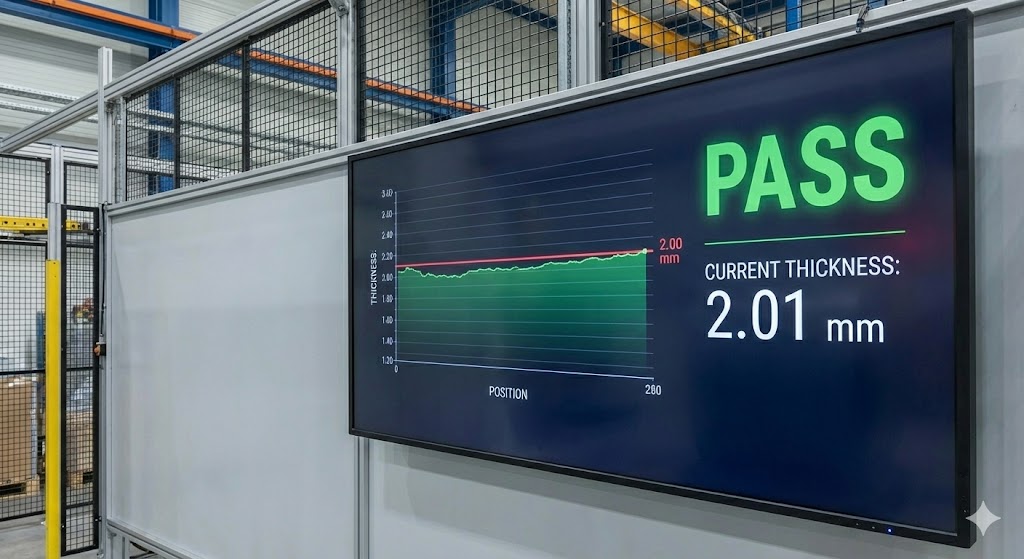
The core principle behind laser measurement involves projecting a laser beam onto a target surface. The reflected light is captured by a receiver, and through techniques such as triangulation, time-of-flight, or interferometry, precise data on distance, displacement, height, or thickness is calculated. Key measurement points include distance and displacement, where sensors monitor minute changes in position critical for alignment and assembly; profile and contour scanning, capturing 2D or 3D shapes for quality control; thickness measurement, ensuring material consistency in rolling or coating processes; and vibration analysis, detecting oscillations in machinery to prevent failures.
Selecting the appropriate measurement point is paramount. Engineers must consider factors like target material, surface finish, environmental conditions, and required resolution. For instance, a highly reflective surface may require a sensor with adjustable gain or a diffused laser line to avoid saturation, while dark or absorptive materials might need a higher-power laser. Ambient light, dust, or temperature fluctuations can also impact performance, necessitating sensors with robust housings and filtering algorithms.

In automotive manufacturing, laser sensors are deployed on assembly lines to verify gap dimensions between body panels, measure weld seam quality, and inspect paint thickness. Any deviation beyond tolerances triggers immediate correction, ensuring every vehicle meets stringent safety and aesthetic standards. Similarly, in electronics, these sensors measure component placement on PCBs, solder paste volume, and flatness of displays, where micron-level precision is non-negotiable.
The aerospace industry relies on laser sensors for profiling turbine blades, inspecting composite materials for voids, and aligning aircraft structures. Their ability to operate in harsh environments—such as high temperatures near engines—makes them ideal for maintaining the integrity of critical components. In logistics and packaging, sensors measure box dimensions for automated sorting, check fill levels in containers, and verify label placement, streamlining operations and reducing waste.
Emerging trends include the integration of laser sensors with IoT platforms and AI analytics. Real-time data from multiple measurement points can be aggregated to predict equipment wear, optimize production parameters, and enable adaptive manufacturing. For example, a network of sensors monitoring a conveyor system can detect minute misalignments before they cause downtime, shifting maintenance from reactive to predictive.

Despite their advantages, challenges persist. Complex geometries or transparent objects can scatter or transmit laser light, leading to measurement errors. Advances in multi-point scanning and hybrid systems combining lasers with other technologies are addressing these limitations. Additionally, cost remains a consideration for small-scale applications, though prices are declining as adoption grows.
In conclusion, laser sensors represent a cornerstone of precision measurement, with their effectiveness hinging on strategic selection of measurement points and understanding of application demands. As industries push toward smarter, more efficient production, the role of laser sensors will only expand, driving innovations in quality assurance and process control. Engineers and technicians must stay abreast of technological developments to fully leverage these tools, ensuring they meet the ever-evolving demands of modern manufacturing and beyond.