In the realm of industrial automation and machine control, the reliable detection of objects is paramount. Among the various sensing technologies available, the three-wire proximity sensor stands as a cornerstone, offering a robust and versatile solution for countless applications. This article delves into the operational principles, wiring configurations, key advantages, and practical considerations for integrating these essential components into modern electrical systems.
At its core, a proximity sensor is a non-contact device designed to detect the presence or absence of an object within its sensing range without physical contact. Three-wire sensors are predominantly solid-state electronic switches. They operate on the principle of electromagnetic induction (for inductive types detecting metals) or capacitance (for capacitive types detecting various materials, including non-metals). When a target enters the sensor's active field, it causes a change in the oscillator circuit's state. This change is processed by the internal circuitry, which subsequently triggers a switching action in the output stage.
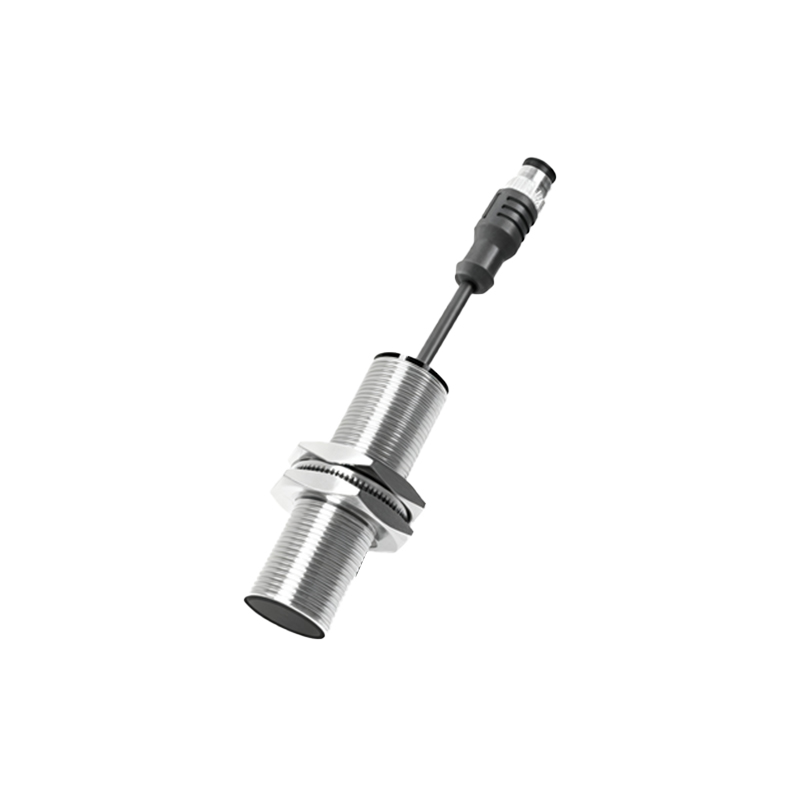
The defining characteristic, as the name suggests, is the three connection wires. This configuration is the most common for DC-powered sensors and provides a clear separation between power supply and the output signal, enhancing reliability and simplifying troubleshooting. The standard color coding, though not universally absolute, is widely adopted: Brown wire for the positive DC supply voltage (typically 10-30V DC), Blue wire for the negative supply or 0V common, and Black wire for the output signal. It is crucial to always consult the specific manufacturer's datasheet for the definitive wiring diagram.
There are two primary output types for three-wire DC proximity sensors, defined by the switching element's relationship to the load and common wire:
1. NPN (Sinking) Output: In this configuration, the output switch (a transistor) is connected between the output wire (Black) and the negative/common (Blue) wire. When activated, the sensor "sinks" current from the load to ground. The load (e.g., a PLC input, relay coil) is connected between the positive supply (Brown) and the sensor's output wire.
2. PNP (Sourcing) Output: Here, the output switch is connected between the positive supply (Brown) and the output wire (Black). When activated, the sensor "sources" current from the supply to the load. The load is connected between the output wire and the common negative (Blue) wire.
Choosing between NPN and PNP is fundamental and depends on the control system's input card configuration. Many modern PLCs are compatible with both, but the wiring must be consistent. A key advantage of the three-wire design is its ability to provide a complementary output type, often available in the same sensor housing (e.g., a Black wire for normally open and a White wire for normally closed), offering design flexibility.
The benefits of three-wire proximity sensors are significant. Their solid-state design ensures a long operational life with no moving parts to wear out, enabling high-speed switching frequencies far exceeding mechanical limit switches. They offer excellent repeatability and accuracy in detection. The clear separation of power and output circuits minimizes electrical noise interference on the signal line, leading to more stable operation in electrically noisy industrial environments. Furthermore, many models feature built-in protection against short-circuits, reverse polarity, and voltage spikes, enhancing system durability.
When selecting and applying a three-wire sensor, several factors must be considered. The sensing distance, or "rated operating distance," is specified for a standard target and must be derated for practical installation to account for temperature variations, target material, and size. The housing material (e.g., stainless steel, nickel-plated brass, PBT plastic) should be chosen based on the environmental conditions, including exposure to coolants, oils, or washdowns. Inductive sensors are immune to non-metallic contaminants like dust or chips but only detect metallic objects. Capacitive sensors can detect a wider range of materials but may be influenced by environmental humidity or material composition.
Installation is straightforward but requires attention to detail. Ensure the power supply voltage is within the sensor's specified range. For inductive sensors, maintain adequate clearance from surrounding metal (the manufacturer's lateral and flush-mounting guidelines are critical to prevent false triggering). Always connect a protective load, such as a flyback diode for relay coils or a suitable resistor, when driving inductive loads to suppress voltage transients that could damage the sensor's output transistor.
In conclusion, the three-wire proximity sensor is an indispensable component in industrial electrical engineering. Its simple yet effective design, combined with high reliability and flexibility, makes it the go-to choice for object detection, position verification, and counting tasks. A thorough understanding of its NPN/PNP operation, proper selection for the application, and correct installation practices are essential for designing robust, maintenance-friendly, and high-performing automated systems. As technology advances, these sensors