In the rapidly evolving landscape of industrial automation and precision measurement, Laser Auto-Focus (AF) sensors have emerged as a critical technology. These sophisticated devices are engineered to deliver unparalleled accuracy, speed, and reliability in a multitude of demanding applications. Unlike traditional contact-based measurement tools or simpler optical sensors, Laser AF sensors utilize a non-contact methodology, projecting a focused laser beam onto a target surface and analyzing the reflected light to determine precise distance or surface profile. This fundamental principle enables them to perform in environments where physical contact is impossible, undesirable, or could damage delicate components.
The core operational principle of most industrial Laser AF sensors is based on triangulation or confocal measurement techniques. In a standard triangulation sensor, a laser diode emits a focused spot onto the target. The reflected light is then captured by a position-sensitive detector, such as a CCD or CMOS array. Any change in the target's distance causes a proportional shift in the position of the laser spot on the detector. By calculating this shift, the sensor's internal processor can determine the exact displacement with micron-level resolution. Confocal chromatic sensors, another prevalent type, use white light split into a spectrum. The distance to the target is encoded in the wavelength of the light reflected back to the sensor, allowing for extremely high precision even on transparent or highly reflective surfaces that challenge other methods.
The applications for Laser AF sensors are vast and integral to modern manufacturing. In semiconductor fabrication, they are indispensable for wafer inspection, ensuring precise focus during lithography and measuring layer thicknesses. In electronics assembly, they verify the coplanarity of Ball Grid Array (BGA) components, measure solder paste height, and inspect micro-connectors. The automotive industry relies on them for quality control of engine components, brake discs, and body panel gap measurements. Furthermore, they are pivotal in 3D profiling and surface roughness analysis for materials research, medical device manufacturing, and precision machining. Their ability to provide real-time feedback makes them essential for closed-loop control systems in robotics, where a robotic arm can adjust its path based on sensor data to perform accurate pick-and-place, dispensing, or assembly tasks.
Several key performance parameters define the selection and effectiveness of a Laser AF sensor. Resolution, often in the sub-micron range, refers to the smallest detectable change in distance. Repeatability indicates the sensor's consistency in returning the same measurement under identical conditions. The measuring range defines the distance over which the sensor can operate accurately, while the stand-off distance is the optimal working distance from the sensor head to the target. Spot size is crucial, as a smaller spot allows for measurement on finer features. Finally, sampling speed, often in the kilohertz range, determines how quickly the sensor can update its measurement, which is vital for high-speed production lines.
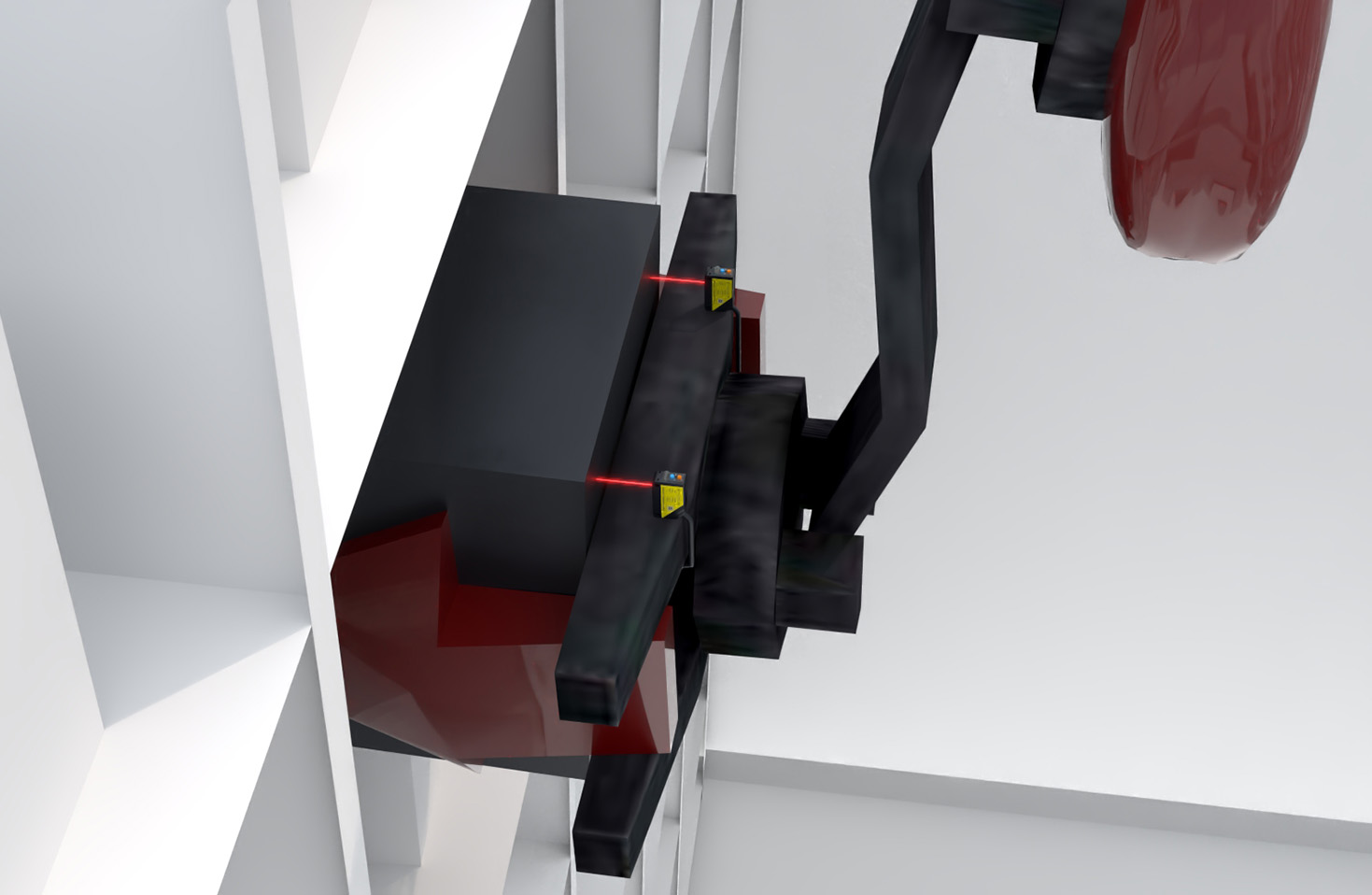
Recent advancements continue to push the boundaries of this technology. The integration of advanced algorithms and machine learning has enhanced data processing, enabling better noise filtering, edge detection, and compensation for surface color or material variations. Miniaturization has led to more compact sensor heads that can be integrated into tight spaces. Improvements in laser safety (predominantly Class II or Class I) and robustness allow deployment in harsher industrial environments with vibration, dust, and variable ambient light. Furthermore, the development of multi-point and line laser sensors enables the capture of entire profiles in a single scan, dramatically increasing inspection throughput.
When integrating a Laser AF sensor into a system, engineers must consider several environmental and application-specific factors. The material, color, and reflectivity of the target surface can significantly affect performance; highly reflective or transparent materials may require sensors with specialized optical configurations. Ambient light interference, particularly from strong industrial lighting, must be mitigated, often through the use of modulated laser light and optical filters. Mechanical stability is paramount, as vibrations can introduce measurement error. Proper calibration against known standards is essential to ensure long-term accuracy.
In conclusion, Laser Auto-Focus sensors represent a cornerstone of modern precision engineering and automated manufacturing. Their non-contact, high-speed, and high-accuracy capabilities solve complex measurement and control challenges across diverse industries. As technology progresses towards smarter factories and more intricate micro-manufacturing, the role of the Laser AF sensor will only become more central. For engineers and system integrators, a deep understanding of their operating principles, specifications, and optimal application practices is crucial for harnessing their full potential to drive quality, efficiency, and innovation in production processes. The ongoing evolution in laser technology, digital processing, and system integration promises even greater capabilities, solidifying their status as an indispensable tool in the industrial toolkit.

