In the realm of modern imaging systems, camera sensors have evolved significantly, with laser technology playing a pivotal role in enhancing their performance and capabilities. This article delves into the intricate relationship between lasers and camera sensors, exploring key applications, benefits, and future trends in the electrical engineering industry.
Lasers, or Light Amplification by Stimulated Emission of Radiation, are coherent light sources that offer precise control over wavelength, intensity, and direction. When integrated with camera sensors—such as CCD (Charge-Coupled Device) or CMOS (Complementary Metal-Oxide-Semiconductor) sensors—they enable advanced functionalities beyond traditional photography. One primary application is in laser triangulation for 3D scanning and measurement. By projecting a laser line or pattern onto an object and capturing its deformation with a camera sensor, engineers can reconstruct detailed 3D models with high accuracy. This is widely used in industrial inspection, robotics, and autonomous vehicles for object detection and spatial analysis.
Another critical area is laser-based autofocus systems in digital cameras and smartphones. By emitting an infrared laser beam and measuring the time it takes to reflect back to the sensor, these systems calculate distance rapidly, ensuring sharp focus even in low-light conditions. This technology, known as Time-of-Flight (ToF), relies on specialized sensor arrays that detect minute light variations, improving image quality and user experience. Additionally, lasers are employed in LiDAR (Light Detection and Ranging) systems, where pulsed laser beams scan environments to generate high-resolution maps. Camera sensors in LiDAR units capture reflected signals, enabling applications in surveying, archaeology, and environmental monitoring.

The synergy between lasers and camera sensors also enhances spectral imaging. By using tunable lasers to illuminate subjects at specific wavelengths, sensors can capture data across the electromagnetic spectrum, from visible to infrared. This allows for material identification, medical diagnostics, and agricultural assessment, where traditional cameras fall short. For instance, in semiconductor manufacturing, laser-induced fluorescence coupled with high-speed sensors detects defects in microchips, ensuring quality control.
However, integrating lasers with camera sensors presents challenges, such as managing heat dissipation, minimizing noise interference, and ensuring eye safety. Engineers must design optical filters and cooling systems to protect sensors from laser damage while maintaining sensitivity. Advances in nanotechnology and quantum dots are paving the way for more efficient sensor-laser hybrids, with potential breakthroughs in quantum imaging and secure communications.
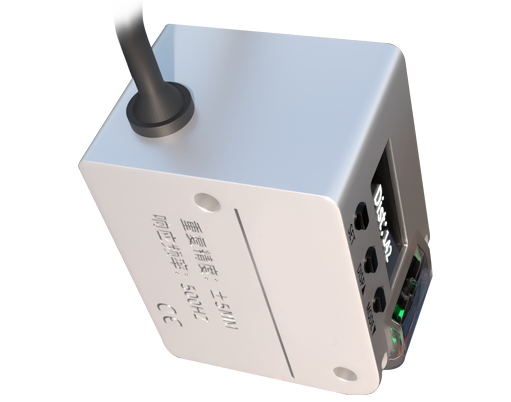
Looking ahead, the convergence of AI and laser-sensor systems promises smarter imaging solutions. Machine learning algorithms can process laser-generated data from sensors in real-time, enabling predictive maintenance in factories or enhanced augmented reality experiences. As the demand for high-precision imaging grows across sectors like healthcare, defense, and entertainment, continued innovation in laser and sensor integration will drive the next wave of technological progress.
In summary, lasers are not just tools for illumination but transformative elements in camera sensor technology. By enabling precise measurements, faster focusing, and expanded spectral capabilities, they empower engineers to push the boundaries of what imaging systems can achieve. Staying abreast of these developments is crucial for professionals in the electrical engineering field to leverage cutting-edge applications and contribute to future advancements.
