The relentless pursuit of precision in modern manufacturing has driven the evolution of non-contact measurement technologies to new heights. Among these, laser milling depth sensors have emerged as a critical component for in-process monitoring and quality control, particularly in high-precision sectors such as aerospace, medical device manufacturing, and microelectronics. This article delves into the operational principles, key technological advancements, and practical applications of these sophisticated sensors, highlighting their transformative impact on machining accuracy and efficiency.
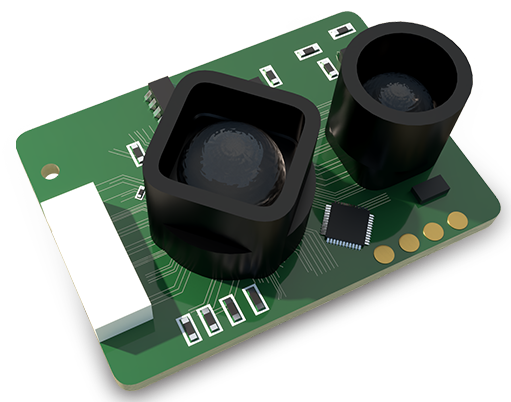
At its core, a laser milling depth sensor operates on the principle of optical triangulation or confocal displacement measurement. In a typical triangulation setup, a focused laser beam is projected onto the workpiece surface within the milling zone. The scattered or reflected light from this point is then captured by a high-resolution CMOS or CCD detector positioned at a known angle. As the milling tool removes material and alters the surface height, the position of the laser spot on the detector shifts accordingly. This displacement is processed in real-time by sophisticated algorithms to calculate the exact depth of the machined feature with micron or even sub-micron resolution. Confocal chromatic sensors offer an alternative, using polychromatic light and spectral analysis to determine distance with exceptional accuracy, even on challenging surfaces like transparent materials or steep edges.
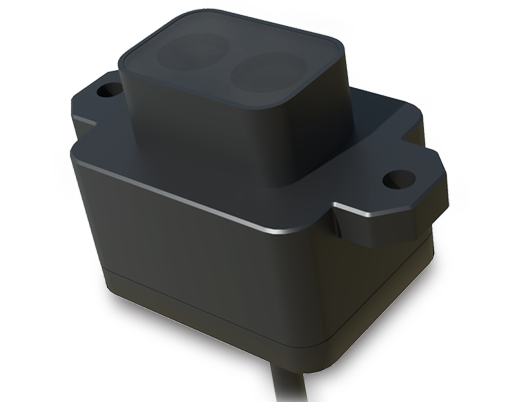
Recent technological advancements have significantly enhanced the capabilities of these sensors. The integration of ultra-high-speed data acquisition systems allows for real-time depth profiling at rates exceeding 100 kHz, enabling dynamic feedback control during high-speed milling operations. This closed-loop control can automatically compensate for tool wear, thermal drift, or material inconsistencies, ensuring consistent depth accuracy throughout a production run. Furthermore, the development of compact, robust sensor heads capable of withstanding the harsh environment of a machining center—including coolant, vibrations, and metal chips—has been a game-changer. Modern sensors are often integrated directly into the machine spindle or tool holder, providing coaxial measurement directly at the point of cutting.
Another critical innovation lies in advanced data processing and software integration. Machine learning algorithms are now being employed to differentiate between actual depth measurements and signal noise caused by coolant spray or flying debris. The seamless integration of sensor data with CNC systems and Manufacturing Execution Systems (MES) creates a digital thread, allowing for comprehensive process documentation, predictive maintenance, and adaptive machining strategies. This level of integration facilitates the creation of digital twins for machining processes, where real-world sensor data continuously validates and refines the virtual model.

The practical applications of laser milling depth sensors are vast and growing. In the aerospace industry, they are indispensable for machining complex turbine blades with intricate cooling channels, where depth consistency is paramount for aerodynamic performance and thermal management. For medical implants, such as orthopedic knee or hip components, these sensors verify the precise depth of porous surface structures designed for bone ingrowth, directly impacting patient outcomes. In micro-milling for electronics, they ensure the exact depth of cavities and trenches in substrates, which is critical for the functionality of microfluidic devices or advanced packaging.
Moreover, the role of these sensors extends beyond simple depth verification. They are instrumental in process development and optimization. By providing detailed, real-time data on material removal rates and surface topography, engineers can fine-tune cutting parameters like feed rate, spindle speed, and depth of cut to maximize efficiency and tool life. This data-driven approach reduces scrap rates, minimizes non-productive time for manual inspection, and accelerates the overall manufacturing workflow.
Looking ahead, the convergence of laser sensing with other Industry 4.0 technologies promises even greater capabilities. The fusion of depth data with in-situ thermographic or acoustic emission sensors could provide a holistic view of the machining process, enabling the detection of subsurface defects or predicting tool failure before it occurs. As additive and subtractive manufacturing processes converge in hybrid machines, laser depth sensors will play a pivotal role in measuring and compensating for the uneven surfaces of 3D-printed pre-forms before finish milling.
In conclusion, laser milling depth sensors represent a sophisticated fusion of optics, electronics, and software, delivering unparalleled in-process metrology. Their ability to provide accurate, real-time depth data directly from the cutting zone is no longer a luxury but a necessity for achieving the levels of precision, efficiency, and traceability demanded by advanced manufacturing. As sensor technology continues to advance, its integration will become even more intrinsic to intelligent, adaptive, and autonomous machining systems, solidifying its position as a cornerstone of modern precision engineering.