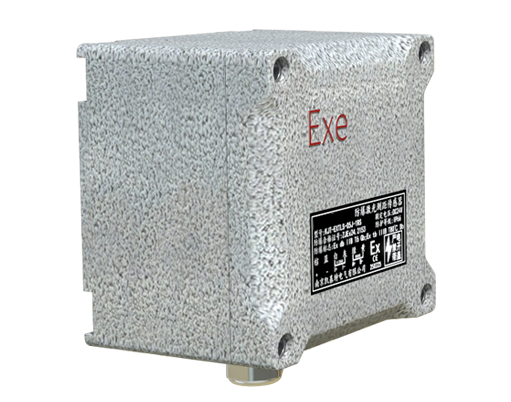
Laser sensors have become indispensable components in modern industrial automation, offering unparalleled precision, speed, and reliability. These devices operate by emitting a focused beam of light—typically from a laser diode—and measuring the properties of the reflected signal to determine parameters such as distance, displacement, thickness, or presence of an object. The fundamental principle relies on techniques like time-of-flight (ToF), triangulation, or interferometry, each suited to specific measurement challenges and environmental conditions.
In industrial settings, laser sensors excel due to their non-contact nature, which eliminates mechanical wear and allows for high-speed inspection of delicate or moving targets. For instance, in automotive assembly lines, laser displacement sensors ensure precise gap measurements between body panels, while in electronics manufacturing, they verify component placement on printed circuit boards with micron-level accuracy. The ability to function in harsh environments—resistant to dust, vibration, and temperature fluctuations—makes them ideal for sectors like metal processing, where they monitor material thickness in rolling mills, or in logistics, where they guide autonomous vehicles and sort packages based on size and shape.
Recent advancements have further expanded their capabilities. The integration of CMOS or CCD detectors has enhanced resolution and sampling rates, enabling real-time 3D profiling for quality control. Innovations in blue laser technology, with shorter wavelengths, improve performance on reflective or transparent surfaces that traditionally challenge red lasers. Additionally, the rise of smart sensors embedded with IoT connectivity allows for predictive maintenance, as data on operating conditions can be analyzed to foresee calibration needs or potential failures, reducing downtime.
Despite their advantages, selecting the right laser sensor requires careful consideration. Factors such as measurement range, spot size, response time, and environmental interference (e.g., ambient light or surface reflectivity) must be evaluated. For example, a diffuse-reflective sensor might be cost-effective for general object detection, while a confocal model is necessary for multi-layered material analysis. Calibration and alignment are critical, as even minor deviations can lead to significant errors, underscoring the need for proper installation and periodic validation.

Looking ahead, trends like miniaturization and the fusion of laser sensing with AI-driven image processing are set to redefine industrial automation. These developments promise even greater adaptability, allowing systems to not only measure but also interpret complex scenarios, such as identifying defects in textured surfaces or adapting to variable production speeds. As industries push toward greater efficiency and quality, laser sensors will remain at the forefront, providing the foundational data required for smart, responsive manufacturing ecosystems. Their evolution continues to bridge the gap between physical processes and digital control, cementing their role as a cornerstone of Industry 4.0.