In the realm of industrial automation, robotics, and consumer electronics, proximity sensors are indispensable components. They detect the presence or absence of an object without physical contact, enabling countless applications from smartphone screen blanking to complex assembly line control. While parameters like sensing range and output type are often discussed, one critical operational characteristic frequently overlooked is proximity sensor frequency. This guide delves into the intricacies of sensor frequency, explaining its significance, how it interacts with other factors, and best practices for optimization.
Understanding Proximity Sensor Frequency
At its core, the frequency of a proximity sensor refers to its operating or response speed. It is typically measured in Hertz (Hz), representing cycles per second. In practical terms, it defines how many times per second the sensor can complete a full detection cycle: emitting a signal (be it electromagnetic, ultrasonic, or optical), receiving the return, processing the data, and providing a stable output. A sensor rated at 1 kHz can theoretically perform 1000 such cycles in one second.
This frequency directly translates to response time—the delay between a target entering the sensing field and the sensor's output switching states. A higher frequency equates to a faster response time. For instance, a 5 kHz sensor responds much quicker than a 100 Hz sensor. This speed is paramount in high-velocity applications. Imagine a sensor counting bottles on a fast-moving conveyor; a low-frequency sensor might miss objects entirely, leading to inaccurate counts.
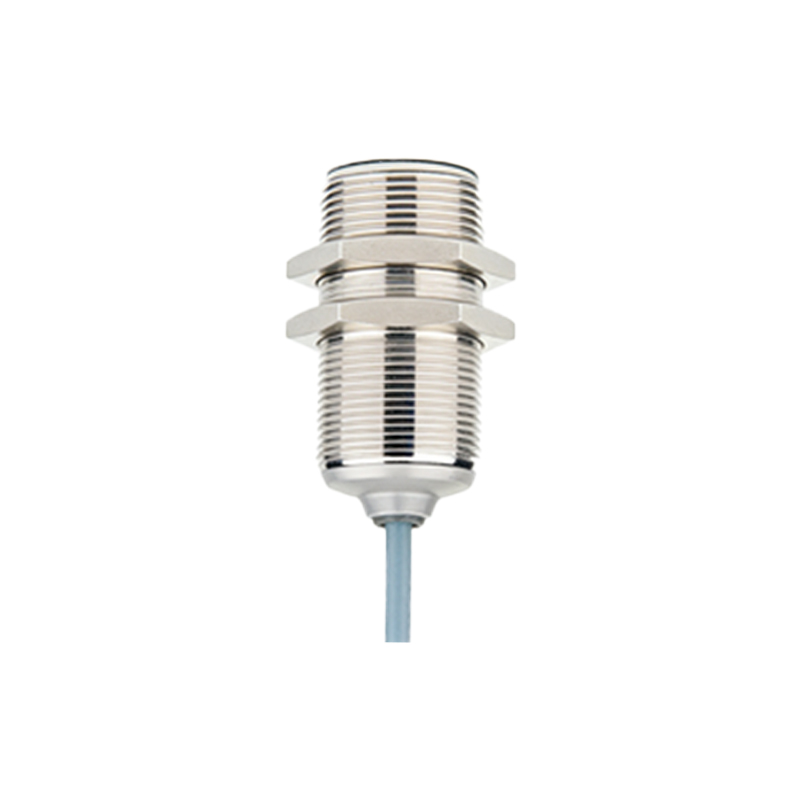
Key Factors Influencing Operational Frequency
Several intrinsic and extrinsic factors determine and affect the effective operating frequency of a proximity sensor.
1. Sensor Technology: The underlying technology sets a fundamental limit. Inductive and capacitive sensors generally offer high frequencies, often ranging from 100 Hz to 5 kHz or more for standard models, with specialized high-speed variants reaching 10+ kHz. Ultrasonic sensors, due to the slower speed of sound, typically operate at lower frequencies. Photoelectric sensors vary widely based on their sensing mode (through-beam, retro-reflective, diffuse).
2. Sensing Distance: There is an inverse relationship between set sensing distance and maximum achievable frequency. Activating a sensor at its maximum rated range often forces it into a longer processing cycle to distinguish a weak return signal from noise, thereby reducing its cycle speed. Operating the target closer to the sensor usually allows for a higher frequency setting.
3. Target Characteristics: For inductive sensors, the size, material, and shape of the target metal object affect the sensing "footprint" and the strength of the eddy current signal. A larger ferrous target allows for faster, more reliable detection at a higher frequency than a small or non-ferrous target. For photoelectric sensors, surface color, reflectivity, and angle are critical.
4. Electrical Load and Output Circuit: The type of output (PNP/NPN analog, digital, IO-Link) and the electrical characteristics of the connected load (e.g., a PLC input module, a relay) influence performance. A heavily capacitive load can slow down the output switching speed. Always consult the sensor's datasheet for load specifications.
5. Environmental Conditions: Extreme temperatures, strong electromagnetic interference (EMI), or contaminants like dust and oil can force the sensor's internal circuitry to work harder to maintain signal integrity, potentially necessitating a lower operating frequency for stable performance.
Optimizing Sensor Frequency for Application Success
Selecting and configuring a sensor based on frequency requirements is not about always choosing the highest number. It's about matching the sensor's capability to the application's demands while ensuring reliability.
Calculate the Required Frequency: Determine the minimum needed response speed. Consider the maximum object speed and the smallest object size. A simple formula is: Required Frequency (Hz) = (Object Speed / Object Size). This ensures the sensor has multiple sampling opportunities as the object passes. Always add a safety factor (e.g., 2x).
Prioritize Stability Over Raw Speed: Running a sensor at its absolute maximum rated frequency can leave no margin for error. Slight variations in target position or environmental noise may cause false triggers. It is often wiser to select a sensor with a headroom of 20-30% above your calculated requirement.
Leverage Hysteresis: Most proximity sensors feature hysteresis—a difference between the switch-on and switch-off points. This prevents output oscillation when a target is at the edge of the sensing range and is crucial for maintaining stability at high frequencies.
Utilize Specialized High-Speed Modes: Many modern sensors offer dedicated high-speed or "Teach-in" modes. These modes often optimize internal filtering and processing algorithms specifically for rapid detection, sacrificing some noise immunity or long-range performance for sheer speed. Use them when applicable.
Regular