In the realm of industrial automation and robotics, achieving precise, reliable, and non-contact distance measurement is paramount. Among the array of sensing technologies available, AG Laser Distance Sensors have emerged as a cornerstone solution, offering unparalleled accuracy and versatility for a multitude of demanding applications. This article delves into the operational principles, key advantages, and critical application areas of these sophisticated devices, providing a comprehensive overview for engineers and system integrators.
At its core, an AG Laser Distance Sensor operates on the principle of time-of-flight (ToF) or phase-shift measurement for modulated laser beams. The sensor emits a focused, coherent laser pulse or a modulated continuous wave towards a target object. The light reflects off the target's surface and returns to the sensor's receiver. By precisely calculating the time delay between emission and reception (for pulsed lasers) or analyzing the phase shift of the modulated wave, the sensor's internal processor computes the distance to the target with exceptional accuracy. This method allows for measurements over considerable ranges, from a few centimeters to several hundred meters, depending on the sensor model and target surface properties.
The "AG" designation often refers to specific performance grades or series within a manufacturer's lineup, typically emphasizing high precision, robustness, and advanced functionality tailored for automation and industrial-grade environments. Key technical advantages of these sensors include:

1. High Accuracy and Resolution: Modern AG laser sensors can achieve sub-millimeter or even micron-level accuracy, making them suitable for tasks like part positioning, dimensional inspection, and gap measurement where minute deviations are critical.
2. Long Measurement Range: They are capable of performing stable measurements over long distances without physical contact, ideal for monitoring large-scale machinery, warehouse level sensing, or vehicle positioning.
3. Fast Response Time: With measurement frequencies often reaching into the kilohertz range, these sensors can track rapidly moving objects or monitor dynamic processes in real-time, a necessity for high-speed production lines.
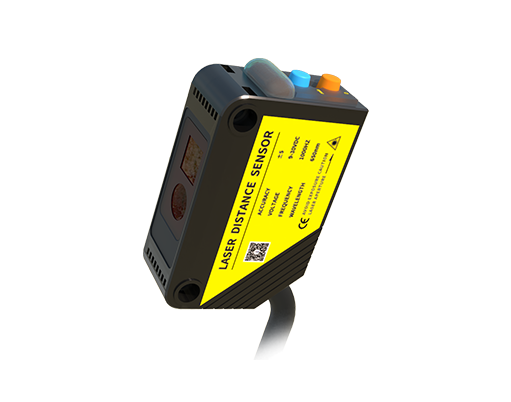
4. Excellent Environmental Resistance: Designed for harsh industrial settings, they typically feature robust housings (IP67/IP69K ratings are common), resistance to ambient light interference, and stable operation across wide temperature ranges.
5. Flexibility and Ease of Integration: Many models offer programmable logic, analog outputs (4-20mA, 0-10V), digital interfaces (RS-232, RS-485, Ethernet/IP, PROFINET), and configurable switching outputs, facilitating seamless integration into PLCs and control systems.
The application spectrum for AG Laser Distance Sensors is vast and continuously expanding. In automotive manufacturing, they are indispensable for robot guidance, weld seam tracking, and panel gap inspection. Within the logistics and material handling sector, they enable precise palletizing, warehouse level control, and automated guided vehicle (AGV) navigation. In the metals and rolling mills, they provide critical thickness and profile monitoring. Furthermore, they play a vital role in crane positioning, warehouse automation, and even in agricultural machinery for implement control.
When selecting an AG Laser Distance Sensor, engineers must consider several parameters: the required measuring range, accuracy, response speed, the target surface's color and reflectivity (diffuse or reflective targets may require different sensor types), environmental conditions (dust, steam, vibration), and the necessary output interface. Proper mounting, alignment, and periodic maintenance are also crucial for ensuring long-term, drift-free performance.
In conclusion, AG Laser Distance Sensors represent a mature yet rapidly evolving technology that is fundamental to modern industrial automation. Their ability to deliver precise, non-contact distance data under challenging conditions makes them an invaluable tool for enhancing quality control, optimizing processes, and enabling advanced robotic applications. As Industry 4.0 and smart factory concepts advance, the integration of these sensors with IoT platforms and data analytics will further unlock their potential, driving efficiency and innovation across countless industries.