In the realm of environmental monitoring and infrastructure management, accurately measuring snow depth is critical for a wide range of applications, from avalanche forecasting and hydrological studies to transportation safety and climate research. Traditional methods, such as manual snow stakes or ultrasonic sensors, have limitations in precision, reliability, and maintenance requirements. The advent of laser snow depth sensors represents a significant technological leap, offering unparalleled accuracy and robustness in challenging winter conditions. This article delves into the operational principles, key features, and diverse applications of these advanced instruments.
At its core, a laser snow depth sensor operates on the principle of time-of-flight (ToF) measurement. The device emits a focused pulse of laser light, typically in the near-infrared spectrum, towards the target snow surface. The light reflects off the surface and returns to a detector within the sensor. By precisely measuring the time interval between the emission and reception of the laser pulse, and knowing the constant speed of light, the sensor calculates the distance to the snow surface with extreme accuracy. This distance measurement is then referenced against a known, fixed baseline (often the sensor's mounting height above ground) to determine the snow depth. Modern laser sensors can perform thousands of these measurements per second, providing a highly reliable average depth and filtering out noise from falling snowflakes or minor surface irregularities.
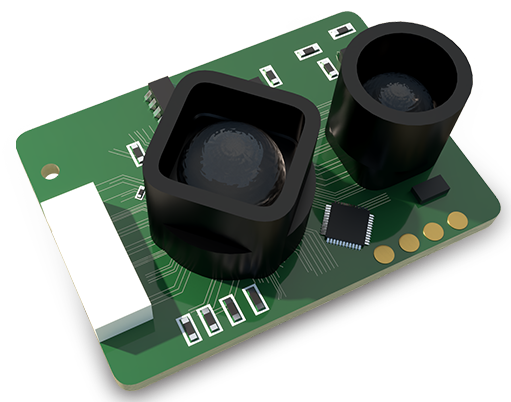
The technological superiority of laser snow sensors stems from several key features. First is their exceptional precision, often achieving resolutions in the sub-millimeter range. This is far superior to ultrasonic sensors, whose accuracy can be compromised by temperature variations and wind, which affect the speed of sound. Second, laser sensors are largely immune to environmental interference. They are not affected by factors like air temperature, humidity, or wind speed, which plague other measurement techniques. Their focused laser beam minimizes problems caused by drifting snow or uneven surfaces, providing a consistent measurement point. Third, these sensors require minimal maintenance. With no moving parts and designed for harsh environments, they offer long-term stability and reliability with little need for calibration or intervention, a crucial factor for remote, unattended installations.
The applications for laser snow depth sensors are extensive and growing. In avalanche safety and mountain research, they provide real-time, precise data on snowpack accumulation, which is vital for predicting avalanche risk and understanding snow metamorphosis. For road and railway authorities, these sensors enable intelligent transportation systems by delivering accurate snow depth data on roadways, allowing for optimized deployment of snowplows and salt trucks, enhancing public safety and operational efficiency. In hydrology and water resource management, accurate snow depth measurement is a direct input for calculating snow water equivalent (SWE), forecasting spring melt runoff, and managing reservoir levels. Furthermore, climate scientists rely on long-term, high-quality snow depth records from laser sensors to study trends related to climate change and validate satellite remote sensing data.
When selecting and deploying a laser snow depth sensor, several practical considerations come into play. The choice of mounting structure is paramount; it must be rigid and stable to prevent movement that would invalidate the baseline measurement. The sensor should be installed at a height sufficient to accommodate the maximum expected snow depth for the location, plus a safety margin. While the laser beam is narrow, careful consideration of the field of view is necessary to ensure the measurement spot is representative and not influenced by nearby obstructions like vegetation or structures. Most modern sensors come with robust communication interfaces (e.g., SDI-12, RS-485, Modbus) and can be integrated into larger SCADA or IoT networks for data logging and remote access.
In comparison to other technologies, the advantages of laser-based systems are clear. While manual measurements are labor-intensive and sporadic, and ultrasonic sensors suffer from environmental dependencies, laser sensors provide a continuous, high-fidelity data stream. The initial investment in a laser snow depth sensor is often higher than for simpler technologies, but the total cost of ownership is frequently lower due to reduced maintenance, higher data quality, and the operational benefits derived from precise information.
In conclusion, laser snow depth sensors have established themselves as the gold standard for automated snow measurement. Their precision, reliability, and low maintenance profile make them an indispensable tool for professionals in meteorology, transportation, hydrology, and safety management. As technology continues to advance, with potential improvements in power efficiency, data processing, and integration capabilities, the role of these sensors in building resilient and data-informed winter operations and environmental monitoring systems will only become more pronounced. For any organization where accurate snow data is mission-critical, investing in laser-based measurement technology is a forward-looking decision.